Lately we’ve seen an explosion of low-cost media players designed to access the web and run Android apps on TV with plain old Android. In part one last week we explored the diversification of products beyond the Google TV platform toward pure Android. In part two we explore each category of Android TV in depth and assess their roles in the TV ecosystem and potential for success.
Android TV options can be broken down into the following categories, including products based on the Google TV platform: low-end, sub-$100 media players; HDMI sticks; high-end, Google TV-based devices; cable-ready Over-The-Top, Set-Top-Boxes; and smartphones and tablets.
Low-end: Sub-$100 Media Players
2012 has seen an avalanche of affordable Android media players focused primarily on emerging nations. The devices are often sold as general purpose Android mini-PCs rather than TV companion boxes.
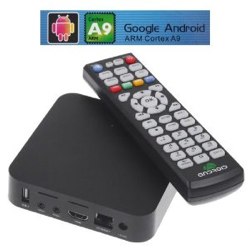 Several dozen Android media players are available in the U.S. on retail sites like Amazon, many of them in the $80 to $100 range. Over 200 such devices from no-name Shenzen manufacturers are available for OEM sale on sites like DHGate.com. They typically use the same AllWinner or Rockchip processors, and often draw from a few stock designs.
Typical entries run Android 2.3 on a Cortex-A8 processor, but devices are quickly moving up to Android 4.0 (“Ice Cream Sandwich”). The latter often run on dual-core Cortex-A9 processors and boast 1080p video. For example, one typical, no-name, ICS/A9 box is available on Amazon for $78.89. On Oct. 12, ARMDevices.net uncovered an ICS-based Fly-A10HD set-top from Orifly that sells for $45 per 1,000 pieces.
Several media players are aimed at specific markets. For example, Akai recently announced an Akai Smart Box for 6,590 Rs ($123) in India where it will compete with Amkette’s pricier EvoTV. These products follow Vodafone’s modest, Android-based Webbox, a keyboard form-factor player that the mobile carrier sells in India and other emerging markets. In China, Android smartphone maker Xiaomi, is rumored to be working on a $99 Android set-top.
HDMI Sticks
An increasingly popular alternative to set-tops are the $50-to-$100 “stick” devices like Rikomagic’s popular line of MK802 media players. These tiny devices often consist of little more than a processor, memory, an HDMI port, WiFi, and perhaps a USB port. Most run Android 4.0 on a Cortex-A8 or -A9 chip. Android sticks have also popped up as Kickstarter projects, including the Equiso Smart TV and the Pocket TV.
The advantage of a stick is that it plugs directly into a TV’s HDMI port, reducing clutter and adding to portability. Some can draw power from the TV, but this typically requires a high-end TV with an MHL (Mobile High-Definition Link) HDMI port.
The New Mid-Range: XBMC for Android
Lately, some more established vendors have entered the Android media player market with pricier options, including Diamond Multimedia’s $120 AMP1000. In some cases they add features like custom remotes, additional ports and media formats, and DLNA networking sharing, but the price difference is primarily based on presumed build quality.
As one moves farther up into the home theater realm, there are very few Android TV appliances that do not run Google TV. For now, most high-end IPTV set-tops run Linux or a proprietary OS.
In 2013, a key selling point for new Android media players could be whether they support XBMC for Android, the beta-stage Android version of the open source XBMC media center software. XBMC underlies the Boxee platform, including the Linux-based Boxee Box, and is used in various desktop Linux distros, such as OpenELEC-2.0.
When it goes final in the coming months, XBMC for Android should offer set-top makers a competitive user experience with Google TV, featuring a mature media center platform with support for numerous video and game services. XBMC for Android also offers an advantage over the iOS and Xbox versions: Compliant devices can boot directly into XBMC.
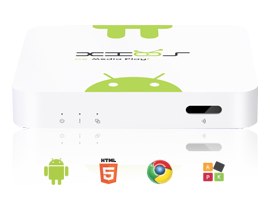 The Android beta is optimized for Pivos Technology’s new Xios DS Media Play device, which runs Android 4.0 on a Cortex-A9. Several new media players, including Oval Elephant’s Android TV Box, have already announced XBMC compatibility. On Oct. 22, the Register reported that XBMC-focused development firm Pulse-Eight acquired assets from failed DVR appliance firm TVonics, and plans a new XBMC for Android set-top.
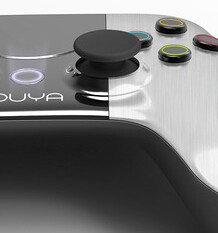
XBMC for Android has also been endorsed by the open source Ouya project. This successfully funded Kickstarter project expects to ship its hackable, game-oriented Android 4.0 media player — complete with a custom game controller by the spring of 2013.
While the hype seems excessive at this early stage, all signs are positive. Not only has Ouya raised millions in funding, but over 1,000 developers have shown interest in writing for the platform. In addition, some 50 companies are looking into distributing the cube-like device, according to the project.
High-end: Google TV
On the high end, Google TV devices from Sony, LG, and Vizio provide more sophisticated TV integration features, including universal search across TV and Internet channels, overlay displays, and support for attached DVRs. This year, Google signed up new partners such as Vizio and Hisense, and the first $99 Google TV set-top debuted with the arrival of the Vizio Co-Star.
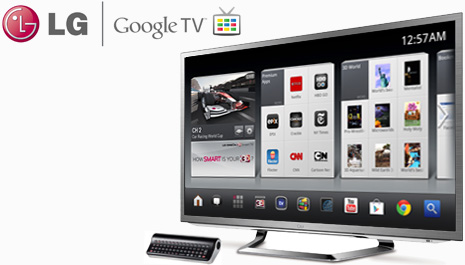 One new partner, LG, is reportedly unhappy with sales, especially considering the licensing fees it pays Google. On Oct. 24 WebOS Nation reported that at the CES show in January, LG will announce a partnership with HP spin-off Gram to bring Open WebOS-based Smart TVs to market.
It’s unclear how hard Google will push the struggling Google TV platform. On the one hand, it could give one last big splash with a voice-enabled version 3.0 and possibly its own Motorola-built STB. Or on the other hand, as some have rumored, it could sell off Motorola’s STB unit, and possibly close down Google TV altogether.
Earlier this year, Google unveiled an entirely separate high-end Android product called the Nexus Q. However, the stylish, but over-priced Android media player has already been sent back to the drawing board.
Cable-ready OTT STBs
As we explored earlier this month, Android is also making its way into some Over-The-Top hybrid OEM products that combine IPTV with traditional cable and satellite TV programming. Panasonic has built an Android-based KDDI cable box that will go live 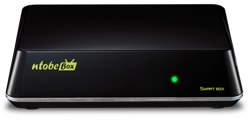 soon in Japan, and ZTE is working on a similar device for China.
Innodigital recently unveiled an nTobeBox OTT device that will run Android 4.0 media player on a quad-core processor. The device uses Kinect-like gesture recognition technology from EyeSight, including hand gestures and hand tracking, all tracked via a 2D camera.
Cable companies are hesitant to turn their interfaces over to Google, just as they have so far eschewed partnership proposals from Microsoft and Apple. Yet, they may be somewhat more inclined to try out Android, which is less controlled by Google than Google TV.
Smartphones and Tablets
All the solutions listed above face the challenge of producing a consumer-friendly remote device for navigating Android. The arrow-pointer IR remotes that ship with some Android media players prove awkward with the touch-oriented Android. Google TV devices and some of the Android media players offer 3-in-1 motion-sensing remotes, touchpads, and keyboards, but they all have their own limitations, and often add to the price.
A simpler solution is to replace both media player and remote with an Android smartphone or tablet. With the proper HDMI mirroring app, a sufficiently long HDMI cable, and an adapter to match a TV’s full-sized HDMI ports, an Android media player is born. With a WiFi-ready Smart TV, some Android devices may also be able to replace the cable with WiFi.
In other words, even if Google TV and the other Android TV boxes falter, Android could still play a big role in the converged TV picture.

 Specifically, I’m looking for someone to help with:
 As things continue to heat up on the open source gaming front, Valve is preparing for a beta test of the Linux version of its popular Steam service, which Valve has promised to deliver