
Tiffany from marketing may seem like the furthest thing from a CIO or IT manager. Surprise! She may already control a larger IT budget than them combined.
Read more at Enterprise Open Source Toolkit
Until recently, most Android-based TV products have used the Google TV platform. But lately we’ve seen an explosion of low-cost media players designed to access the web and run Android apps on TV with plain old Android.
 Few of these products compete directly with Google TV, but rather fill in the low end of the market. Typically, the new players are sub-$100 devices from low-profile Shenzen manufacturers aimed at emerging markets, although several dozen are also available for retail sale in the U.S. Most of these vendors — and their customers — are unable or unlikely to invest in Google TV, which has been sold primarily by high-end TV vendors.
Now that Vizio has paved the way for more affordable Google TV set-top boxes (STBs) with its $99 Vizio CoStar, a broader selection of consumer electronics vendors are considering Google TV. Yet, as Google TV continues to struggle, they are more inclined to try their own Android TV products, thereby avoiding Google’s licensing terms.
Unless Google TV takes off, the move to Android makes sense. After all, vendors can’t very well license their own Apple TV or Microsoft Xbox products. Embedded Linux is certainly a valid option, as proven by popular IPTV devices like the Roku boxes, but consumers increasingly want to run all their familiar Android apps on the big screen, and use their Android mobile devices in concert with TV players.
In 2013, the choice of a pure Android TV device should become easier thanks to the currently beta-stage, open source XBMC for Android. Already several Android set-tops are expected to run this mature home-theater alternative to Google TV, including the open source Ouya gaming device. If Google TV doesn’t turn the corner soon, we can expect to see more established vendors create a new mid-range market of $100-$150 Android STBs running XBMC.
Android is something of a longshot in converged TV, but the market is still in its adolescence. The Android contenders join a host of technology firms interested in exploiting the Internet video craze, including Microsoft’s Xbox, Apple TV, and TV vendors selling predominantly Linux-based “Smart TVs.”
According to a recent Forrester survey, some 32 million U.S. households watch online video on a TV set, up from 25 million in 2011. Most of these appear to be using a Smart TV or a game console like the Xbox 360. An Oct. 17 report from DisplaySearch projects that Smart TVs will grow to 15 percent of global TV shipments in 2012.
Android TV options can be broken down into the following categories, including options based on the Google TV platform: low-end, sub-$100 media players; HDMI sticks; high-end, Google TV-based devices; cable-ready Over-The-Top STBs; and smartphones and tablets. Next week we’ll explore each category in depth and assess their roles in the TV ecosystem and potential for success.
 LinuxCon Europeis approaching fast. We’ll be gathering in Barcelona, Spain November 5-7, 2012 to help developers, SysAdmins and business executives connect and collaborate while having a great time. One of this year’s keynote spakers is Dave Engberg, CTO at Evernote. He’ll be sharing a story with LinuxCon attendees about how his company designed a a system for millions of users with Linux and open source best practices and why it didn’t fit the cloud model. Here he shares with us more details about what we can expect from his keynote, as well as his thoughts on cloud computing and collaborative development.
You’re going to be speaking at LinuxCon Europe about Evernote’s service architecture. Can you give us a little more detail on what we should expect?
Engberg: At Evernote, we approach architecture using the principle of Minimal Viable Cleverness. Systems tend to be more stable and cheaper to maintain when you use standard methodologies and stable tools. So we try to only innovate where absolutely necessary.
At LinuxCon Europe, I’ll explain how we designed a system for tens of millions of users using 95 percent open source best practices and 5 percent innovation. This required identifying the unique characteristics of our application that don’t fit off-the-shelf solutions, and optimizing a deployment around those characteristics.
Finally, I’ll compare the costs of our infrastructure to an equivalent cloud solution to show why we feel that our particular service is one of the few that doesn’t fit the cloud model.
Tell us about Evernote. What value does it place on Linux and how does the company use and contribute Linux and the community?
Engberg: When I was building Internet services 15 years ago, we’d consider a number of options for operating systems and software. In 2012, you’d need to have a very strong justification to use anything but Linux. It now has the stability and maturity to handle most service tasks, and it would be hard to find experienced staff to run a service on any other platform.
Evernote has contributed to a few open source projects (like Apache’s Thrift), but our use of Linux is extremely vanilla; we’re using unmodified Debian Stable in almost all of our 400+ servers. As a result, we haven’t had much to contribute back to the Linux community other than a few “how we do it” posts on our Tech Blog. One good example is Matt Ackerman’s postdescribing how we automate our build processes with Preseed and Puppet.
What is your take on the accelerated pace of cloud computing deployments this year? How important is open source to this market?
Engberg: Cloud computing and open source go together like chocolate and peanut butter.
The existence of mature open source virtualization systems like Xen and KVM on Linux have enabled the rapid deployment and growth of large-scale cloud environments. It’s extremely easy to build robust networks of virtualized servers.
On the flip side, the users of cloud platforms have a strong incentive to use open source software on the cloud infrastructure. Commercial software vendors have had a much harder time shifting from a 1999 software licensing model with hardware-specific activation keys and other business practices that aren’t friendly for fluid cloud management.
How do you think the rise of collaborative development for building software is impacting the application and services market? What can developers do to take advantage of this opportunity?
Engberg: I think the market is still trying to figure out the right balance between the flexibility of the collaborative development model and traditional business needs like accountability and maintainability. Businesses may be able to get a great deal by doing some shopping in Eric Raymond’s Bazaar, but they’ll also want the company payroll to be run by someone who they can yell at when they have problems.
How do you think the consumer cloud market differs from the enterprise cloud market?
Engberg: Enterprises have been running applications on network-accessible servers for many years. For most businesses, moving to hosted “cloud” applications is just a finance question: Does it cost more or less to run corporate messaging on Google Apps than an in-house Exchange server? In most cases, enterprise clouds are just a more flexible and cost-effective way to perform the same tasks as before.
Most consumers, on the other hand, never ran their own servers. For them, cloud applications represent a more significant shift to allow them ubiquitous access to entirely new categories of applications. Consumers don’t think of cloud applications, such as Evernote, as just cheaper versions of desktop utilities they had in 2002. For them, “the cloud” is more of a sea change.
We’re looking forward to seeing Dave’s keynote in a couple weeks! To register for LinuxCon Europe, just visit The Linux Foundation events website.
This week’s top open source cloud headlines raised a few interesting questions. Does OpenStack need a Linus Torvalds? This week’s top open source cloud headlines raised a few interesting questions. Does OpenStack need a Linus Torvalds? And can Eucalyptus be the next billion-dollar open source company? Announcements from Rackspace and OpenNebula are also featured, along with an inside look at Cisco’s OpenStack Edition.
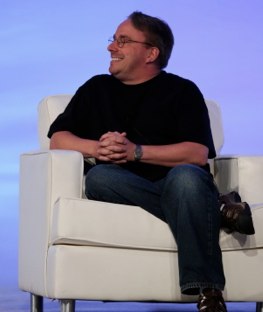 Does OpenStack Need a Linus Torvalds?
ComputerWorld
Good question: Does the open cloud platform need a “decider” in order to succeed? Five potential OpenStack leaders are proposed, including OpenStack Foundation executive director Jonathan Bryce.
Looking For The Next $1 Billion Open Source Company
ReadWriteWeb
Brian Proffitt includes open cloud platform Eucalyptus as a candidate to become the next Red Hat.
Rackspace and Hortonworks Team Up on Easy Hadoop via OpenStack
OStatic
As we wrote on Linux.com last week, the open cloud is ready for Hadoop and this seems to be the first official alliance between an open cloud platform and Hortonworks, the open source software company that oversees Hadoop. Rackspace will release an OpenStack public cloud that’s Hadoop-ready.
Inside Cisco’s Open Source OpenStack
Enterprise Networking Planet
Last week before the OpenStack Summit, Cisco announced its new OpenStack Edition. This week Sean Michael Kerner explores why Cisco is involved with OpenStack and what to expect from its flavor of OpenStack.
OpenNebula 3.8 Improves Hypervisor Support
The H
The latest version of OpenNebula provides better integration with VMware and KVM hypervisors.

Sure, it’s not the first elite cybercrime-fighting team we’ve heard of, it’s also not everyday you hear the likes of Intel, Lockheed Martin and AMD buddying up on research. The companies are looking to address the “complex problems” in cyber security, with the private, non-profit group (which also includes Honeywell and RSA/EMC) aiming to work somewhere between government-funded security research and commercial products already out there. The Cyber Security Research Alliance is already in talks with NIST, and plans to launch a security research symposium early next year. The CSRA will also start tracking cyber security R&D, “prioritize” those aforementioned challenges, and hopefully come together for the greater good.
Continue reading AMD, Intel and RSA team up, form the Cyber Security Research Alliance
Permalink  Security Week |
  Cyber Security Research Alliance | Email this | Comments

The Raspberry Pi is a great little cheap computer, but it doesn’t have a lot of interfacing options to connect external peripherals. If you want a low-footprint solution that looks great sitting on the Raspberry Pi itself, DIYer Joe Walnes outlines how to make the “Pi Crust” breakout board. More »