
Calxeda buck the ARM server trend by focusing on their 32-bit product.
Read more at ZDNet News
In recent months, we’ve seen a surge of Android media players ranging from basic, sub-$100 mini-PCs and HDMI sticks from China to a smaller number of more advanced, primarily Google TV devices. Building upon a foundation established by Google TV, Apple TV, media-savvy game consoles such as Microsoft’s Xbox, as well as numerous Linux-based players like Roku, the media players let users stream and download video and other multimedia from the Internet for playback on TV. Some offer built-in support for online video services such as Netflix, while most simply project Android onto a TV screen, letting users browse the web, run apps and sign up for services via specialized remotes.
 None of these devices, however, replicates the function of a cable or satellite box. With the exception of the Google TV products offered by Dish TV, they are sold independent of cable- and satellite networks and lack any integration with their set-top boxes (STBs). In fact, most offer much the same (or less) functionality than you would get by attaching a high-end Android tablet or smartphone to a TV via HDMI to run videos on the big screen.
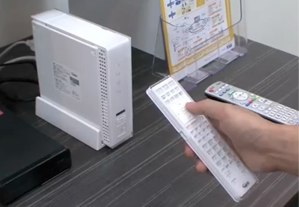
A new breed of Android STB is arriving, however, that does it all, providing an Android media player and web-browsing experience while incorporating traditional cable access technology. One of the first Android versions of these Internet-ready set-tops, commonly referred to as hybrid Over-The-Top (OTT) STBs, was announced in July by Japanese cable provider KDDI. Built by Panasonic, the Android 4.0-powered Smart TV Box, will be available this fall for KDDI’s Japanese customers.
Equipped with three USB ports, an SD slot and a WiFi access point, the Smart TV Box incorporates media player, DVR and cable access functionality in a single unit. The customized Android interface provides channel guides and various pay services from KDDI, plus access to Google Play and other app markets.
On Oct. 8, ZTE announced what appears to be a similar Android OTT set-top in conjunction with European TV services giant Nagra. Few details are known, but according to Bloomberg, it will support video calling, 3D TV, and HTML5 web browsing. In June, Vestel demonstrated a somewhat similar Android set-top aimed at cable providers, but has yet to announce any customers.
Cable access providers such as KDDI hope to meet the growing demand among users whowant a common interface to watch broadcast TV while also viewing Internet videos and running Android apps. The integrated interface also enables carriers to provide something like Google TV’s universal search over Internet and TV content.
Cable companies also see an opportunity to brand Internet shopping and create lucrative tie-ins with media and advertising. In other words, they seek the fulfillment of the 20-year old Holy Grail of interactive TV.
The traditional TV world still commands far greater advertising and subscription revenues than online video services. According to Digital Trends, Comcast earned $14.8 billion in TV revenues in the first quarter of 2012 based on 22.2 million subscribers while Netflix generated only $870 million in the same period based on 23.4 million subscribers.
For 20 years, tech companies have longed to get a piece of that action. Established TV forces are well aware of the IPTV trend, however, and are trying to co-opt it by offering their own Netflix-like online video services, increased DVR and on-demand services and interaction with mobile devices. Yet most access providers are hesitant to update their typically abysmal interfaces with Android or iOS.
Big cable has been especially wary of letting advertising and OS giant Google invade its turf, but it has also kept its distance from Apple (Apple TV) and Microsoft (Xbox). Apple keeps trying, though — in August, the Wall Street Journal reported that Apple was in talks with cable companies over Apple TV integration.
Among Android media players, Google TV devices have so far offered the greatest integration with traditional TV. Google has partnered with “Smart TV” vendors such as Sony and LG on Google TV. But aside from satellite provider Dish TV, it has been shunned by access providers. Dish TV resells existing Google TV devices that have been tweaked to offer some control over its receiver’s DVR functions.
Unlike Google, Panasonic and ZTE do not dictate the path of Android, and both are global leaders in STBs and IPTV middleware, making them less threatening to the TV industry. Still, we are unlikely to see a flood of these hybrid Android boxes, as cable companies are wary of ceding control to platforms such as Android.
Google’s acquisition of STB manufacturer Motorola Mobility could help pry open some doors. However, if the rumors that Google is trying to sell off Motorola’s STB business are true, Google may have decided cable companies are not likely to resell Google TV devices, let alone integrate the technology.
Some have speculated that Google will shut down Google TV. The addition of new hardware partners, including Vizio and China’s Hisense, however, suggests otherwise.
Google also continues to update the platform. On Oct. 8, the company added streamlined access to Google Play media content, and then leaked and retracted a video showing the upcoming Google TV 3.0. The demo revealed voice-activated controls and the ability to select a video on an Android device and send it to Google TV.
Even if tech companies can’t break into the lucrative TV business as it exists today, they’re well positioned for the future. With the rapid growth in online video viewing, the significance of a full-fledged Android-based cable box may be somewhat short-lived,
Consumers are increasingly cutting the cord from cable TV, rebelling at high subscription rates, poor service and arcane interfaces while drawn to the portability, interactivity, and convenience of the web. An Accenture survey in January found that consumers watching broadcast or cable TV in a typical week on televisions fell from 71 percent in 2009 to 48 percent in 2011. TV purchases were also said to have fallen slightly during that period.
Also in January, Deloitte estimated that 9 percent of U.S. consumers have terminated their cable/satellite subscriptions and 11 percent are considering it “because they can watch almost all of their favorite shows online.” According to a recent Park Associates study, TV sales are increasingly dominated by Smart TVs, which offer the equivalent of a built-in media player — typically Linux-based — for web access.
These trends, along with increased use of HD-ready mobile devices, give hope to tech firms with TV dreams. New IP-oriented platforms such as Google TV are less burdened by legacy technology and the walled garden mentality than the cable systems. Assuming broadband keeps getting broader, and bandwidth remains cheap and available — and assuming the tech firms can gain access to premium video content — they all have a shot to go it alone.
Over the past three years, Tushar Kute has converted from an occasional Linux user to a Linux evangelist.

The native of Pune, India, encountered Linux for the first time as an engineering student, running it as an occasional alternative to Windows. But he didn’t fully embrace it as an operating system until he began teaching microprocessors and operating systems as a graduate student and assistant professor at the Sandip Institute of Technology & Research Centre in Nashik, India.
Going straight into the educational sector after graduating from college meant Kute didn’t gain the real-world experience that comes from working in the industry, he said. Converting to Linux has helped him get hands on with research and development and greatly increased his understanding of computer systems.
“I got inspired by various Linux & Open source developers & users. As it follows my ideology that, `Windows of knowledge are wide and open!” said Kute, via email. “I am passionate about programming and especially, C Programming! Linux has given me everything that I wanted in programming. As Linux is (an) open source operating system, I can study everything about a computer that I want to know.”
He wants to give his own students the same empowering experience and has convinced the university to slowly begin adjusting its curriculum. Within two years, Kute has helped transform the Information Technology department from a proprietary and Windows-based curriculum to one based largely on Linux and open source.
“Our students get approached & involved in Linux and all kinds of open source software,” Kute said. “They got a good platform for research & development (and) I am happy about their efforts & progress.”
To support his efforts, Kute started the Sandip Information Technology Research Collaboration, an online community for students to blog about their projects and breakthroughs on Linux. And next year he hopes to start a citywide Linux users group in Nashik, India to hold workshops and seminars.
He’s now working on his graduate thesis, “machine learning techniques to improve Linux process scheduling,” based on an IEEE paper written by professors at University of Hyderabad, India.
In addition to pursuing his masters degree in engineering and computer science, Kute is developing an online exam for testing students’ knowledge of the Linux operating system that will replace the university’s current Windows-only test.
He joined The Linux Foundation as an individual supporter to stay up-to-date on developments in the industry. His hope is to someday publish Linux trade journals in India and attend a LinuxCon in his home country.
“I know that India is not much aware about the use of Linux as like western countries,” he writes. “You have provided lots of benefits to me as an individual member but it is not possible for me to take advantage of (them) all!”