Home Blog Page 1013

​Europeans to Win the Right to Sue in US Courts Over Privacy Breaches

Europeans will soon be able to sue US authorities that improperly handle their personal data in local courts.

Europeans whose data has been mishandled by US authorities will soon have the right to take legal action in the US courts. EU citizens’ right to seek legal redress in the US comes as part of a new EU-US data protection agreement covering instances where EU citizens’ personal data is involved in US criminal and terrorism investigations. The deal brings rights of EU citizens in line with those of US citizens, who can sue in European courts for similar privacy breaches.

Read more at ZDNet News

Human Interface Guidelines (HIG) for the Unix Shell

HIG

As a command line person myself, I was very intrigued when I saw Klaatu‘s talk, HIG for the Unix Shell, on the upcoming All Things Open schedule.

While I have always been attracted to the Unix/Linux shell because of its beautiful simplicity—yes, really—it is always nice to connect with someone who shares that appreciation. Klaatu, however, has gone further than mere appreciation by defining some of the attributes that contribute to the elegance of the shell. 

Read more at OpenSource.com

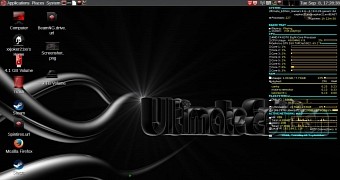
Ubuntu-Based Ultimate Edition 4.6 Gamers Distro Is the Ultimate Entertainment System

gameTheeMahn, the creator, maintainer, and lead developer of the Ultimate Edition project (formerly Ubuntu Ultimate), had the pleasure of announcing the immediate availability for download of Ultimate Edition 4.6 Gamers GNU/Linux distribution.

Being based on the Ubuntu 15.04 (Vivid Vervet) operating system, Ultimate Edition 4.6 Gamers comes now with more than one of the biggest collections of Linux games, as it includes a pre-configure version of the popular XBMC Media Center…

Software-Defined Radio May Cause FCC to Restrict WiFi Modifications

NEWS ANALYSIS: While the concept of a software-defined radio may sound like confusing techno-babble, such radios are almost certainly in devices you already use, especially WiFi routers. 

The comment period for the Federal Communications Commission’s notice of proposed rulemaking (NPRM) on software-defined radios was supposed to end on Sept. 8. But the FCC has extended the comment period because the topic is complex, and the parties involved need time to work.

Read more at eWeek

Google’s VP9 Codec Coming to Microsoft’s Edge Browser

Microsoft has started developing support for Google’s VP9 codec in its Edge browser.

Initial support will be restricted to streaming through the browser when used with MP4 or AAC audio. Microsoft is considering adding additional audio codecs—Opus is often used with VP9, and Microsoft is also considering Ogg and Vorbis support—and extending support to support local playback. Microsoft intends to support both software decoding and, where possible, hardware decoding.

Read more at Ars Technica

Is It Time for The Linux Foundation To Be Renamed? Interview with Jim Zemlin

Jim Zemlin, Executive Director of the Linux Foundation, discusses his organization’s expanding efforts to help enable multiple open source foundations. 

When Jim Zemlin helped to start the Linux Foundation back in 2007, it was an organization with a singular purpose: to help grow and enable the Linux ecosystem. Now in 2015, the Linux Foundation is more than just Linux, and has helped to enable multiple open source foundations and efforts, including the Cloud Foundry Foundation, the node.js Foundation, the Open Container Initiative, the OpenDayLight, and Let’s Encrypt projects. In a video interview, Zemlin discusses foundation building and talks about why the Linux Foundation is likely to keep growing.

Read more at Datamation

Top 5 Upcoming Linux-Based Smartphone Operating Systems

As today is the much anticipated day of the new iPhone 6S and 6S Plus unveiling I thought it would be interesting to take a look at the most anticipated smartphones based on the Linux operating system instead.

Ubuntu Phone

Of course when most people think of Linux-based phones the first thing that comes to their minds is Ubuntu. Ubuntu is in plans to create a touch-optimised interface which will work on not only smartphones and tablets but also TV’s. Not meant as a separate operating system, the intention here is to have one version of the Ubuntu Linux distribution. Ubuntu’s Unity is designed to automatically resize and adapt to the screen size of your device whether you’re using a PC, tablet, TV or phone. Essentially, Ubuntu’s vision is to create a full desktop operating system within a mobile operating system, meaning you could dock an Ubuntu phone and have access to a full Linux desktop running on that device.

Jolla Sailfish

A little history lesson for you: before joining the Windows movement, Nokia was in preparation of a Linux-based smartphone operating system called Maemo. Eventually merging with Intel’s Moblin project and renamed MeeGo, the Nokia N9 was the only MeeGo phone Nokia ever released. After ditching MeeGo and choosing instead to bet on Microsoft’s Windows Phone, many members of the MeeGo team left Nokia and formed a new company. Welcome Jolla. Linux fans rejoice as Sailfish, like MeeGo before it is essentially more of a standard Linux system with apps able to be created with Qt and you can even launch a terminal and install Linux package files. Better still, it even has some compatibility with Android apps.

Firefox OS

This is the new OS I am most excited about as I’ve been a big fan of Firefox for years. It’s almost as handy as Chrome but they seem to have a more ethical stance than Google on a lot of things in the Tech world. Based on the Firefox browser and Gecko rendering engine with every app using web technologies including HTML5 there’s a lot to be excited about. Mozilla is launching Firefox OS devices in developing markets first. I plan on cashing in my old phone as soon as one is available.

Samsung Tizen

Tizen I actually the umbrella of the Linux Foundation with both Samsung and Intel being on its Steering Committee. Basically a backup operating system for Samsung, Tizen looks almost identical to Galaxy phones. The problem with the Tizen OS is that it isn’t compatible with Android, meaning if or when Samsung chooses to run with its own operating system, they would need to convince Android app developers to create apps for Tizen.

Open webOS

Widely heralded as ahead of its time, Palm’s webOS, seen on the Palm Pre and Palm Pixi has a lot of history with HP acquiring the technology in 2010 only to change their minds about further developments and instead open-sourced much of its code as ‘WebOS Community Edition’, with the Open webOS project taking on the code and further developing it as a community project. Just 2 years ago LG licensed it to use on their smart TVs. While now solely on LG TV’s we’re hoping that this OS, originally intended for smartphones will soon see it’s time again

Today’s Web Architectures Call For Private Networking

servers-logoAs more developers turn to a microservices architecture for building web-scale applications, data centers must evolve to meet new networking requirements.

Servers.com’s hosting and cloud service reflects this new approach to software development by offering a uniquely secure and performant combination of public and private networking to its customers, according to Nick Dvas, Servers.com Project Manager.  

“Once an application goes beyond a single server, private networking is required,” Dvas said. “E-commerce web sites tend to scale out, and require private networking for this. The same is true for online game developers — they can have enormous data flows in the private network.”

Servers.com’s 1,500 Gbps wide-area network includes a private multi-homed backbone, with connections to major Internet Exchanges (IXs) and Internet Service Providers (ISPs), designed for low latency, fewest hops, and stable round-trip times. Inside its data centers, each server has a 20-Gbps connection to the company’s private network, and a 20-Gbps connection to its public network.

With two locations in the United States and Europe — housing more than 2,500 servers on the launch and continuously increasing the stock, Servers.com provides responsive, scalable hosting and cloud service for high-load websites, e-commerce, developers, and data-intensive customers of any kind.

Servers-datacenter-2Servers.com is an “all under one roof” service from XBT Holding S.A., combining XBT’s global hosting and network solutions offerings together so customers can browse, mix, compare, and choose through a single source. Their services are uniquely built from the ground-up for next-generation software architectures.

“Early systems for web applications were ‘tightly built’ — monolithic,” says Dvas. “Today, by contrast, software systems tend to be more ‘loosely’ built. A large application consists of a collection of ‘microservices,’ implemented at the infrastructure level as either containers or virtual machines, interacting with each other.”

“Instead of one server scaling up, a customer’s application has dozens of small servers scaling out. And many of these servers exchange data very intensively.”

At the same time, says Dvas, “We are having more and more powerful server hardware, capable of running hundreds of virtual machines and containers — and able to use more and more network throughput. Microservices may be running on separate physical servers, in different racks, even physically distributed, with applications, databases, storage and other pieces running at two or more of the company’s international data center locations.

The network requirements to support these web applications include, according to Dvas:

  1. “A stable network — we don’t want the internal interactions between different components on the system to be broken.”

  2. “Low latency, because microservices require fast interactions between the components.”

  3. “We expect the network to have a high throughput, because we have a high data exchange.”

  4. “Security is a must for the network and users should be confident that the information being exchanged, say, between an application and a database, does not leave the customer’s private network, and will not be shared with public systems.”

Part of Servers.com’s solution is private networking, between and inside its data centers, in addition to its public network. “A private network for a customer is essential for almost any application,” says Dvas. “For example, connecting the data store to the cache server, for databases replicating with each other, and for internal monitoring, orchestration, and management of various sub-systems.”

Even for a basic web site that includes a database and an application, “If you put them both on the same server, not only will they fight over resources of a single server, your database is vulnerable to possible attacks because it is on a web-facing computer,” Dvas points out. “And when you decide to put them on different servers, you don’t want data between them going over the public network. First, because your data will be insecure. And second, because data flows between the web app and the database can be much greater than data flows to the outer world — and you don’t want to pay for this usage.”

Servers.com’s private network is isolated on a hardware level from its public network connections, Dvas notes. “For its private network, Servers.com has dedicated switches and equipment. This means that no one from the public networks can access our customers’ private networking. And each of our private networks is isolated on a logical level as well, so they are secure from each other.”

To help keep latency due to traversing network cables to a minimum, “we try to have each customer’s servers as physically close to each other as possible,” notes Dvas.

To assure network stability and availability, “Both our private and public networks are redundant on every layer, with no single point-of-failure,” says Dvas.

One way that the company is looking to improve its private networking functionality even further, says Dvas, is by providing the access at OSI Level 2 (Data Link), rather than the current access, which is Level 3 (Network Layer). “We are studying ways to do this,” says Dvas. “It’s a requirement for clustering tools like Xen Cloud Platform, Jelastic Platform-as-Infrastructure, and VMware.

“Throughput and latency in our private network is definitely better than the market average,” claims Dvas. “Network stability is more important than anything else. You can survive longer latency, but if it is not stable it cannot be used.”

Raspberry Pi Gets an Official ​7-Inch Touchscreen

The cheap micro-computer now has a touchscreen to build a basic tablet or control your Pi-powered creations. 

How touching: the cheap-as-chips Raspberry Pi mini-computer now has an official 7-inch touchscreen for building a basic tablet or control panel. The touchscreen comes from element14, the British company behind Raspberry Pi.

Read more at CNET News

Ubuntu-Powered Erle-Spider Land Drones Now on IndieGoGo with Promotional Price

droneThe Ubuntu-powered land drone Erle-Spider is now on IndieGoGo and its makers are trying to raise enough money for manufacturing.

There are hundreds of flying drones out there, and they are exciting, of course, but there are hardly any land drones. They are slower, and they might not seem all that interesting, at first, but they have a lot of potential, and not just for fun-related activities. 

Read more at Softpedia Linux News