Home Blog Page 1039

Ubuntu Devs Willing to Work on GNOME Software to Replace Ubuntu Software Center

Ubuntu-software-centerThe Ubuntu Software Center managed to be the center of news stories after the Ubuntu MATE project decided to ditch it as default (still available in the repos), and discussions about a possible replacement in the regular Ubuntu desktop have started once more.

Ubuntu Software Center is there, and it does its job, barely. It hasn’t been improved in the past couple of years, and with the exception of a couple of security issues that have been fixed, the application has remaine… (read more)

Linux Kernel 4.2 RC5 Is Out For Grabs, Linus Torvalds Wants Things to Calm Down

LinuxRCOn August 2, Linus Torvalds announced the release and immediate availability for download and testing of the fifth RC (Release Candidate) version of the forthcoming Linux 4.2 kernel series.

According to Mr. Torvalds, it would appear that the development cycle of Linux kernel 4.2 will consist of at least three more RC (Release Candidate) versions, because things are not calming down and… (read more)

Global Optical Transceivers Market Is Expected To Grow $9.9 Billion By 2020: Acute Market Reports

This 2014 optical transceivers market report has 575 pages as well as 177 data tables and figures. The vendors in the optical transceivers industry have to invest in high-quality technology and processes. The development of innovative products is essential to keeping and growing market share.

High-speed serial transceivers form the backbone of networks. Communications, servers and many other electronic systems depend on high-speed serial transceivers. Global adoption of the Internet is driving rapid growth of the mega datacenter. Data centers support online commerce, streaming video, social networking, and cloud services. Software as a Service (SaaS) is a primary offering.

Leading vendors offer a broad product selection. They are positioned with innovative technology. Optical module manufacturers address the needs of all major networking equipment vendors worldwide. Leading vendors have taken a leading role in transforming the data communications and tele-communications equipment market.

Access This Full Report @ http://www.acutemarketreports.com/report/optical-transceivers-market

The shift has been away from utilizing discrete optical components to leveraging the design and pay-as-you-grow flexibility offered by pluggable modules. Optical transceiver products are compliant with Ethernet, Fibre Channel, SONET/SDH/OTN and PON standards. They generally operate at data rates of 10 Gb/s, 40 Gb/s and 100 Gb/s.

Transmitter / Transceivers are capable of distances ranging from very short reach within a datacenter to campus, access, metro, and long-haul reaches. They feature outstanding performance. Units work over extended voltage and temperature ranges. They are positioned to minimize jitter, electromagnetic interference (EMI) and power dissipation.

Optical transceiver components are an innovation engine for the network. Optical transceiver components support and enable low-cost transport throughout the network. Optical transceivers are needed for high speed network infrastructure build-outs. These are both for carriers and data centers. Network infrastructure build-out depends on the availability of consultants who are knowledgeable.

Consultants with extensive experience are needed to bring optical component network design, installation, upgrade and maintenance into development. Optical components are being used to equip data centers, FTTx, metro access or core networks. They are used for long-haul and WAN.

A palette of pluggable optical transceivers includes GBIC, SFP, XFP, SFP+, X2, CFP form factors. These are able to accommodate a wide range of link spans. Vendors work closely with network planners and infrastructure managers to design high speed optical transport systems.

According to Susan Eustis, lead author of the WinterGreen Research team that prepared the study, “The DP-QPSK is the industry-backed modulation scheme for 100Gbps.Commonality between 40Gbps and 100Gbps coherent designs bring a design choice to the issue is relative costs. The economics of 40 Gbps versus 100 Gbps coherent are matters of comparison. If users buy 40 Gbps and an economical 100 Gbps coherent design appears, 40 Gbps coherent get the required market traction to create economies of scale that market the 40Gbps devices viable in the market.”

Designers are shrinking existing 40Gbps modules, boosting 40Gbps system capacity. The 300-pin LFF transponder, at 7*5 inch, requires its own line card. Two system line cards are needed for a 40Gbps link: one for the short-reach, client-side interface and one for the line-side transponder.


Korora 22 Linux Officially Released Based on Fedora 22, Drops Support for Adobe Flash

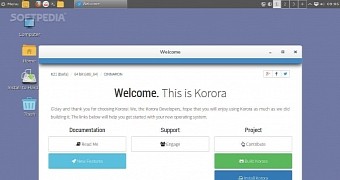
Korora-22On the first day of August, Chris Smart was more than proud to announce the release and immediate availability for download of his excellent Korora 22 Linux distribution based on the well-known and highly acclaimed Fedora 22 operating system.

Dubbed Selina, Korora 22 comes with all the latest and greatest open-source Linux desktop environments, including KDE Plasma 5, GNOME 3.16, C… (read more)

The New AMDGPU Patches Show More AMD Developer Involvement

The AMDGPU scheduler patches published this week show more AMD developers involved than once was the casefor the open-source AMD Linux driver stack…

Read more at Phoronix

How To: Check if Username and Password are Valid using Bash Script

It’s time to create a bash script that will take inputs – Username and Password, from the user and validate if the username-password combination is correct. There will be two essential steps involved in this script- check if username is valid and in case username is valid, check if password associated with that username is valid.

Let’s start scripting!

1. Check if username is valid

This, surely, is the easier part of the script. Validating a user is very straight-forward, as you can use id command with option -u or read /etc/passwd (using ‘grep‘ command) file to do so (Read about /etc/passwd file format here). If the exit status is “0”, then it’s a valid user, else it’s not. For those who are new to bash scripting- Exit status can be checked using echo $?.
 
Read more on YourOwnLinux

/etc/shadow file format in Linux Explained

Full article here

In one of the recent articles we’ve published, we’ve learned the file format of /etc/passwd file, which stores one line entry for each user that can access the system. As one of the fields in each line of the /etc/passwd denotes whether the password for that user is stored in /etc/shadow file or not, it can easily be depicted that the actual passwords (of course, in the encrypted form) are stored in the /etc/shadow file. This article will help you learn more about /etc/shadow file format in more detail.

/etc/shadow File Permission

To begin with, let us observe and compare the file permissions on both /etc/passwd and /etc/shadow files:

MyLinuxBox root ~ > ll /etc/passwd
-rw-r--r--. 1 root root 1725 Jul 31 23:02 /etc/passwd
MyLinuxBox root ~ > ll /etc/shadow
-rw-------. 1 root root 1187 Jul 16 09:10 /etc/shadow
Things are pretty clear- /etc/passwd is world readable and /etc/shadow can only be read by the root user. This is because, had the password were stored in /etc/passwd file, even in encrypted format, anyone could see, decrypt and use them pretty easily. Thus, passwords are actually stored in /etc/shadow file which can only be accessed by root or superuser and not made open to the entire world, as there is a huge risk factor involved in it.
 
Read more on YourOwnLinux

3 Best Free Clojure Books

Clojure is a dialect of the Lisp programming language. It is a dynamic functional general purpose programming language that uses the Java Virtual Runtime as its platform, combining the approachability and interactive development of a scripting language with an efficient and robust infrastructure for multithreaded programming. Clojure features a rich set of immutable, persistent data structures, first-class functions and dynamic typing. Clojure programs are composed of expressions and written in terms of abstractions.

<A HREF=”http://www.linuxlinks.com/article/2015080201094651/ClojureBooks.html“>Full article</A>

Distribution Release: Zorin OS 10

The developers of Zorin OS, a desktop distribution based on Ubuntu which strives to present a friendly interface for people transition from Windows, have announced the release of Zorin OS 10. The new release is based on Ubuntu 15.10 and features a new visual style with new fonts….

Read more at DistroWatch

Adobe Brakets 1.4 An Awesome Text Editor Released, Install In Ubuntu 15.04/14.04 Or Derivatives


Adobe Brakets 1.4 An Awesome Text Editor Released, Install In Ubuntu 15.04/14.04 Or Derivatives

Adobe Brackets is a text editor developed by Adobe developers. You will like it if you are a web designer. Brackets window splits into two parts vertical or horizontal both and this unique user interface helps managing multiple documents simultaneously. You can easily install Adobe Bracketsin Ubuntu, Linux Mint and other derivatives.
 

Read At LinuxAndUbuntu