Home Blog Page 1101

Rafael Laguna from Open-Xchange: Make money with Open Source software

Rafael Laguna, CEO of Open-Xchange, the producer of the groupware Open-Xchange, explains in this article that the Open Source industry and its contributors have evolved from “ponytailed computer geeks” to worldwide successful companies and IT professionals who are paid for their contribution to Open Source software which led to the rise of this industry.

The complete article can be found in the Univention blog.

Synergy – Keyboard and mouse sharing utility that lives up to its name

Synergy works really well, it’s simple to use, and is an essential utility if you want to control local computers with a single mouse and keyboard.

The latest version of Synergy is 1.73; the application continues to be actively developed. Ubuntu Software Center offers an older version (1.62). But to upgrade to the latest version you now need to stump up $10 for the basic edition, $29 for the pro version (which includes SSL encryption), or compile the source code yourself. I’m not an advocate of open source software that charges money to download a binary with no other direct benefit. The developers of Synergy say this route is essential, as only 1 in 500 users were donating to the project. But as most individuals will not try to compile the source code, and with no free trial available, the latest version is essentially off limits without people having to pay. This isn’t a good model for the sustainable development of the project.

<A HREF=”http://www.linuxlinks.com/article/20150531034548316/Synergy.html“>Full article</A>

RDO Kilo Set up for three F22 VM Nodes (Controller+Network+Compute) ML2&OVS&VXLAN

Actually, straight forward install RDO Kilo on F22 crashes due to relatively simple puppet mistake. Workaround for this issue was recently suggested by  Javier Pena. Start packstack for multinode deployment as normal to get files require updates.  After first packstack crash update  /usr/share/ruby/vendor_ruby/puppet/provider/service/systemd.rb to include “F22”  (in quite obvious place)  on all deployment nodes and restart packstack on controller.

Complete text of article may be viewed here

Linux Support for Digital Video Broadcasting

Mauro Carvalho Chehab, the maintainer of the kernel’s media subsystem, has posted the first two in a series of articles on digital video broadcasting support in Linux. Part 1 gives an overview of how the devices and protocols work, while part 2 looks at digital TV network interface use. “Supporting embedded Digital TV hardware is complex, considering that such hardware generally has multiple components that can be rewired in runtime to dynamically change the stream pipelines and provide flexibility for things like recording a video stream, then tuning into another channel to see a different program. This article describes how the DVB pipelines are setup and the needs that should be addressed by the Linux Kernel.

Read more at LWN

Richard Stallman and Phil Zimmerman Underline Key Concerns With Tech Sector

Two of technology’s most pioneering developers have strongly criticised the current state of the industry, warning that the right to encryption is doomed and that users are exploited by the software that they use.

Open sourcerer Richard Stallman has painted a very bleak picture of today’s technology and communications environment, describing proprietary software as “malware”.

Read more at V3.

Carl Sagan’s Linux-Based Solar Spacecraft is in Trouble

The test flight of Carl Sagan’s LightSail craft is in jeopardy after a computer problem left it unable to communicate with its mission controllers. According to the Planetary Society, the hardware was launched into space with an older version of its Linux-based operating system, which shipped with a serious glitch. As the vehicle circuits the planet, it’s meant to send back a packet of data, but over the first two days, this file grew too big for the system to handle. As such, it crashed, although we mean that in the software sense, rather than the coming-back-to-Earth-with-a-bump sense.

Read more at Engadget.

openSUSE Tumbleweed Now Uses Linux Kernel 4.0.4

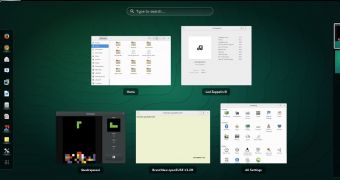
The openSUSE Tumbleweed distro has received another set of updates this week, and the distribution is now using Linux kernel 4.0.4, which is the most advanced version available right now.
openSUSE Tumbleweed is the rolling release version of the famous openSUSE distro, and it received numerous updates, including some of the latest bleeding-edge packages. Not too many operating systems out there have Linux kernel 4.0.4, but Tumbleweed is an … (read more)

Essential Guide for Tizen Web Application Development is Released

  The Essential guide for Tizen Web application development has been released. The document guides you on how to set up a development environment and essential information for developing and releasing your app for the Tizen-based Samsung TV. Learn how to Install the SDK and launching apps on the TV.   

Read more at Tizen Experts

All Supported Ubuntu OSes Receive Update for OpenLDAP Vulnerabilities

Ubuntu 15.04, Ubuntu 14.10, Ubuntu 14.04 LTS, and Ubuntu 12.04 LTS have been updated in order to fix a few OpenLDAP vulnerabilities that have been found.

OpenLDAP is the open source implementation of Lightweight Directory Access Protocol, and from the looks of it, OpenLDAP could have been made to crash if it received specially crafted network traffic.

“It was discovered that OpenLDAP incorrectly handled certain empty attribute lists in search requests. A remote attacker … (read more)

Wine 1.7.44 Works On More 64-bit ARM Support

Wine 1.7.44 is out this morning to end out the month of May for the Wine development community…

Read more at Phoronix