Home Blog Page 1131

The Companies That Support Linux: Fox Technologies

Mark Lambiase, CTO of Fox Technologies, Inc.Linux has long been regarded as a stable and secure platform for enterprise applications. And the recent explosion of container technology presents yet another way for developers to build securely on top of Linux, says Mark Lambiase, CTO of Fox Technologies, Inc.

The Linux container model “will provide for the opportunity to separate and segment applications from a shared OS model, which can provide both security and performance/configuration advantages,” Lambiase said.

Fox Technologies, which helps companies manage and maintain Unix and Linux systems with its BoKS ServerControl application, is contributing to such growth and innovation in the Linux ecosystem, in part, by becoming new corporate members of the Linux Foundation. (See the full announcement.)

“Having benefited so much from the Linux Foundation’s efforts, Fox Technologies feels this is a good way to give back to the community,” Lambiase said.

Here, he tells us more about Fox Technologies, the latest release of its server management software, why and how they use Linux, and technology industry trends in open source and security.

Linux.com: What does Fox Technologies do?

​Mark Lambiase: Fox Technologies has been in the business of ​designing and developing security and administration tools for Unix and Linux systems for over 20 years. The BoKS ServerControl application is a cross-platform account administration, access control and privilege management tool. The combination of features allows for positive and proactive controls of large and small Linux/Unix deployments, providing tangible economic and security benefits, allowing administrators to set, control and maintain policy. Often used to meet compliance requirements, BoKS ServerControl provides detailed information of the accounts, access and use of privilege on protected servers. 

BoKS is deployed by a number of the largest financial enterprises in the world, with deployments across tens of thousands of servers. BoKS is also used in industries with much smaller server deployments, such as power generation, where up-time, as well as regulatory compliance​ are critical.

How and why do you use Linux?

​Our development systems, build servers, CVS, intranet, bug-tracking system and other internal systems are all hosted on Linux.  FoxT developers tend to lead their development on Linux systems, porting to other Unix platforms after the functionality is built and tested. Linux and tools running on Linux provide the backbone of our development effort.​

Why did you join the Linux Foundation?

​BoKS ServerControl benefits from a number of Open Source projects, as well as the proliferation of Linux. Our developers have worked in the Unix space for over 25 years, and have enjoyed the benefits of the growth of the Open Source movement, and the development​ and growth of the various Linux platforms. Having benefited so much from the Linux Foundation’s efforts, Fox Technologies feels this is a good way to give back to the community.

What interesting or innovative trends in security are you witnessing and what role does Linux play in them?

​Linux offers enterprises the opportunity to tightly control how their servers are built, and what is running on them. When done well this can offer a stable and secure environment, especially important for critical applications. The adoption of virtualization ​technologies has allowed for enterprises to scale beyond the hard-limit of physical systems, realizing the benefits of application-specific systems on often underutilized shared physical systems.

The growth and adoption of the Linux container model allows for application specific containers to share the physical resources, as well as some of the host OS resources without thick layers of virtualization. This will provide for the opportunity to separate and segment applications from a shared OS model, which can provide both security and performance/configuration advantages, although it will add to the burden of administrators to maintain control over the configuration of the many and multiplying containers.

How is your company participating in that innovation?

​Although many free and open source tools are being developed to help manage and maintain the explosion of Linux systems in the enterprise, this growth has created a fertile marketplace for third-party vendors, such as Fox Technologies to step in and help solve these problems. ​As part of the ecosystem our goal is to provide a useful tool and service to our customers, and today we provide financial support to the Linux Foundation. Over time our goal is to participate more directly, allowing our developers to engage in the many and varied projects, and allowing FoxT to help not just financially but through direct support and participation in the development of various interesting projects.

What other future technologies or industries do you think Linux and open source will increasingly become important in and why?

​It sure seems like Linux is being positioned to become the engine behind the Internet-of-Things. When we finally hit the inflection point there will be an explosive growth of connected devices of all types. Devices will range in purpose from the sensing and collection of information to the actuation or control of various devices in the physical world​. All of these interconnected devices will also create an explosion of responsibility to 

What else is new and exciting at Fox Technologies?

​F​ox Technologies recently announced the release of version 7.0 of its flagship BoKS ServerControl product. Our staff has continued to develop a unique product, designed and built by Unix people for Unix people. Additionally, Fox Technologies has opened new development positions, adding jobs for dedicated, skilled and talented developers.

For more information on Fox Technologies visit: www.foxt.com, and view detailed information of the new release, BoKS ServerControl 7.0, by visiting our blog: http://www.foxt.com/foxt_boks-70/

As Chief Technology Officer, Mark Lambiase is responsible for Product Management, Engineering and Customer Services at FoxT. Mark comes to FoxT with over 15 years of experience designing, building, implementing, and supporting a broad range of identity, authentication and other related security technologies. Most recently, he was the Chief Security Architect and Director of Research at SecureAuth.

Interested in becoming a member of the Linux Foundation? Join now!
As Moore’s Law Turns 50, Processor Market Keeps On Innovating

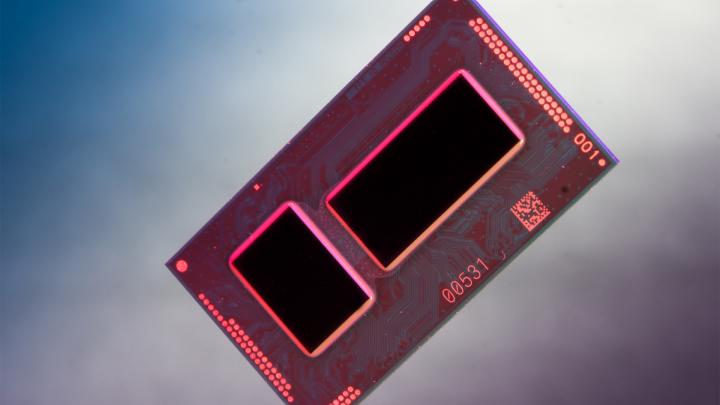
Intel 14 nm transistor

Two weeks ago, the tech world celebrated the 50th anniversary of Moore’s Law — Intel cofounder Gordon Moore’s tenet that transistors per chip would roughly double every two years. For several decades, analysts have wrongly predicted the end of Moore’s Law, only to see it bounce back like Flubber. The end does indeed appear to be coming, but probably not for at least 10 years, according to Intel Senior Fellow Mark Bohr, quoted in a recent PC Mag article.

Even if the upcoming shift to 10-nanometer, 7 nm, or possibly 4 nm, processes finally push up against the limits of semiconductor miniaturization, semiconductors will likely continue to grow more varied and adaptable, while gaining more human-like neural processing capabilities. Last month, for example, Qualcomm announced an emerging cognitive computing technology called Zeroth, which it intends to start baking into future Snapdragon system-on-chips.

Meanwhile, more iterative advances continue to change how we use processors and the increasingly complex, multi-core SoCs built around them. Here’s a brief look at some Linux- and Android-related chip highlights culled from only the last few weeks: an open MIPS core for academics, new Cortex-A72 details, MediaTek’s deca-core Helio X20 SoC, and TI’s new DSP-fueled FPGA competitor.

Imagination releases Linux-ready open MIPS core for academics

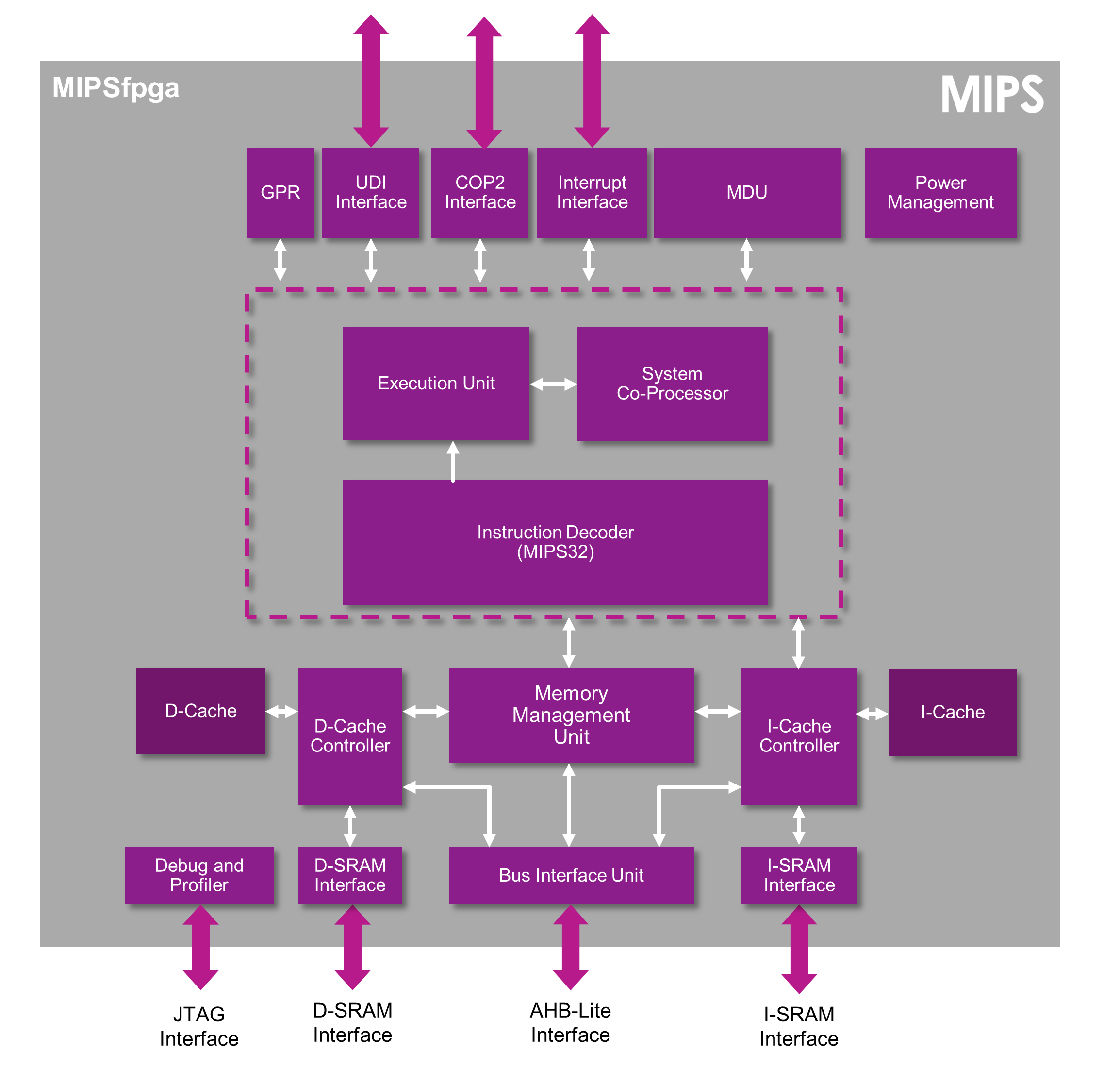
Imagination Technologies gets a bad rap in the open source world for selling one of the most closed proprietary graphics co-processors around. (If PowerVR wasn’t so good, we wouldn’t complain so much.) Yet the MIPS architecture it acquired a few years ago has always been one of the more open, or at least well documented, of the major computing platforms. MIPSfpga-architectureImagination is continuing the tradition by releasing a special free and transparent version of its 32-bit MicroAptiv processor called MIPSfpga.
Starting in May, MIPSfpga will be available to academic institutions as a fully visible RTL design that can run on FPGAs. It’s free and open, but not fully open source. Researchers can see deep into the design and modify it at will, but cannot implement it in silicon or establish patents based on it without an agreement.

The device is more like a microcontroller than a full application processor, but you can run Linux on it. The final Linux code will take a few more months, however.

MIPS is popular in computer research and education due in part to its substantial documentation, as well as its “true RISC” attributes. By comparison, ARM and x86 have morphed a lot more over the years from their RISC roots. However, the lack of a highly visible working MIPS model has been a challenge for educators.

MIPSfpga is more simplified than MicroAptiv, and it modifies the MIPS load/store architecture with a more elegant “instruction bonding” technology, but otherwise stays close to its roots. The chip design ships with FPGA implementation guides and teaching materials. More information and sign-up for access may be found at Imagination’s website.

In another MIPS-related open source development this week, Cavium, which builds MIPS-based Octeon III processors for high-end networking and storage applications, announced that its lower-end, MIPS64-based CN70/71XX versions of its Octeon III SoCs will ship with a free, open source OpenWRT Linux distribution. Designed for consumer/SMB routers and security appliances, the SoCs also support commercial, carrier-grade Linux distros including Wind River Linux and Cavium’s own MontaVista Linux. However, the optimized, lightweight OpenWRT distribution can open up more resources for enterprise applications, says Cavium.

Meanwhile, a fully open source RISC design called RISC-V is progressing at UC Berkeley, along with an associated lowRISC project that plans to build an open source SoC and hacker board to run it. The lowRISC project just released its first preview version of the Linux-oriented SoC design, which demonstrates support for tagged memory.

ARM borrows from the future for Cortex-A72

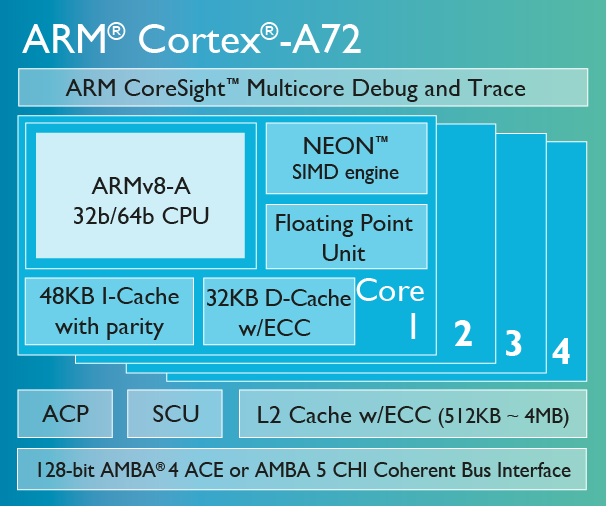
ARM Cortex A72 diagramARM unveiled its Cortex-A72 processor design in February with claims that it is twice as fast as the similarly 64-bit Cortex-A57. Last week, ARM revealed more details about the -A72 at the Linley Mobile Conference. According to Embedded.com, Brian Jeff, director of marketing for ARM’s Cortex-A products, revealed that the Cortex-A72 includes three functional units “borrowed” from an unannounced future core: a branch-predict unit, a load/store unit, and a floating point unit (FPU).

Jeff is quoted as saying the new branch predictor significantly reduces cache misses, and the load/store unit decodes micro-operations at later stages in the pipeline in order to “get more throughput in the front end and save decode power.” The FPU, meanwhile, lowers latency by as much as 50 percent for some operations. While these components are tuned toward power efficiency on the -A72, they can also be configured for more performance. Embedded.com interpreted several comments by Jeff to suggest the future “enterprise” chip design will do just that in an attempt to catch up to Intel’s x86 chips on their relative strength: sheer performance.

MediaTek’s 10-core Helio X20

MediaTek, which is shaping up as a major competitor to Samsung, Qualcomm, and Nvidia in the market for mobile SoCs that drive the Android world, has already begun sampling the first Cortex-A72 SoC with its MT8173 design. The MT8173, which features dual 2.4GHz Cortex-A72 cores and dual Cortex-A53 cores, should appear in tablets later this year.

There’s even greater interest in MediaTek’s MT6797 Helio X20, a more recently revealed SoC design that also uses Cortex-A72 cores. The Helio X20 is said to be the first 10-core (deca-core) SoC, and the first with a new Tri-Cluster CPU architecture designed to replace ARM’s Big.Little heterogeneous multi-core technology. The SoC will combine two 2.5 GHz -A72 cores with four 2.0 GHz –A53 cores and four 1.4 GHz -A53 cores.

This Tri-Cluster design adds a “medium” performance/efficiency tradeoff. In addition to optimizing the -A72 cores for speed and the 1.4GHz -A53 cores for efficiency, you can run mid-level routines with the faster -A53 cores. This week Digitimes reported that the Helio X20 will use TSMC’s 20 nm process. ARM previously announced that homogeneous Cortex-A72 designs will be able to move to TSMC’s new 16nm FinFET+ node fabrication process. By comparison, Intel has already moved to 14 nm with its new Broadwell and Cherry Trail chips.

TI SoC takes on FPGAs in data acquisition

Years ago, Texas Instruments stepped back from the limelight — and cut-throat competition — of the mobile world to focus solely on embedded. For much longer, however, it has been fighting a war to pitch its digital signal processors (DSPs) as alternatives to field programmable gate arrays (FPGAs) from companies like Altera and Xilinx. Last week, TI unveiled a 66AK2L06 SoC that uses a combination of Linux-driven Cortex-A15 cores and DSPs to compete directly with FPGAs in data acquisition (DAQ) applications used in avionics, defense, medical, and test and measurement equipment.

The 66AK2L06 is related to its Linux-ready, DSP-enabled Keystone II SoCs, but adds two major new features that help it compete with FPGAs in the DAQ market. The first is a Digital Front End (DFE), which offers features like a Digital Down Converter / Up Converter (DDUC), an NCO/mixer, functional resampling, and noise and image filtering and shaping. There’s also an interface compliant with the JESD204B serial standard, which is supported by a variety of TI’s analog-to-digital converters (ADCs), digital-to-analog converters (DACs), and analog front ends (AFEs).

The bottom line, according to TI is that the 66AK2L06 can do almost everything FPGAs can do in data acquisition, but can do it in a way that is cheaper, faster, and more power efficient. The SoC is also claimed to be easier to work with than using FPGAs.

Reducing Power Consumption on Haswell and Broadwell Systems

Haswell and Broadwell (Intel’s previous and current generations of x86) both introduced a range of new power saving states that promised significant improvements in battery life. Unfortunately, the typical experience on Linux was an increase in power consumption. The reasons why are kind of complicated and distinctly unfortunate, and I’m at something of a loss as to why none of the companies who get paid to care about this kind of thing seemed to actually be caring until I got a Broadwell and looked unhappy, but here we are so let’s make things better.

Read more at Matthew Garrett’s blog.

OpenMP 4.1 Support Is In The Works For GCC

This month’s release of GCC 5 brought OpenMP 4.0 support — including the initial offloading support — while GCC developers now are already at work on OpenMP 4.1 support…

Read more at Phoronix

Tiniest Mini-PC With a Quad-Core ARM SoC and 4GB RAM?

SolidRun has added a high-end model to its cubic mini-PC line, claiming the 2 x 2 x 2-inch Cubox-i 4X4 to be the “smallest ARM quad core 4GB mini computer.” Tel Aviv-based SolidRun has just rolled out a top-end version of its 2 x 2 x 2-inch CuBox-i mini-PC line. The new model, dubbed the […]

Read more at LinuxGizmos

Linux Kernel 4.0.1 Officially Released, It’s Now the Most Advanced Version Available

The latest version of the stable Linux kernel, 4.0.1, has been released by Greg Kroah-Hartman, which is the first update for the most advanced available branch.
Linux kernel 4.x is the latest branch released by Linus Torvalds, and it’s the most advanced and stable version that can be downloaded right now. Linus Torvalds only deals with the development versions, the bleeding edge of the kernel, and Greg Kroah-Hartman picks up the maintenance for the stable iteration once it … (read more)

Read more at Softpedia News

Samsung Wants to Bring Smartwatches and Virtual Reality to Your Enterprise

Could wearable devices boost employee response time or provide them with high value data in a more timely fashion? Samsung thinks so and is already courting developers.

Read more at ZDNet News

Distribution Release: Chromixium 1.0

The Chromixium project has announced the release of Chromixium 1.0, an Ubuntu-based Linux distribution that attempts to recreate the look and feel of Chrome OS while providing a complete Linux system with the ability to install popular desktop applications: “I am extremely proud to announce that Chromixium 1.0…

Read more at DistroWatch

Bodhi Linux Forks Enlightenment E17

The Bodhi Linux distribution has forked the Enlightenment project from its E17 release…

Read more at Phoronix

SteamOS Moving to Debian 8 Jessie Soon? Unlikely, but Not Impossible

SteamOS is a Linux distribution built by Valve that will eventually power the Steam Machines consoles. It’s based on Debian 7.x “Wheezy” and there is no sign that Valve has any intention of moving to the new Debian 8 “Jessie” base anytime soon.

Right after Debian 8.0 “Jessie” got released, people started to ask on the official forums if SteamOS is going to make a change anytime soon, but there is no official information on this aspect, as of yet. Users want to know if chang… (read more)

Read more at Softpedia News