
Home Blog Page 1185

OpenSSL Set For Major Security Audit

A team of security consultants is set to undertake a major independent audit of OpenSSL as part of a multi-million dollar initiative by the Linux Foundation to improve the security and stability of core open source projects.

Cryptography Services – which comprises experts from NCC Group, iSEC Partners, Matasano, and Intrepidus Group – announced the review of “one of the most widely deployed pieces of software in the world” on Monday.

Read more at Infosecurity Magazine.

Linux Kernel 3.18.9 Is Now an LTS (Long-Term Support) Release

Today we have some good news for all users of the Linux 3.18 kernel, as its status has been changed to LTS (Long-Term Support) on March 11, which means that it will be supported with patches for at least two more years from today.

Of course, this also means that some operating systems will stick with this kernel instead of upgrading to the current stable release, Linux kernel 3.19.1 at the moment of writing this article. For example, the famous Arch Linux distribution stil… (read more)

Read more at Softpedia News

Fedora 22 Alpha Released And Available To Download


Fedora 22 Alpha Released And Available To Download

Feodra 22 Alpha release has been announced with many changes included. Fedora only releases two developments releases before the final one. The next release will be beta in April and the final Fedora will be released in May, 19, if everything goes well. Let’s look at the first development release Alpha.
 

Read At LinuxAndUbuntu

SUSE OpenStack Cloud 5 Serves Private Clouds, Can Onboard Hadoop

While it doesn’t grab as many headlines as other players, SUSE has steadily announced new versions of its SUSE Cloud platform, which is its OpenStack distribution for building Infrastructure-as-a-Service private clouds. SUSE has especially focused on data centers where administrators want to take advantage of multiple types of computing environments, and has offered full support for VMware vSphere through integration with VMware vCenter Server.
Now, SUSE has announced the general availability of SUSE OpenStack Cloud 5, which is the new name for SUSE Cloud. SUSE OpenStack Cloud 5 is based on the latest OpenStack release (Juno) and provides increased networking flexibility and improved operational efficiency to simplify private cloud infrastructure management. It also provides “as-a-service” capabilities to enable development and big data analytic teams to rapidly deliver business solutions along with integration with the new SUSE Enterprise Storage and SUSE Linux Enterprise Server 12 data center solutions.


Read more at Ostatic

Glitch in Dropbox SDK for Android Links Apps to Attacker’s Cloud Storage

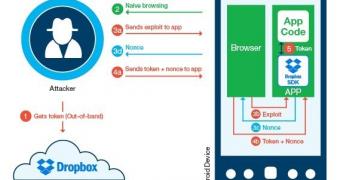
A vulnerability found in Dropbox SDK for Android can be exploited by an attacker to cause apps using the software development kit for Dropbox synchronization to upload the data to an unauthorized account.
Security researchers warn that the flaw can be exploited through a malicious app installed on the mobile device or remotely, through drive-by attacks.

However, the attack is not successful if the Dropbox app is installed on the mobile device, even if it is not configure… (read more)

Read more at Softpedia News

Apache HTTP Server Vulnerabilities Closed in All Supported Ubuntu Systems

Ubuntu 14.10, Ubuntu 14.04 LTS, Ubuntu 12.04 LTS, and Ubuntu 10.04 LTS have been updated in order to repair a few Apache HTTP Server vulnerabilities that have been identified.

The Apache HTTP Server issues are not all that dangerous, but that doesn’t mean that users should not upgrade their systems as soon as they are able to do so.

“Mark Montague discovered that the mod_cache module incorrectly handled empty HTTP Content-Type headers. A remote attacker could use this is… (read more)

Read more at Softpedia News

Canonical Deepens Partnership with Microsoft, Advances Metal-as-a-Service

There are a lot of announcements coming out of the Open Compute Project U.S. Summit this week. HP has announced new Cloudline servers that will sell for low prices and eschew the proprietary technology that the company uses in its Proliant servers. They may especially find a home in organizations standardizing on HP’s Helion cloud platform.

And, also coming out of the summit, Canonical and Microsoft announced a partnership extension and demonstrated Canonical’s Metal-as-a-Server (MaaS) deployment in an open computing environment. Ubuntu’s MaaS allows users to treat physical servers like virtual machines in the cloud, turning bare metal into an elastic resource. New support means that Windows and Linux (Ubuntu, CentOS, SUSE) operating systems and application software can be one-touch provisioned on OCS hardware. Together, the two companies claim they will create a more scalable, OCP-compliant architecture to make open source deployments easier for enterprises and telecoms providers.

Read more at Ostatic

Cloud Foundry and Apache Brooklyn for Automating PaaS with a Service Broker

In this post we will learn about the service broker in the Cloud Foundry ecosystem. We will explore how this modular component bridges the gap between service providers and the CF tooling. The next post will cover a CF plugin that makes it simple to specify services in your application manifests, so you can create them and bind them to your application with one command. After that, we will give some examples, including a sharded MongoDB instance in your manifest for a truly scalable application and a Riak cluster.

The Service Broker

The Service Broker component in CF allows developers to decouple their apps from the services that they consume. The cf create-service command calls to the broker to create a new instance of a service. You can then include a reference to this service instance in your application’s manifest, or manually issue a bind-service, to associate it to one or more applications. CF will then automatically inject details of the service instance — such as the URL and credentials for consuming it — into your application’s runtime.

v2services-new


Read more at The New Stack

diff -u: What’s New in Kernel Development

Nicolas Dichtel and Thierry Herbelot pointed out that the directories in the/proc filesystem used a linked list to identify their files. But, this would be slow when /proc directories started having lots of files, which, for example, might happen when the system needed lots of network sockets.

Nicolas and Thierry posted a patch to change the /proc implementation to use multiple linked lists instead of just one. Each subdirectory would have its own linked list, keyed to a hash of the directory’s name. According to their benchmarks, the patch shaved 1/5 of the time needed to churn through all the entries of a given subdirectory.

Read more at Linux Journal.

There’s Now More Than 1,000 Games On Steam For Linux

There’s now more than one thousand native games available via Steam for Linux / SteamOS…

Read more at Phoronix