Home Blog Page 1188

Firefox 36.0.1 Finally Available in Ubuntu Repos After Small Delay

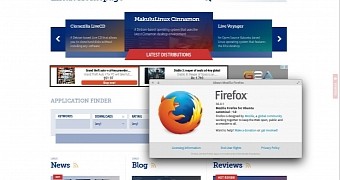
The Firefox maintainers for the Ubuntu systems have just pushed the latest 36.0.1 update for Mozilla’s browser into the repositories and it is now available for upgrade.

The Firefox 36.x branch arrived pretty fast in the Ubuntu repos, but it took some time until the first update was made available to the users. As usual, it’s about fixes and a few important changes that were made by developers. Most important of all, this update repaired a regression that was introduced wit… (read more)

Read more at Softpedia News

Unix Best Practices: Remember, What You’re Protecting is Not Systems But Productivity

When considering the issue of best practice as it applies to the administration of Unix servers, there are a number of questions you might want to ask yourself. They begin with “What is best practice?”, quickly followed by “How do you pursue best practice?”, and “How do you know when you’re meeting best practice?”

Read more at IT World.

Firing Community Members

Javascript code close-up with neon graphic overlay

As open source started booming, more people joined. Opinionated people. People who listened to the “we welcome everyone!” message and felt that their opinion could be their primary contribution. For some, they felt showing up at the gig gave them the right to dictate what the band played.

From a leadership perspective, this was a tough spot to be in. On one hand, you want to foster an open, welcoming, and empowered community. You want that diversity of skills, but you also want value and quality. Low-quality contributors don’t bring much other than noise: they are a net drain on resources because other good contributors have to take time away to support them.

Read more at OpenSource.com

RHCSA Series: How to Perform File and Directory Management – Part 2

In this article, RHCSA Part 2: File and directory management, we will review some essential skills that are required in the day-to-day tasks of a system administrator. Create, Delete, Copy, and Move Files and…

[[ This is a content summary only. Visit my website for full links, other content, and more! [[

 
Read more at TecMint

TrueAbility Linux Showdown

Want to flex your scripting skills? Also want a chance to win awesome prizes?  If so, you should compete in Linux Showdown 8: “The Assembler†that TrueAbility is hosting!

TrueAbility (http://trueability.com) was built with tech professionals in mind and has a vast community of Linux members. Everything from Linux challenges and self-assessments, to blog posts and Linux jobs can be found at TrueAbility.


We are launching an old school challenge to test tech pros’ scripting skills and they are calling it their most difficult challenge EVER. It goes live on March 16th, so you have a few days to brush up your Hardware Programming Language: Assembly. The top 50 techs will advance to an even more challenging round 2.

Think you have what it takes to make it on their leaderboard and advance to round 2?


Go sign up now at : https://trueability.com/assembler-challenge


Lots of prizes are going to be given away! They range from Linux Foundation Certified Engineer Exam credits and TrueAbility Abilityscreens to DigitalOcean credits and even a D-Link AC3200 Ultra Wi-Fi Router. It doesn’t cost anything to join in on the fun. Prove what you’ve got while winning awesome prizes. You won’t want to miss this!

Meet the 10 Ubuntu 15.04 Vivid Vervet Community Wallpaper

Ubuntu 15.04 Vivid Vervet Community Wallpaper available to download. Every new release of Ubuntu are also have new wallpaper by default. The default wallpaper are chosen through a contest in which any user can participate by sending its own wallpaper but it should be according to the various guidelines required by the developer of the Canonical Design team.

More detail read on – Ubuntu 15.04 Vivid Vervet Community Wallpaper

Ceph Open Source Storage Grows With Red Hat Backing

Editor’s Note: This article is paid for by Red Hat as a Diamond-level sponsor of the Linux Foundation’s Vault storage conference and was written by Linux.com.

Ceph logoThe Ceph open source software-defined storage platform is taking over the world. Or, at least, it’s taking over Red Hat’s enterprise offerings – and its competitors’ as well.

In the past few weeks we’ve seen Ceph become an integral part of Red Hat’s Enterprise Linux OpenStack Platform 6 and the latest update of its core enterprise operating system, RHEL 7.1, as well as a key consulting area in its newly announced Cloud Innovation Practice.

SUSE also just announced its own enterprise storage service based on Ceph, available with SUSE OpenStack Cloud or as a stand-alone solution.

And the coming weeks are likely to bring more news from Red Hat around a Ceph-based product that will “give a customer everything they need to deploy a business-critical storage infrastructure,” says Ranga Rangachari, vice president and general manager for Red Hat’s Storage and Big Data solutions.

“In our view the Ceph community is growing unabated in terms of enthusiasm and the level of cooperation that’s going on,” Rangachari said.

Ceph grows With Red Hat

All of this is happening within a year of Red Hat’s $175 million acquisition of Inktank, the company that, until recently, was doing most of the development on the open source Ceph project as well as offering commercial support.

Ceph is now seeing an accelerating growth in community contributions beyond its core engineering team from companies such as Intel, Yahoo, CERN, Deutsche Telecom, and Mellanox said Sage Weil, a co-founder of Inktank, creator of the Ceph project, and now Ceph’s principal architect at Red Hat.

This acceleration is, in part, due to its association with Red Hat, Weil said. The technology’s future seems more certain with Red Hat’s resources and endorsement behind it than when it was backed by a startup, he said, and for good reason.

“There’s a lot more testing and a lot more quality because the bar for Red Hat products is higher than a startup,” Weil said. “There’s a lot of work going into performance and overall stability and we’re more conservative about declaring something ready to go.”

Somewhat paradoxically, Red Hat competitors are also more likely to contribute their own engineering resources to the project, rather than rely on Red Hat’s internal team to do the heavy lifting on features competitors need for their own products, he said.

Ceph grows with Software-Defined Storage

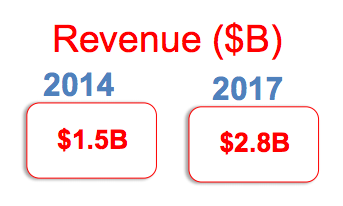
But the 10-year-old project was also gaining momentum long before Red Hat’s acquisition, along with the rise of software-defined storage (SDS) – the fastest-growing segment of the storage market, according to a 2014 study by IDC.

SDS revenue IDC

“Two years ago SDS was experimental, now it’s mainstream,” Rangachari said. “It’s growing seven times faster than than the overall storage market and we’re right in the middle of that.”

Ceph is now the most popular storage back-end for OpenStack — the open source technology behind some of the largest enterprise cloud deployments. This is one of the main reasons that companies like SUSE have chosen to integrate Ceph into their own products: It’s a solid, highly extensible storage solution that works well in distributed systems.

SUSE announced its intention to produce a storage product based on Ceph at SUSECon 2013 and has been tracking the technology for more than 5 years, said Jason Phippen, head of global product marketing at SUSE in a recent interview with Linux.com.

“Ceph is not a Red Hat project, it is an Open Source project that originated from the community,” Phippen said. “Together SUSE, Red Hat and others contribute to the Ceph project to define the future of Distributed Software Defined Storage.”

Such community participation, even among competitors, and a strong surrounding ecosystem are the hallmarks of a successful open source project.

“It’s ultimately why open source will be crazy transformational to the storage industry,” Weil said. “It’s easy to do these integrations – you can do it without going through the process of partnership with somebody. All the code is out there.

“The end goal is really about a better value proposition for the customer,” he said. “So instead of buying something wrapped in tin, the hardware with the sticker on it, you have an entire ecosystem of options for your storage.”  

On the Linux Kernel’s Code of Conflict


Last week, 60 kernel developers signed off on a small patch called the Code of Conflict that provides guidelines for discourse in the kernel community and outlines a path for mediation if someone feels abused or threatened. The code was written by kernel maintainer Greg K-H, supported by many of the most prolific maintainers and developers of the kernel community and accepted into the kernel by Linus Torvalds himself.

The Linux Foundation is happy to see these guidelines and is supportive of the mediation process. We will work directly with the Linux Foundation Technical Advisory Board to provide whatever support they need in implementing this process. We believe the guidelines are grounded in the unique culture and process that makes Linux so successful. Conflict over code will and should happen. But the Code is very clear that personal insults or abuse are not welcome.

It’s no secret that the software industry would like to see more diversity. The Linux Foundation believes in that. While this code does not address that directly, we feel it’s an important step to make clear that civil discourse is an important part of an open source community and to make it very plain that all are welcome. Over the last few years, The Linux Foundation has undertaken a variety of programs to address the diversity issue. From funding kernel internships to being one of the first organizations to publish a code of conduct for our events, we take the need for diversity seriously and plan on continuing and expanding these programs as well as supporting the community in their efforts.

There is a long way to go, but the kernel community is always evolving and we feel this patch is an important step.

Kubuntu 15.04 Vivid Vervet Beta 1 – Bring KDE Plasma 5 as Default Desktop

Kubuntu 15.04 vivid vervet beta 1 has been released by Kubuntu Devs Team brings KDE Plasma 5.2 as default desktop environment, also include KDE Applications 14.12 containing all favourite applications from KDE. This is the 14.12.2 update with bugfixes and translation updates. Several applications have been ported to KDE Frameworks 5 but those which aren’t should fit in seamlessly. Kubuntu 15.04 still development by Kubuntu Developer, it will available in stable version on april 2015.

Kubuntu 15.04 Vivid Vervet Beta 1 video overview and screenshot

SUSE Explains Why the Future of Enterprise Storage is Open Source

Jason PhippenThe storage market is growing rapidly, creating a new market for open source solutions, software-defined storage, and cloud computing. So SUSE’s announcement last month of its new enterprise storage solution based on the open source Ceph project is perfectly timed.

Ahead of the Linux Foundation’s new Vault storage conference, taking place in Boston this week, SUSE’s head of global product marketing Jason Phippen answered questions about SUSE Enterprise Storage, why they use Ceph, and industry trends in open source, software-defined storage.

If you’re attending Vault this week, be sure to look for the four SUSE engineers presenting there, including Lars Marowsky-Brée, a SUSE Distinguished Engineer and architect for SUSE Enterprise Storage. See the full conference schedule.

Linux.com: What is SUSE Enterprise Storage?

Jason Phippen: SUSE Enterprise Storage, powered by Ceph, is a highly scalable and resilient software-based storage solution. It enables organizations to build cost-efficient and highly scalable storage using commodity off-the-shelf servers and disk drives. It is self-healing and self-managing and delivers storage functionality comparable to mid- and high-end storage products at a fraction of the cost. It also scales from terabyte to a multi-petabyte storage network.

This unlimited scalability enables enterprise IT organizations to deliver the agility businesses demand by non-disruptively adding capacity at the cost they want to pay while enabling storage administrators to minimize the amount of time spent managing storage.

Why did you go with Ceph for your storage solution?

SUSE chose Ceph as it is the most popular OpenStack distributed storage solution. It is extensively scalable from storage appliance to cost-effective cloud solution. As of the Firefly release, Ceph provides industry-leading storage functionality such as unified block and object, thin provisioning, erasure coding, and cache tiering. It is self-healing and self-managing.

Does Ceph’s Red Hat backing (post Inktank acquisition) make a difference in the decision to use Ceph or the timing of the SUSE storage release?

SUSE has been tracking the Ceph technology for over 5 years. We announced our intention to produce a SUSE supported storage product based on Ceph at our SUSECon 2013 conference.

Why is software-defined storage an advantage over traditional storage solutions? 

In a typical enterprise data center today, IT organizations are rapidly breaking free from server vendor lock-in with hypervisors, which can virtualize any workload on any server using an x86-64 processor. However, most networking and storage environments remain silos of restrictive and expensive vendor-specific hardware and software.

With software-defined data centers, IT organizations are beginning to transform their networking and storage infrastructure from expensive, proprietary, vendor-specific hardware into open-source based software and low-cost, commodity hardware, key factors driving the migration.

Traditional enterprise-class storage can be described simply as block, object and file storage systems including software embedded on expensive, proprietary system controllers, along with server-based storage management software. Transform both types of software into open source software running on industry-standard servers and commodity storage, and you have software-defined storage. This will lie at the heart of a software defined data center, providing a flexible, cost-effective, high-performance, highly available and massively scalable storage environment.

How does the SUSE Enterprise Storage offering fit into the array of new features that enterprise SUSE is offering? For example, with your new live kernel patching feature?

Enterprise data storage customers demand continuous availability from their storage platforms. SUSE Enterprise Storage runs on top of SUSE Linux Enterprise Server. As a result, the customer inherits all the reliability, availability and supportability that has been built into SUSE Linux Enterprise Server over the past two decades

Software upgrades to SUSE Enterprise Storage are done online. Additional capacity, performance or both can be added to the SUSE Enterprise Storage cluster while online. Data can be migrated from older hardware in the SUSE Enterprise Storage cluster to new hardware in the cluster while remaining online. The system is designed to scale to exabytes of data. SUSE Enterprise Storage is designed to provide continuous data access to our customers once deployed in their environment.

How is SUSE Enterprise Storage adjusting to accommodate enterprise computing trends such as containerization, microservices architectures, and distributed computing? Is SUSE Storage part of this new strategy?

SUSE Enterprise Storage provides the perfect foundation to address the data needs by all of these trends. Any service, container, or distributed computing architecture begins with the need to store and access data. SES’s scalability allows the storage subsystem to grow according to the needs of the services, both in terms of capacity and performance. It can be optimized to meet the requirements of any environment. Its dependability and self-healing ensure continuous access and thus availability of the services. And by providing multiple different interfaces to the data from the same converged cluster, it can accommodate flexible deployments – be it object/S3 interfaces for Cloud applications or block for raw storage.

What’s the future of enterprise storage, according to SUSE?

Enterprise data storage will transition into two tiers or classes of storage. Latency sensitive data will increasingly be deployed on solid state; both memory and disk. Less latency sensitive data will transition to scale out storage.

SUSE Enterprise Storage powered by Ceph allows these two different tiers to be consolidated into a single, seamless cluster through the use of cache tiering, with the software automatically placing the data based on the access pattern. It is built upon the most popular open source software-defined storage solution. Deploying SUSE Enterprise Storage on top of industry standard servers creates a value proposition that will produce an impact on current enterprise storage with the same impact as Linux did to the Unix market.

What is the state of industry collaboration in software-defined storage at the moment? Where is it succeeding and what are the challenges?

SUSE can’t speak to the broad software-defined storage industry as it is very diverse and consists of many proprietary solutions. What SUSE can speak about is the open source community. This community is very healthy, active and collaborative. Literally thousands of software engineers regularly contribute to functionality developed by this community. Linux and OpenStack are just two examples of what this community can deliver.

SUSE Enterprise Storage powered by Ceph is built on the most broadly deployed software-based storage solution utilized within the OpenStack framework. The open-source community has already selected the best software-based storage solution for their needs. It will only be a matter of time until the rest of the enterprise data storage industry follow.

How is SUSE contributing to Ceph – what features are you working on now?

As we mentioned earlier, there are literally hundreds of software engineers contributing to the Ceph technology. The architecture is almost 10 years old. The functionality provided by the product rivals any software-based storage product available in the industry.

SUSE is building our technology on top of Ceph and deploying our engineering resources to build and deliver storage solutions. Initial use cases will target archive, object and bulk (block) solutions. In addition to developing solutions to address these use cases, SUSE is working to automate and simplify the initial installation and ongoing administration of the system.

Combined with SUSE’s world class enterprise support, our focus is on providing the enterprise storage customer with a best in class customer experience.

Is SUSE storage at the Linux Foundation’s new Vault conference this week? Any talks you’d like to highlight, or demonstrations?

The Linux Foundation’s new technical conference will gather the best and brightest engineers and consumers working on all parts of the Linux storage stack. SUSE is proud to be a member of this community and a Gold sponsor of the Vault conference. SUSE engineers participate as speakers and attendees to collaborate with their peers from all over the world, present our work, and engage in dialogue on shaping the future development in the interest of our customers. SUSE participated in the technical program committee, and is honored to have four engineers selected to present. It is also a unique chance for SUSE, as a successful and growing business, to reach out to those community members who wish to work more in this exciting area.

Lars Marowsky-Brée, a SUSE Distinguished Engineer and architect for SUSE Enterprise Storage, will present his research into the challenges of measuring, evaluating, and predicting the performance of distributed storage systems based on Ceph. Due to the flexibility of the technology, such understanding is key to be able to design, implement, and optimize SDS solutions that meet the requirements of their users. But we recommend checking out SUSE’s other presentations in the great line-up at Vault, too!