
Samsung is losing ground, and that has allowed iOS to overtake Android in the US. But with the flagship Samsung Galaxy S6 now on the horizon, will it have what it takes to win back the fans.
Read more at ZDNet News
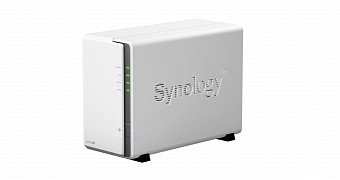 Network-attached storage devices can have up to 8 bays, sometimes more if they come in blade form factor, but that much is ultimately unnecessary for home and small offices.
One or two bays are enough if the drive capacity support is large enough. In the case of Synology’s two latest models, the top storage capacity for each drive is 6 TB.
That means that the top capacities for the new DS215j and DS115 are of 6 TB and 12 TB, respectively. A bit less when RAID mode is activated.
Average read… (read more)
 Black Lab BriQ rev4 is a new mini PC put together by the same guys who are also working on the Black Lab Linux distro. This is not their first attempt, as the version number shows, and it’s actually a pretty powerful solution.
It looks like this kind of effort, of building a mini-PC powered by the same Linux distribution that you’re also developing, has been getting more traction lately. This is not the first company to do this and it probably won’t be the last. As long as you have the design… (read more)
 ownCloud, Inc., the company behind the popular ownCloud open source file sync and share software, has announced a project that for the first time ties together researchers and universities in the Americas, Europe and Asia via a series of interconnected, secure private clouds. It’s yet another example of the momentum that ownCloud has. As I covered in a post yesterday, survey results from LinuxQuestions.org showed experts at the site to be very interested in the ownCloud platform.
OpenCloudMesh, a joint international initiative under the umbrella of the GÉANT Association, is built on ownCloud’s open Federated Cloud sharing application programming interface (API). The project, focused on linking up global universities, is focused on “taking Universal File Access beyond the borders of individual Clouds and into a globally interconnected mesh of research clouds.”
 The white paper, Inside the Lustre File System, describes the inner workings of Lustre in a way that is easy to understand, yet is technical enough for many users and systems administrators. Lustre is a mature and stable file system that has consistently been able to respond to the needs of organizations that require high performance throughput and expanding capacity.
 Folks in the Big Data and Hadoop communities have been getting increasingly interested in Apache Spark, an open source data analytics cluster computing framework originally developed in the AMPLab at UC Berkeley. According to Apache, Spark can run programs up to 100 times faster than Hadoop MapReduce in memory, and ten times faster on disk. When crunching large data sets, those are big performance differences.
In OStatic’s recent interview with Eucalyptus cloud originator Rich Wolski, he cited Spark and other technologies competitive with MapReduce as being very interesting. Databricks and Typesafe are now out with some survey results that bolster the case for Spark usage being on the rise. Here are details.