
With the GNOME 3.16 series, Mutter uses GTK+ for drawing all window decorations regardless of using client-side decorations, and there’s also many other GTK+ improvements…
Read more at Phoronix
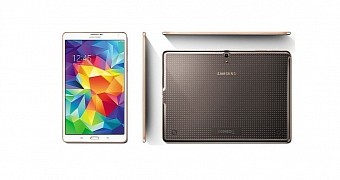 Samsung has been pretty silent when it comes to tablets in the last few months. The Korean tech giant rolled out the Galaxy Tab Active at IFA 2014, but that was just a rugged, re-branded version of the Galaxy Tab 4 8.0-inch model.
Anyhow, the first rumors related to Samsung’s upcoming portfolio have already started popping up. A while ago we told you Samsung might be prepping slates that would boast 4:3 aspect ratios just like the iPad and Nexus 9.
We also brought you word that next-gen Gala… (read more)

A collection of articles about jobs and careers in open source.
I have been working in the computer business for over 40 years, but the best years have been the last 17 or so working with Linux and open source software. I got into the computer business unintentionally and kind of sideways, but that is a whole other story. I’ll tell you about how I got into open source and Linux semi-intentionally and also kind of sideways.

To Take a deeper look at the new features, visit the official website.

To Uninstall previous version of LibreOffice, open terminal and type the following command –

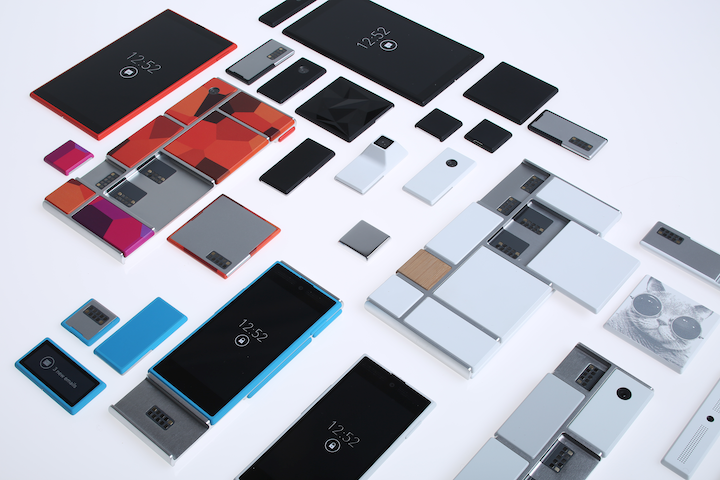
In Oct. 2013 when Google’s Motorola subsidiary announced Project Ara, for building an open source, modular smartphone, the consensus was that it would fail on both the technical and business levels. Today, however, the odds have tilted in the project’s favor.
Google sold Motorola to Lenovo, but retained the Advanced Research and Projects (ATAP) R&D group that runs the project. ATAP recently showed off a second generation prototype of the Ara phone, and earlier this month, Google announced plans to launch a 2015 pilot program in Puerto Rico. Project Ara has also recently attracted some interesting technology partners, including battery maker SolidEnergy, audio experts Sennheiser, and health accessory designer Lapka.
Together with ATAP’s Project Tango for developing 3D sensing phones, Project Ara represents Google’s vision for the smartphone future. The timing seems right, as the Android smartphone scene is looking a bit moribund compared to hot-ticket technologies like wearables, drones, and home automation.
Although Android still dominates phone sales, the Linux-based platform is also facing renewed competition from Apple which is enjoying record sales of the iPhone 6. Meanwhile, Android phone leader Samsung just reported that its mobile business suffered a 64.2 percent loss compared to the previous year. 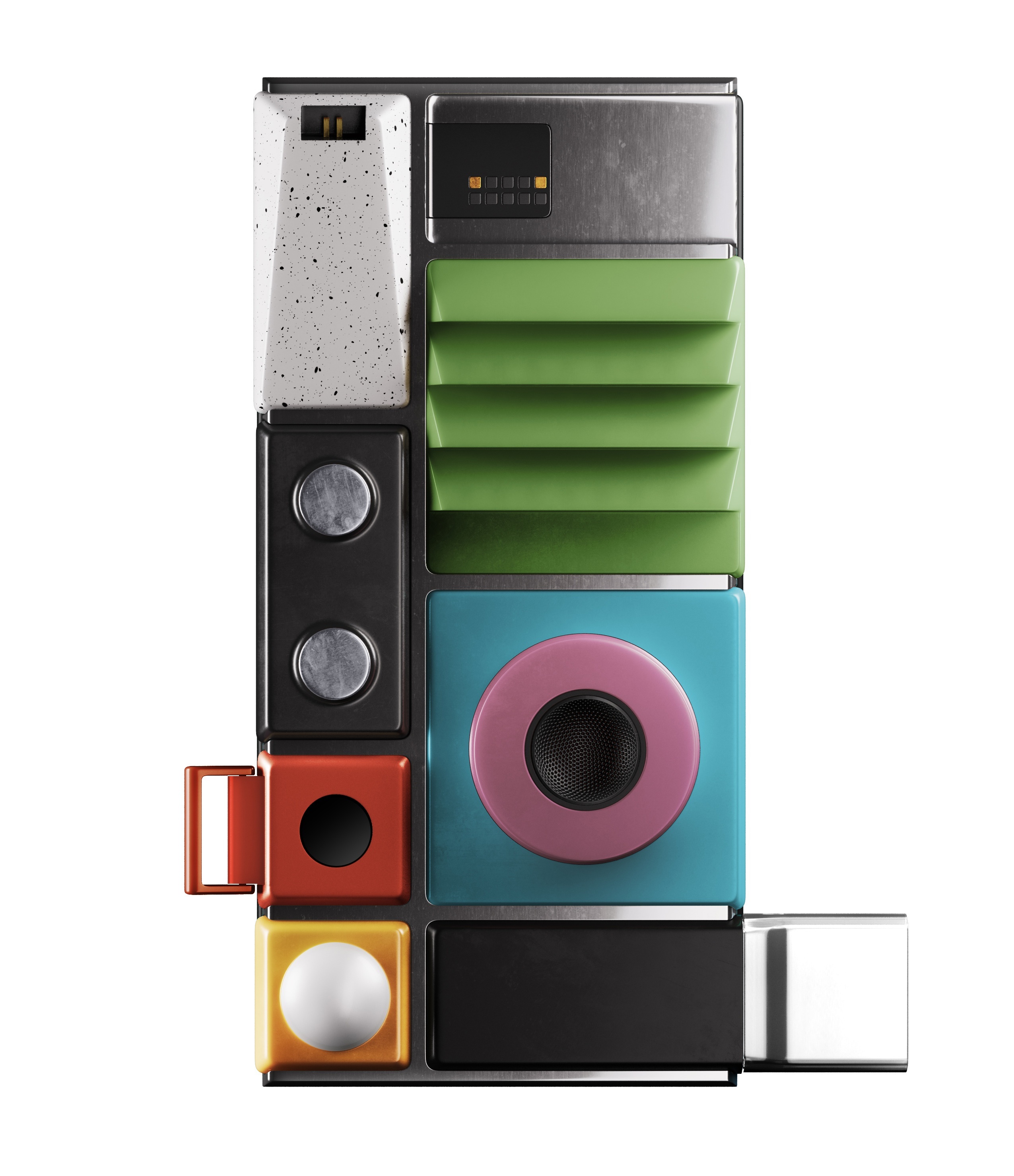 Apple has finally tied Samsung in smartphone sales, with each taking 20 percent of the global market, according to a new report from Strategy Analytics. Samsung’s troubles may stem as much from Chinese Android device vendors like Lenovo, Huawei, and Xiaomi, as they do from the iPhone’s resurgence, but the reversal has been a wake-up call for Android device makers.
Smartphones may not be the center of tech conversations the way they once were, but they’re still in the center of the action. Smartwatches have yet to take off, and Google Glass is heading back to the skunkworks for a rethink. After all, without a smartphone, how else are you going to control your drone or home automation gear?
While Project Tango offers the sci-fi appeal of 3D motion and depth sensing, Project Ara may be the more fundamentally disruptive technology. Based in part on the open source Phonebloks project, the Android-based Project Ara prototype is comprised of modular building blocks that snap into the phone’s endoskeleton using electro-permanent magnets. The module housings are designed to be 3D printed, so any manufacturer or hobbyist can use open source schematics to print and sell Ara components. Modules communicate with each other with an internal packet-switched network based on the MIPI UniPro protocol stack.
If your screen breaks, or you want a faster processor, a longer-lasting battery, or a better camera or speaker, you don’t need to buy a new phone, only a new component. At the same time, since you can customize the phone when you buy it, you don’t have to pay for features you don’t want.
A “Spiral 2” version of the phone that was recently examined by The Verge, adds the foundations for 3G support and an online marketplace for selling Ara modules. The eight-module backplate includes a camera, battery, and micro-USB module, but the display module is limited to 720p, and still lacks touch support.
Google no longer plans to 3D print the module covers, which can be customized with user-supplied imagery. Instead, you’ll choose or upload your design using a Moto Maker style service, which will manufacture the covers using injection molding, says The Verge. The publication was unable to test a Google claim for hot-swapping the battery while the phone is running.
Later this year, Google will complete a Spiral 3 version, which adds 4G LTE, longer battery life, and somewhere between 20 and 30 modules. The design will be used in the Puerto Rico market pilot in the second half of the year, says the story. The Project Ara website says an entry-level Ara phone will cost $50 to $100, although the actual price will likely be higher than that.
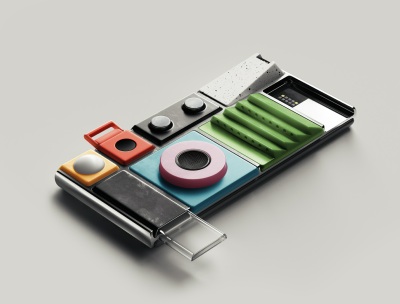 Theoretically, Project Ara would offer more choice and lower costs to consumers, while providing a more environmentally sustainable product cycle, an issue that may become more important as precious metals become harder to find. Potentially, Project Ara could also encourage a grassroots industry linked to the booming field of 3D printing.
The greatest obstacle is that the scheme flies in the face of time-honored business strategies such as built-in obsolescence. In many markets, the cost of a new phone pales in comparison with the cost of the 4G data plan, and some consumers may not want to bother with a smorgasbord of options.
Others wonder if the different puzzle pieces can interoperate as efficiently and reliably as a tightly integrated phone, and who will support them if they don’t. It may be a while before a Project Ara phone wins any competition in weight, profile, or battery life.
Some 50 hardware partners have signed up to build Ara modules, including Marvell, Nvidia, and Rockchip, according to a Forbes story on the Puerto Rico trial. No pricing has been announced yet, although Project Ara director Paul Eremenko was quoted as saying the phones would be sold from food trucks in Puerto Rico in partnership with local carriers. Eremenko and lead software developer Marti Bolivar will deliver a joint keynote on Project Ara at the Linux Foundation’s Embedded Linux Conference, Mar. 23-25 in San Jose, Calif.
Battery life has been the biggest technical hurdle for Ara, but help is on the way. According to a separate, Jan. 28 report in Forbes, MIT-inspired startup SolidEnergy is prepping a version of its supercharged Li-Ion battery as an Ara module.
The SolidEnergy technology replaces the battery’s graphite-based anodes with anodes made of lithium on copper. The anodes are less than a fifth the size of a regular Li-Ion battery, resulting in a doubling of energy density to 1,200 watts-hour per liter. Theoretically, vendors could provide twice as much storage, or alternatively reduce the size by half. Unlike most metal anode batteries, the device can operate at room temperature, thanks to a special electrolyte.
In addition to getting a better battery, Project Ara will also acquire a decent audio system. German audio specialist Sennheiser is working with Phonebloks on an “Ampion” module for Project Ara that offers an audiophile-quality speaker with a class G amplifier and low-noise microphone. The device will feature a low-latency DSP with user-programmable audio equalizer and digital effects.
Another partnership involves health accessory vendor Lapka. The company recently announced 3D printed Ara modules that test air quality, CO2 levels, ambient light, EKG readings, glucose levels, alcohol (breathalyzer), and a mysterious “soul” sensor.
As smartphones get loaded down with sensors and other gizmos like 3D and infrared cameras, the modular approach makes more sense. It will become too costly in money, size, and battery life, to include all the possible extras. Once selectivity becomes a necessity, Project Ara’s time will have arrived.
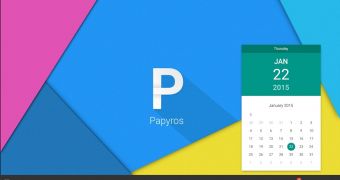 Papyros is a new Linux distribution in the making that will use the Material Design style from Google. There is nothing to test so far, but the progress made by the developers is impressive and it’s very likely that this will become one of the most interesting distros available.
We wrote a while ago about a Linux distribution called Quantum OS that aimed to follow the Material Design guidelines from Google. This is the same one, but it’s now called Papyros. The name change was necessary, but … (read more)
 The Tor anonymity network has increased with 12 more middle relay nodes that can distribute user traffic, courtesy of Mozilla as part of the Polaris Privacy Initiative started in November 2014.
The new relays from Mozilla are powered by hardware no longer used by the organization and consist in two Juniper EX4200 switches and three HP SL170zG6 (48GB ram, 2*Xeon L5640, 2*1Gbps NIC) servers and a dedicated IP Transit provider (2 x 10Gbps).
Mozilla engineer Arzhel Younsi says that the current d… (read more)