
One in four enterprises employs DevOps,and it’s making a difference in software delivery. Data security is a concern, however.
Read more at ZDNet Linux
The Linux landscape is ever changing. Over the last few years, the flagship open source tool has found levels of acceptance thought unreachable for software running on a free platform. That momentum isn’t going to let up. In fact, 2015 promises to be a very bright year in Linux land ─ from enterprise Linux all the way down to the desktop. In fact, the Linux desktop should find 2015 to be a rather exciting time.
Why? Applications. There are some outstanding projects on the horizon that could easily bring the Linux desktop into a realm of relevancy it has yet to enjoy.
Let’s take a look at six such projects and see what they have to offer.
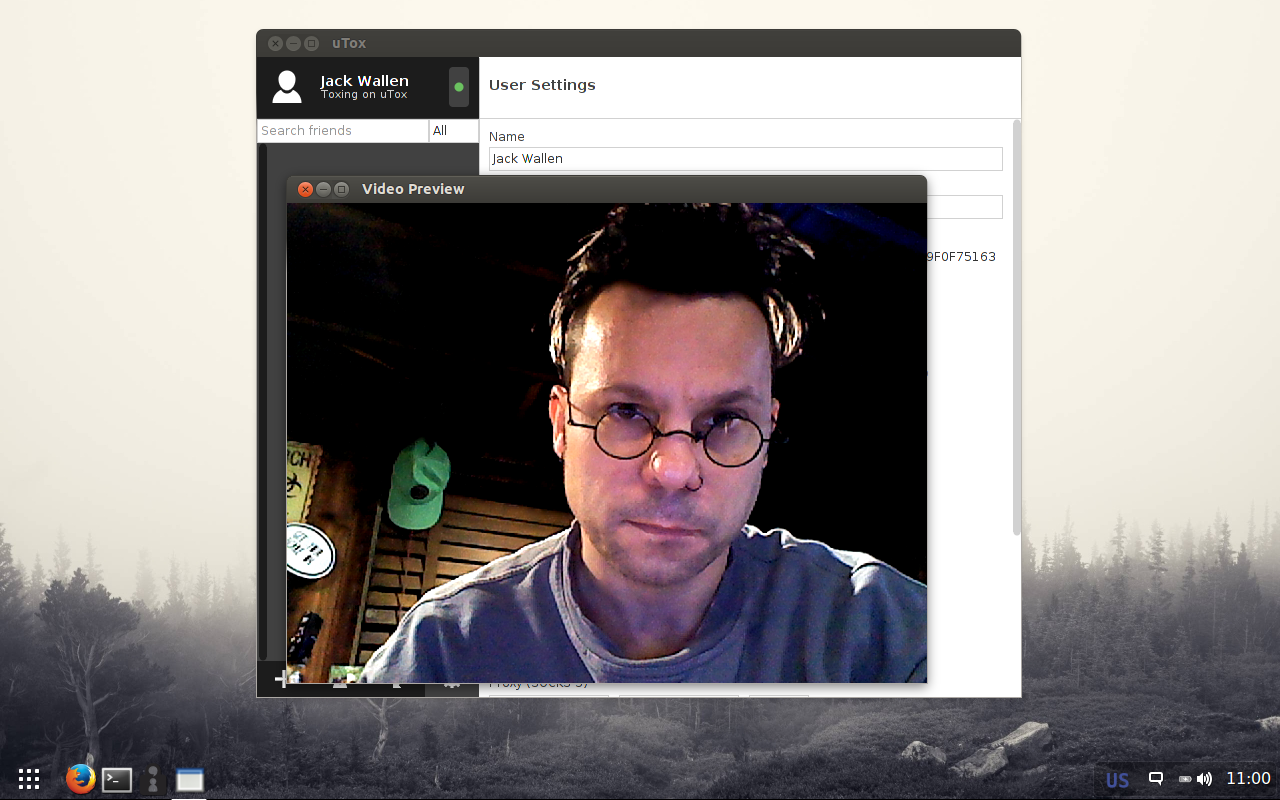
Tox is a free, peer-to-peer instant messaging, video conferencing, calling tool with a knack for privacy. In a world where it seems more and more people are “listening in” on your conversations, videos, and discussions, Tox promises to bring a level of security to those discussions you haven’t truly enjoyed to this point.
Tox uses existing technology (such as dispersed networking and strong cryptography) to deliver a far more secure messaging experience than any of the currently available tools. With Tox, you’ll be able to share files, have conversations with unlimited users, and much more.
Tox is already available ─ but is very much in its infancy ─ for Linux, Windows, and Mac. You can download binaries for each of the platforms, just understanding this is very much a work in progress. This application is important to the Linux ecosystem as it brings a platform-independent application that could easily be a drop-in replacement for the likes of Skype.
Ubuntu Unity with Mir has been mired in controversy ─ much of which centers around the choice of Mir over Wayland to replace Xorg. Unity 8 promised to do something no other desktop interface has ever been able to yet do ─ bridge the gap between mobile devices and the desktop. Convergence.
To date, however, there have been two outstanding issues surrounding this meta paradigm ─ the release of Unity 8/Mir and the vaporware that is the Ubuntu Phone. Setting aside the reality that is the Ubuntu Phone, it looks as if Unity 8/Mir will finally see a light at the end of a very long tunnel in 2015. With the release of Ubuntu 15.04, Unity will still be at release 7 … However, this release should finally bring Mir front and center as the replacement for the aging Xorg. This will be a massive step in a direction Canonical hopes will be right.
Unfortunately, as with everything about Unity 8/Mir ─ this is mostly speculation (based on a “Unity/Mir Catch Up session by Kevin Gunn of Canonical”).
.NET was the big news at the end of 2014. That’s right, Microsoft is finally opening the .NET server side stack and 2015 will see .NET running on Linux. What this effectively means is that .NET developers can build more apps that can be run in more places. This is ultimately huge because one of the most widely used app-execution environments (.NET) can be merged with one of the most widely used server environments (Linux).
Where the opening of .NET is ultimately crucial will be how it motivates Microsoft to further open its tech toolbox. Should the unleashing of .NET be a rousing success, the chances of Microsoft following through by opening ASP.NET, the Roslyn .NET compiler platform, the .NET Micro Framework, .NET Rx and the VB and C# programming languages, and much more. Imagine how powerful the Linux platform could become with many of these tools available and ready to use?
This could also mean one very important thing ─ releasing Java’s stranglehold. With .NET available for the Linux ecosystem, Java could finally be sunsetted. That is a major upside.
Linux++ is what HP is hedging its bets on for the “future of computing”. What is Linux++? A new desktop platform that will be released in 2015 to serve as the initial operating system for HP’s The Machine. What is The Machine? HP has planned a next generation PC that will be vastly superior with regards to energy efficiency and far more powerful than any hardware to date.
HP’s approach with The Machine is to use electrons for computation, photons for communication, and ions for storage. These massive changes for the computing platform will rely solely on Linux++ … at least until its replacement, Carbon, has been built. The Linux++ platform will allow the HP developers to test and show off the developments for The Machine.
Linux++ is set to be released in June, 2015 and will serve as an emulator for The Machine. Hopefully, HP will release Linux++ into the wild.
Could the future of computing be near? HP certainly thinks so.
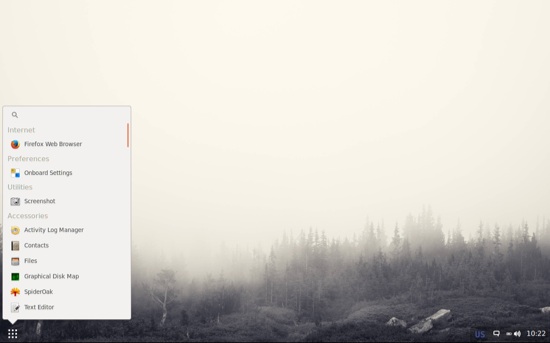
Budgie takes the ChromeOS desktop and conveniently places it on Linux. Budgie is the default environment for the Evolve OS distribution (but can be installed on various other flavors of Linux).
What makes Budgie a project you should be looking out for? It’s a simplified Linux desktop that is as elegant as it is light weight. If you like the ChromeOS UI, you will love Budgie.
The one caveat with Budgie is that it is very much in the early stages of release. It also has no 32 bit release ─ so older hardware need not apply. If you have the hardware to test it out, I highly recommend it. If you’ve used ChromeOS, you know just how productive a platform it is ─ and Budgie promises to recreate that on the Linux environment.
Snappy is a transactional software update management system for Ubuntu on the cloud. What does this mean, exactly? It’s simple (sort of). Although Ubuntu Core (a stripped-down version of Ubuntu ─ designed specifically for large-scale cloud deployments running applications in Docker containers) is still served up in the same light weight fashion, applications are provided much more reliably.
Thanks to Snappy, application updates happen after a backup occurs. This means, if an update fails, the system can be rolled back. Snappy also has one unique feature that should offer tons of appeal to administrators. Each Snappy app is a complete package. In other words, Snappy apps do not rely on libraries or dependencies. So when a Snappy app is updated, only that app need be updated. Each Snappy app is a single unit. This approach to cloud-based apps and platforms also offers a level of security traditional cloud services cannot touch.
There are so many projects that promise to help bring Linux into the limelight in 2015. Each of these could go a long way to help make Linux a household name. Do you have a project coming out in 2015 that fits into this category? If so, share it with your fellow Linux.com readers.
 The latest version of the stable Linux kernel, 3.12.36, has been announced by Jiri Slaby and it has arrived with a fair number of changes and improvements.
Even if this is a very old branch, the kernel developers are still releasing updates for it and here is no sign that they intend to stop anytime soon. In fact, this latest iteration is quite a big, but that was to be expected.
“I’m announcing the release of the 3.12.36 kernel. All users of the 3.12 kernel series must upgrade.”
“The updat… (read more)
 As predicted, 2015 is turning out to be the year when many IT departments are moving from evaluation stage to deployment stage for OpenStack cloud instances.
What many first-time OpenStack users don’t realize though, is that numerous tools have been developed in tandem with OpenStack to ease the process of testing and overall orchestration. In this post, you’ll find three essential examples of these to know about.
 One of the problems on Ubuntu platforms is that the Software Update tool doesn’t remove the old kernels after an upgrade, but the Ubuntu devs are now talking whether their tool should be used to perform this kind of cleaning.
It might seem like a trivial stuff, but if you’re running an Ubuntu system for a long time and you never clean up, you’ll end up with a lot of installed kernels. It can get to a point where you’ll be looking to clean up the space on your home partition just to make a sim… (read more)
 Black Lab Linux, a distribution based on Kubuntu and that uses one of the latest KDE packages, has been upgraded for version 6.0 and is now available for download.
Users might associate the name of Black Lab Linux with a GNOME desktop, but the developer also had a KDE edition of the operating system, which they didn’t bother too much to upgrade. Now they have finally got around to it, and backed by popular demand, and they made quite a few improvements.
The developers have made a serious upg… (read more)