Following a tumultuous two days in the Docker community, Joyent has announced two open source initiatives and a container service that further its ties to Docker. With the news, Joyent CTO Bryan Cantrill also has some choice remarks about CoreOS “full-frontal assault” on Docker. First, there is the sheer brazenness of the remarks, but also reflects something that could have been predicted.
“It’s pretty clear that containers, specifically Docker, are going to be the future of infrastructure. What’s not clear is how that’s going to shake out,”Cantrill said. “Who will be the winners and who will be the losers? Can the pie be shared?”
“I think CoreOS came to the conclusion that the pie cannot be shared. That either Docker or CoreOS will succeed, but not both, and they had to attack Docker in order to succeed.”
Curious how the CPU performance of Ubuntu Linux has evolved from the 12.04 LTS release compared to 14.04 LTS and then the latest 14.10 release? Here’s some benchmarks…
Almost two years ago, Samsung’s open source team was just one person: Linux and FOSS advocate Ibrahim Haddad. The new Open Source Innovation Group at Samsung is now 40 people strong, including 30 developers, devoted full-time to working on upstream projects and shepherding open source development into the company. And it’s growing.
The open source group is hiring aggressively and plans to double the size of the group in the coming years. Their first targets are project maintainers and key contributors to 23 open source projects that are integral to Samsung’s products, including the Linux kernel, Gstreamer, FFmpeg, Blink, Webkit, EFL, and Wayland. But they plan to eventually start hiring more junior open source developers as well, said Haddad, head of the open source group at Samsung Research America, an R&D subsidiary of Samsung. (For job descriptions, see the LinkedIn Jobs page under Samsung Electronics America.)
“When Samsung approached me about starting the open source group I thought there was a big opportunity there to create a success story,” he said. “This is a huge company, there’s a lot of potential to unlock for the open source community.”
Just about every Samsung product, from phones and tablets to home appliances, uses open source software, said Guy Martin, senior open source strategist at Samsung, and the former head of open source consulting at Red Hat. But until now the company hasn’t had a strategic commitment to upstream development.
The mission of the open source innovation group is to contribute to, and eventually gain influence and leadership in, all of the open source projects the company relies on.
“We’ve done a good job of consuming open source and that’s not surprising… that’s usually where a lot of companies start,” Martin said. “Most organizations that are at the evolutionary stage we are with open source, realize they have to contribute upstream. If you want to have a voice… you have to do the work.”
Open Source Developer Jobs
Developers in the open source group at Samsung are guaranteed to spend at least 50 percent of their time working on upstream projects. The other 50 percent is spent helping other product and R&D teams within Samsung, including a mentorship program to introduce other developers outside the core group to open source practices. They also travel to several open source conferences a year to present and participate.
Transforming Samsung into an open source company is an ambitious goal, and the group will face challenges. The open source group is in its infancy compared to dedicated open source efforts at IBM and Intel, for example. Much work remains in evangelizing open source within the company as well as in becoming meaningful contributors in the open source community.
“There will be challenges, I won’t lie, but the opportunity to help build something really cool at Samsung and have ability to influence the company’s future direction and collaboration with open source is really interesting,” Martin said.
To help ease open source culture into the broader company, Haddad and Martin have effectively created a bubble within Samsung for open source developers where the tools, infrastructure, and processes are like those used in any other open source company. Everything is different,but integrates as necessary with the rest of the company. (See our article on How Samsung is Bringing Open Source Culture Inside the Firewall.)
The open source group is among the only areas in the company in which employees work remotely. And it’s focused on improving technologies, rather than products; developers often work on projects that span multiple product lines.
They also look to hire developers who are a good cultural fit, in addition to having technical capability and open source experience. They will be ambassadors who help bring the open source mindset into a Korean company that employs more than 40,000 software engineers, and has more employees total than Google, Microsoft and Apple combined, according to ArsTechnica.
The bubble will slowly expand.
“We want to get to the point where we’re not the anomaly in the company, but mainstream to what the company does,” Martin said.
Paid to Contribute
The open source group is admittedly a small team for such a large company. But it indicates a significant shift in the company’s approach to development – and one that is gaining in popularity among enterprises, in general. Companies start by using open source software, then advance to participating in open source communities, contributing upstream, and adopting open source practices internally.
“You already see this in the Linux kernel, where most people who contribute are paid to contribute. And you’ll see that more and more,” Martin said. “The changing face of open source is going to be more corporate.”
Roguelike is a sub-genre of role-playing games. It literally means “a game like Rogue”. Rogue is a dungeon crawling video game first released in 1980, standing out for being fiendishly addictive. Its goal was to retrieve the Amulet of Yendor, hidden deep in the 26th level, and ascend back to the top.
This article compiles a good selection of roguelike games available for Linux. If you enjoy intense, addictive gameplay, try these 13 games. Don’t be put off by the primitive graphics, you’ll soon forget the visuals once you get immersed. All of them are available to download without charge, and almost all are released under an open source license.
Samsung plans to launch a new Smartphone that is going to be sold for under $100, running the Tizen operating system in India this month, that is according to a post in South Korea’s Maeil Business Newspaper. Samsung will hold a press conference on December 10 where they will reveal the Tizen based Samsung Z1. As we know Samsung were due to release the Samsung Z1 in Russia earlier this year, but the plans were put on hold due to a weak App ecosystem.
We know Samsung will be releasing the Tizen Smartphone with good support of most of the top “most wanted†apps. Once released potential Tizen developers have a target device to port and release their applications to, and get some revenue from a new ecosystem, and not have to battle in an overcrowded existing one.
Not all tech is created equally. Even when products or services meet their demise, they’re not even killed off equally. Here’s what we saw the end of this year.
Product round-up Much to the dismay of many a sysadmin, Linux is no longer purely the domain of Captain Command-Line and his trusty side-kick Admiral APT. For those looking to make the most of their new-fangled graphics-capable hardware, here’s a selection of freeware to start with, in our case as installed on Ubuntu 14.04:…

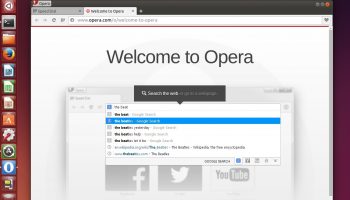 The first stable release of Opera for Linux in 18 months is now available for download, but will be a shock to those used to its v12 release.