Home Blog Page 1306

Distribution Release: Pisi Linux 1.1

Pisi Linux is an independent distribution built by many of the former developers of Pardus Linux – complete with custom package management and system installer, as well as several home-made utilities. It is also one of the few remaining Linux distributions (besides Slackware and Gentoo-based ones) that haven’t….

Read more at DistroWatch

KDE Developer Aaron Seigo Joins Kolab Systems

Munich skyline

Aaron Seigo is a seasoned open source developer who leads the Plasma team at KDE. He also tried to bring a Linux-based tablet to the market through his Vivaldi project. He recently joined Kolab Systems, and we talked to him as well as Kolab CEO Georg Greve to understand what Kolab does and how Aaron, a KDE developer, will help the company. (See the full Q&A with Aaron Seigo.)

Easy email

Today, the IT infrastructure of most organizations is dominated by open source products. It’s no longer rocket science to get started with a Linux server or a desktop client. Need a website for your company? Open Source CMS solutions like Drupal, Joomla or WordPress have your back covered. Need a database? MariaDB, Postges SQL, MongoDB, etc are at your service. Do you want to run a private cloud? OwnCloud is only a click away. LibreOffice handles all documents. Firefox and Chromium are the windows to the world wide web. All of these solutions are extremely easy to deploy and maintain.

There was only one missing link – easy to deploy email or a Groupware solution. Getting started with your own email server is so challenging that companies like Linode warn users to reconsider setting up their own email server.Contrary to popular assumptions, email remains the number one means of communication for enterprises and individuals. 

McKinsey says e-mail remains a significantly more effective way to acquire customers than social media—nearly 40 times that of Facebook and Twitter combined (exhibit). That’s because 91 percent of all U.S. consumers still use e-mail daily, and the rate at which e-mails prompt purchases is not only estimated to be at least three times that of social media, but the average order value is also 17 percent higher.

That’s where Kolab comes into the picture. It solves one of the most critical challenges enterprise customers face by offering a groupware/email solution which is secure, easy to deploy, can be run on premises (instead of someone else’s servers), is vendor neutral, and is open source so that one can see the source code and ensure there are no-back doors.

Greve says that Kolab is the missing link in the three critical business applications central to any installation: Office, Browser, and Groupware. If any of these three cannot be addressed there is a fatal flaw. And despite what is being heralded for some time now, the desktop is not disappearing. All signs say there will be a hybrid future, with the desktop playing a major role in professional environments, especially in those that set the tone.

He believes that in a larger picture for Open Source, Kolab has the same strategic value that Firefox had in breaking the Internet Explorer dominance, or OpenOffice for the beginning decline of Microsoft Office and the rise of ODF.

What is Kolab?

Seigo explains, “Kolab is a complete end-to-end groupware system. It includes a server which provides email, contacts, calendaring, file storage, task lists, notes, resource allocation, LDAP authentication and management, and much more. Essentially, everything you expect from enterprise groupware.

“All of these features are shareable, so people in a company (or at home as we do!) can share calendars, notes, etc.,” he said. “There is also the web client (Roundcube; the most used web mail software in the world), the desktop client for Windows, MacOS and Linux (Kontact) and synchronization options for every mobile platform in wide use today.”

Kolab offers two kinds of products: Kolab groupware suite which one can download and install on their own servers; and MyKolab hosting service. I find it similar to what WordPress offers.

MyKolab runs on Linux & Open Source

MyKolab runs on Linux, obviously. Greve elaborates on their open source usage, “We run MyKolab on top of RHEL, with minor tweaks, such as our own OpenSSL packages in order to enable the strongest possible levels of transport encryption. All the packages we run there are part of our Enterprise 13 repository, so no different from what other customers run.”

Kolab doesn’t trust proprietary software at all, he said. “There is no proprietary component in the software stack we are running there, both because we do not trust proprietary, and because we do not believe in the proprietary model.”

This usage makes them heavy consumers of open source code, but they are good citizens and contribute as much as they can.

“Kolab Systems is the primary sponsor of the Roundcube webmail system,” Seigo says. “Despite that, Roundcube works perfectly fine with other mail systems, which I think is a testament to how much Kolab Systems “gets” free software. We also work with projects ranging from cyrus-imap to KDE to the 389 Directory server. We work closely with Linux distributors as well, including Red Hat and Univention. So we are quite integrated with the free software world in both the technical and the business realm. All of the technology we produce is (and always will be) free software and, when sensible, done upstream.”

What will Seigo do at Kolab?

Seigo is a strong proponent of open source and his role at Kolab is not going to be much different from what he already does – promote open source. Upon joining Kolab he will immediately be helping to execute the much talked about Munich project, which is bringing free software for groupware on desktop, web and mobile devices to some 40,000 employees in that German municipality.

“In the bigger picture, I will be working with the technical team as well as the business development group to help bring the technology to a bigger world stage and increase adoption,” Seigo said. “This is a task that requires a dedicated, skilled team and I’m happy to come on board and extend that team through my efforts.”

When asked about the value Seigo brings to Kolab, Greve told me, “As a senior technologist, Aaron has a deep understanding of technology.” Aaron also understands the Free Software community and how to work the business aspects in ways that most people do not. “This will help develop Kolab Systems further as a deeply committed Free Software company,” he said.

Seigo is also a noted communicator who runs a popular blog and videocast. This skill-set will help Kolab in taking their story to the world. Georg admits that the “Kolab story has not yet been widely understood. So we’ll be working together to make sure that changes.”

Will a KDE developer influence the Kolab code-base?

Kolab already uses some KDE/Qt components so Seigo’s KDE background will be beneficial for both Kolab and Aaron. “Aaron is currently working with our development team on ensuring the Kolab Client will be up to enterprise standards by the end of the year on Windows and Linux.

“As you may know, the Kolab Client is a stabilized version of KDE PIM / Kontact with a focus on running against a Kolab Enterprise 14 server. Seigo’s KDE background, and his work on KDE PIM for Plasma Active are invaluable experience that he can bring to bear,” said Greve.

Seigo is however not planning on writing much code in the future as he does now. He will also be spending more time next year helping to promote and realize market opportunities for Kolab Enterprise and MyKolab, the hosted Kolab service provided by Kolab Systems. 

What will happen to those KDE projects that Aaron was leading or maintaining? Aaron said he has “transitioned the responsibilities I had in Plasma to other qualified members of the KDE community. This didn’t happen overnight; the steady pace of Plasma 5 releases demonstrates that continuity has been maintained. I still am holding on to a few smaller projects, such as KSnapshot.”

Work life balance of an open source developer

I always wondered; how does an open source developer work for a company? What is the work-life balance for an open source developer?

“There is no standard answer for that, but many open source developers work in a regular office, Seigo said. “I happen to work at home, though I meet with other Kolab Systems team members throughout the week. (When we do meet, I don’t drive, though: I take transit .. welcome to Switzerland!”

One unique aspect of working as a free software developer for a company is that you end up working constantly with people from other companies as well as the community. While in proprietary software shops it is very insular, free software companies are extroverts and you get to work with people around the world in an ever-changing constellation. This is an amazing opportunity to learn new things, meet new people and network across the industry.

Talking about the work-life balance he said, “As for the work-life balance, that’ a personal thing. I’ve never been good at it. Obviously, my family comes first and I have a couple of hobbies which ensure sanity (cooking and playing guitar), but I am answering these questions at nearly 8:00 pm which says a lot. I often write software that is relevant to work topics in my own time. It’s a passion. I love doing it, so I do it when I can. This is like any other passion out there that also happens to be a paying job; the greats in their field are always doing it because they love it, on the clock or not. The entire Kolab Systems team is, I’m finding, like this, which certainly contributes to the results.”

Tiny $269 3D Resin Printer Runs Linux on Raspberry Pi

The $269 iBox Nano, billed as the “world’s smallest, cheapest 3D resin printer,” offers WiFi and 328 Micron resolution, and runs Linux on a Raspberry Pi. The Raspberry Pi has been used as a computer interface device for 3D printers, as well as a calibration add-on, but as far as we know the iBox Nano […]

Read more at LinuxGizmos

How to Fix SSLv3 Vulnerability (POODLE) in Apache and NGINX on CentOS

POODLE (CVE-2014-3566) is an security vulnerability in SSLv3 discovered by Google in September. POODLE stands for Padding Oracle On Downgraded Legacy Encryption. All the websites supporting SSLv3 is vulnerable to POODLE, even if it also supports more recent versions of TLS. Using POODLE a hacker run Man-in-the-middle attacks attacks in your network stream and can steal secure HTTP cookies.

Read complete article here to check how to fix this issue on Apach2(HTTPD)/NGINX Servers on CentOS/RHEL Systems.

OpenStack vs. Amazon: The Power of Distributed Computing

At the OpenStack Summit in Paris, the OpenStack Foundation’s Mark Collier discusses the open-source cloud effort versus Amazon and why one cloud doesn’t fit all needs.

Read more at eWeek

Mobile Linux Distros Keep on Morphing

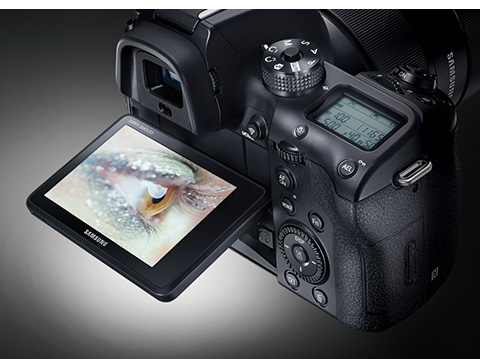
Samsung NX1 camera

Legitimate questions have been raised as to whether Linux platforms designed for smartphones are as good as a tailored embedded Linux stack built from scratch. Yet, so far experiments outside the mobile realm have proven fairly successful. Over the last week, we saw how several of these platforms, including Firefox OS, Tizen, Ubuntu, and WebOS, are spreading out to new device types.

First, Mozilla revealed a Firefox OS port to the Raspberry Pi that it hopes will rival Raspbian. Also last week, Samsung showed off a Tizen-based smart TV prototype, as well as a new camera. In addition, specs for the first Ubuntu Touch-enabled tablet were floated on the web, and earlier last month, LG hinted at an upcoming WebOS smartwatch.

Samsung NX1 cameraSome of these projects, especially Tizen, were touted from the beginning as being able to expand to a variety of form factors. Yet, the smartphone has been the main focus, despite the fact that the only platform to actually ship in a phone so far is Firefox OS, and years ago, WebOS. Firefox OS continues to expand its budget phone launches in emerging markets, and higher-end phones shipping with Ubuntu and Tizen are likely to arrive by year’s end.
Yet, the smartphone market is problematic to newcomers on several counts. First, it’s becoming increasingly saturated, leaving only the budget field open for major growth. Second, Android now runs better on lower-end hardware, and is better able to compete in emerging markets with Google’s new Android One support program. Android, of course, has a big advantage by dint of its huge library of mature apps.

At the same time, the Internet of Things revolution, spurred on by lower-cost wireless technology, means that more and more dumb appliances can benefit from being smarter. Many devices could benefit from apps, which is the main argument for using a mobile platform rather than building an embedded IoT gizmo from scratch.

Firefox OS based PiFxOS takes on Raspbian

At the Mozilla Festival held earlier this week in the U.K. , Mozilla unveiled a PiFxOS version of Firefox OS for the Raspberry Pi, also dubbed Foxberry Pi, with promises to make it competitive with Raspbian Linux. It’s currently a bleeding edge demoware build, but Mozilla appears to be serious about ramping it up, with an early focus on robotics hacking and media players.

PiFxOS is based on a Firefox OS port to the Pi developed by Oleg Romashin and Philip Wagner, which seems to have stalled. Mozilla plans to beef it up with support for sensors, control motors, LEDs, solenoids, and other components, as well as build a modified version for drones. A longer term project is to develop a DOM/CSS platform for robots using “a declarative model of a reactive system.”

Mozilla had already focused its attention on media players. Last month, a startup formed by Mozilla developers had a successful Kickstarter launch for the Matchstick HDMI stick computer running Firefox OS. The device offers Tizen homeChromecast-like content casting, as well as a $25 price.

Samsung shows Tizen smart TV

Tizen has yet to ship in a smartphone, despite Samsung having announced a Tizen-based Samsung Z model earlier this year. Now, it appears that the first Tizen phone will ship by the end of the year in India instead of Russia. Meanwhile, Samsung is already on its second generation of Tizen-based smartwatches with the new Gear S, and last week Samsung showed off a long-rumored Tizen smart TV.

As reported by Brian Warner on Linux.com, Samsung and other companies demonstrated a variety of Tizen-based products and prototypes at the Tizen Developer Summit in Shanghai. Tizen backer Intel announced that Tizen 3.0 is on schedule for release by the year’s end.

One Tizen 3.0 enhancement is a feature that makes a common core set of code extendable to new form-factors using device-specific profiles. This is somewhat similar, although not as ambitious, as Canonical’s plans to develop a convergence release that enables an Ubuntu Touch app to run seamlessly on phone, tablet, and desktop.

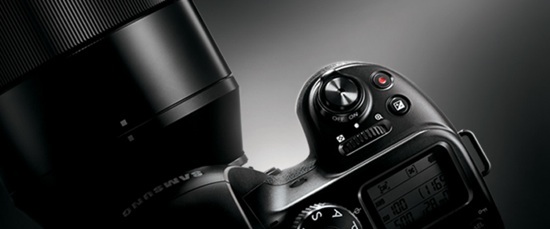
Samsung also showed off the latest Tizen smartwatches and cameras. The latter have expanded from the NX300M camera announced a year ago to an NX30 model and a 28.2-megapixel NX1 camera that can capture 15 frames per second in a 70-frame burst.

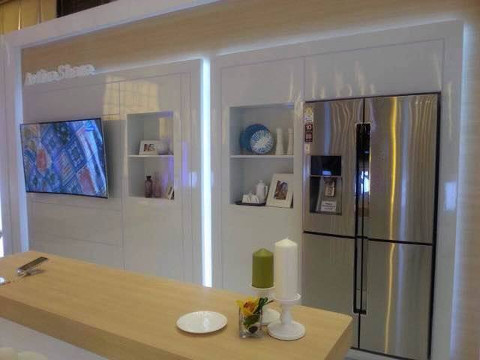
Samsung orchestrated a product synergy demonstration in which a video running on a Tizen smartphone is transferred in progress using a Gear S watch to a prototype Samsung smart TV running Tizen. The video, which picked up where the phone left off, was then transferred back to the phone. Judging from the photo, a previously announced Tizen refrigerator prototype was also part of this kitchen-themed demo.

There was also a display showing the Tizen-based Modello IVI (in-vehicle infotainment) proof-of-concept UI. Several automotive IVI projects based on Tizen are already in the works.

Ubuntu tablet breaks cover

Over the years, Ubuntu has popped up on a number of minor tablet launches, but it was never optimized for touchscreens. With the new Ubuntu Touch interface, which added more tablet features in Ubuntu 14.04, a fairly polished tablet UI is now available. The first tablet with Ubuntu Touch could be a UT One design that was revealed by Phoronix this week. There were no photos of the tablet, which is designed by the Demski Group and Mastermind Hardware, but Phoronix posted a spec list.

The 10.1-inch tablet, which is to ship this quarter, runs Ubuntu Touch on a quad-core, 1.5GHz Intel Atom Z3735D processor. The UT One features 2GB of RAM, 16GB of storage, and a microSD slot, and offers an IPS touchscreen with 1280 x 800-pixel resolution. Other features include front- and rear-mounted 2-megapixel cameras, WiFi, Bluetooth 4.0 LE, and optional USB-based 3G.

Meanwhile, Meizu is expected to release a version of its new Meizu MX4 Pro smartphone running Ubuntu Touch by the end of the year. This will likely be the first Ubuntu phone, although Spain’s BQ is also expected to introduce an Ubuntu phone, as well.

WebOS to appear in smartwatch?

The Linux-based WebOS has had a long strange journey since its heyday late in the previous decade when it shipped on Palm Pre phones. After a short-lived career in HP tablets and phones, the OS was sold to LG, which revamped it and put it to work in a well-received LG Smart TV, as well as a signage computer. Now, it appears, a smartwatch is in the works.

In early October, The Verge noticed and recorded a web-page promoting an SDK for a round-faced WebOS SmartWatch. The web page was then pulled by LG.

Assuming the watch is legit, LG appears to be following Samsung’s lead in trying out several smartwatch platforms. Just as Samsung offers an Android Wear based Gear Live watch, in addition to its three Tizen watches, LG has already launched an Android Wear based G Watch and is now selling a round-faced follow-up called the G Watch R.

LG appears to be making the previously proprietary WebOS more open to outside developers. For a fully open version for mobile devices, you can turn to LuneOS, the new name for the Open WebOS project. In September, LuneOS released an Affogato build that supports HP’s previously WebOS-based TouchPad tablet, as well as LG’s Android-based Nexus 4.

And don’t forget Android…

The platforms noted above are still far less diversified than Android, which is the premiere shape shifter among mobile Linux OSes. In addition to offering Android for mobile devices and Android Wear for wearables, Google has this year launched an Android Auto platform, as well as an Android TV replacement for Google TV. Android TV is initially available on an Intel Atom-based, Asus-built Nexus Playerdevice running Android 5.0 (“Lollipop”).

These are only the official Android platforms. Android and forks of Android have appeared on all manner of devices, including media players, home automation devices, robots, and point-of-sales devices like the new Poynt PoS device. Clearly, whether you’re an established player or an emerging competitor, diversity is the name of the game.

OpenBSD 5.6 Replaces OpenSSL with LibreSSL

The new SSL/TLS library aims to capitalize on post-Heartbleed dissatisfaction with OpenSSL. Whether it’s as true a plug-in replacement as it claims to be is yet to be determined.

MakerBot and GE FirstBuild Want to Transform the Fridge

A new Thingverse challenge seeks to make the kitchen appliance customizable to each individual household.

The Latest Ubuntu Images Arrive on Google Cloud Platform

Canonical, working with Google, has announced that it is launching the public beta of Ubuntu 14.04 LTS, 12.04 LTS and 14.10 on Google Cloud Platform. “Starting today, it is possible to select optimized, up to date, fully secure and consistent Ubuntu images on Google Cloud Platform,” Canonical’s post noted, adding that “Canonical continually maintains, tests and updates certified Ubuntu images, making the latest versions available on Google Cloud Platform within minutes of them being officially released.”

Ubuntu has been shown to be an increasingly popular platform for use in the cloud and as the basis for cloud deployments, and making it available on Google’s cloud platform should attract many users. 

Read more at Ostatic

Tizen Common Milestone 3.0.2014.Q3 has been released

  The Tizen Common team has announced the new release of Q3 milestone for Tizen Common 3.0, which is published at the following URL: http://download.tizen.org/releases/milestone/tizen/common-3.0.2014.Q3/tizen-3.0.2014.Q3-common_20141031.15/  

Major characteristics of this release: Availability for 3 architectures: ia32, x86_64, armv7l; Two display systems: X11 or Wayland; Emulator image; USB installer image; Multiple boot systems supported: mbr, efi, u-boot.   

Read more at Tizen Experts