
With Jono Bacon having recently left Canonical where he served as the Ubuntu Community Manager, Canonical has made some changes to its community team…
Read more at Phoronix

This article is based on a talk I gave at DockerCon this year. It will discuss Docker container security, where we are currently, and where we are headed.
This is the fourth profile in a series on Linux Foundation system administrators leading up to SysAdmin Day. Do you have a super-hero sysadmin you’d like to recognize? Send your nomination to This e-mail address is being protected from spambots. You need JavaScript enabled to view it
by July 25 and enter them to win a free ticket to LinuxCon and CloudOpen North America taking place in Chicago August 20-22, 2014. (See the full contest announcement for more details.)
 Clint Savage is a system administrator for the Linux Foundation’s Collaborative Projects. Here he discusses the new technologies he’s been digging into lately, his favorite part of the job, and fond memories of a weeklong hackfest with his coworkers.
Linux.com: How long have you been a sys admin?
Clint Savage: I started working on Linux systems in 1998, but really started doing systems administration in 2006.
When did you start at the Linux Foundation and how did you get the job?
I applied for the job after deciding that traveling with a young child would be difficult as my previous job had me traveling around 25-30 weeks a year. I believe I was contacted by a recruiter in June. I applied in July, had several interviews and a successful technical test. I was hired in mid-August, 2012, and started two days before LinuxCon. My first duties were to attend LinuxCon that year in San Diego.
What do you do for the Linux Foundation? What’s your specialty?
I am a systems administrator for the Collaborative Projects. My specialty is core systems. I’m the guy that builds virtual machines, maintains our authentication systems and does identity management (read FreeIPA). I also focus on our puppet tooling and git repositories for Code Aurora Forum and other collaborative projects.
Will you describe a typical day at work for you?
My typical day starts with me making sure customers have what they need to do their jobs. I tend to focus on a few tickets each day, then work on projects to improve our infrastructure. Lately, I’ve been digging a bit into CoreOS and Docker. We’re working to create a new build infrastructure for Jenkins and Gerrit on Google’s Compute Engine (GCE) using these technologies.
What’s your favorite part of the job/ thing to do and why?
I love the flexibility of working from home. I tend to work a few hours in the morning, take time with my family around lunch time and then work into the evening. My family is typically around me all day and I love feeling involved in their lives and still being able to get work done.
What is your favorite sysadmin tool and how do you use it?
Hmm, there are so many to choose. I think I’ll go with something command line-ish. I love ‘ctrl+r’ on a bash command line, using the ’emacs’ value of the SHELLOPTS environment variable.
What’s your favorite story about working at the Linux Foundation?
In April of 2013, I attended the Linux Foundation Collaboration Summit in San Francisco. We had a company-wide event the day after the summit ended, which was quite fun. I really enjoyed meeting everyone that week. I really felt part of the team. The interesting thing was that we had intended to attend the Summit and work on migration of services for Code Aurora Forum (CAF) that week. It turned into a big hackfest that lasted all through Summit. We then had the one day off for the company event, followed by a flight to Portland for more work, both at the data center and hacking.
I really got to know my coworkers that week, they are all dedicated souls who spent nearly 18 hours each day that week to ensure our customers got the best experience possible. I’d say that was my defining week so far at The Linux Foundation. I’ve never found myself worrying about anything because I can always rely on someone on the team to be there with a possible solution. That is, if I can’t figure it out myself. 🙂
What do you do for fun, in your spare time?
Lately, I’ve been spending an inordinate amount of time learning about solar power and living off the grid. I won’t say that I’m going to go that way yet. But after building a portable solar swamp cooler, I just want to build a tiny house on a trailer and travel the country in a little house on wheels. The rest of the time, I tend to read a lot of graphic novels, programming something useful, or spending time with my kids. I think this year I’ll start camping a bit more again, too.
Read more about Linux Foundation System Administrators:
Linux Foundation SysAdmin Konstantin Ryabitsev, an SELinux Expert
Linux Foundation SysAdmin Michael Halstead’s IT Career Started at Age 15
Linux Foundation SysAdmin Andy Grimberg Loves New Tech and Snowboarding
To Linux Foundation SysAdmin Ryan Day, Elegance is the Best Tool
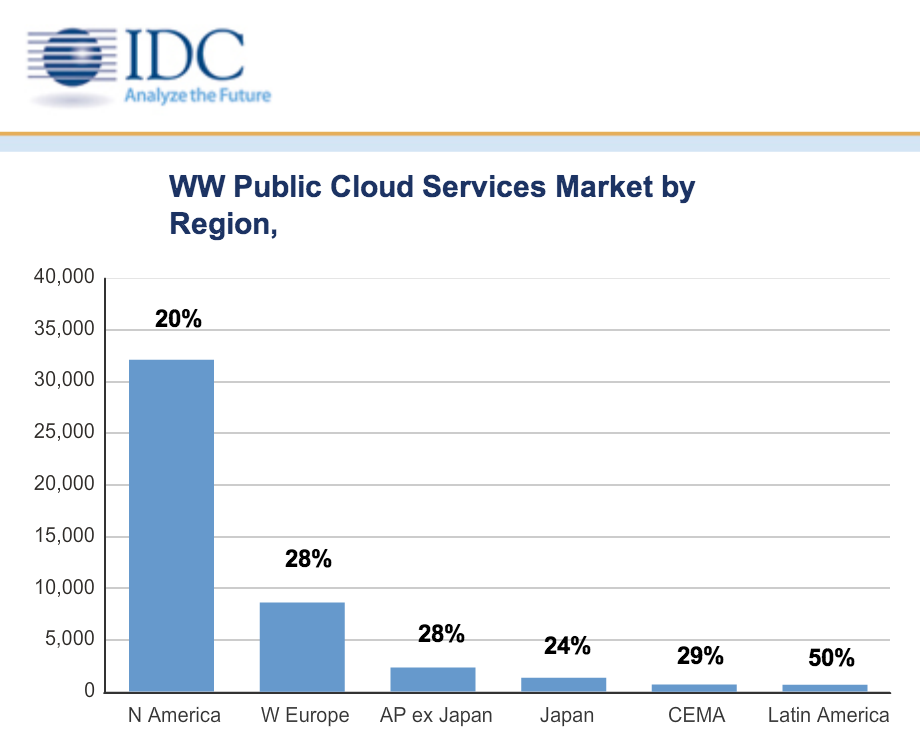 If the success of Amazon Web Services (AWS) has demonstrated anything, it’s been the popularity of public solutions in the early days of cloud computing.
That popularity appears to continue, too. In fact, recent research from IDC uncovered newly intensifying market-share battles now under way in the increasingly valuable public cloud services market. Global public cloud services reached a total market size of $45.7 billion in 2013, according to IDC’s latest Worldwide Semiannual Public Cloud Services Tracker, and IDC expects the market to follow a compound annual growth rate of 23 percent until 2018.
Increasingly, however, organizations are showing fresh appreciation for the distinct benefits of hybrid and private cloud solutions, as underscored by newly released reports from Technology Business Research.
To wit: Not only has a full 20 percent of the large enterprise market integrated at least two clouds to create a hybrid cloud, according to TBR, but “the volume of integrations will increase over the next five years as customers demand improved data interoperability, connectivity and customer experience,” the researcher predicted. TBR puts the hybrid integration market at $7 billion in 2014.
In the private cloud realm, meanwhile, TBR estimates a $41 billion private cloud market in 2014, growing at a 14 percent compound annual growth rate to $69 billion by 2018.
“In general, we have seen more use of public cloud and public PaaS thus far compared to private and hybrid clouds,” Jay Lyman, a senior analyst for enterprise software with 451 Research, told Linux.com.
“However, that public cloud use has mostly consisted of Web and mobile applications,” Lyman noted. “As enterprise interest and use of cloud computing infrastructure grows, we are seeing stronger pickup for private and hybrid clouds.”
Enterprise organizations are typically seeking “the availability, scalability and economic advantages of public cloud infrastructure, but are reluctant to go beyond their own resources for control, security, data, compliance, regulatory and other enterprise concerns,” he added. “Thus they seek private cloud infrastructure and hybrid implementations that allow them to get the best of both worlds.”
Recent data from 451 Research’s ChangeWave service corroborates these trends, Lyman said.
For example, some 31 percent of the 1,137 respondents to a January ChangeWave survey reported that their company operates a private cloud — up two percentage points since October 2013, he explained. Among those currently using a private cloud, moreover, 40 percent said they’d increase their private cloud spending over the next six months; that’s three points higher than in the previous survey, he added.
As for hybrid clouds, nearly one in 10 companies surveyed — 9 percent — reported using a hybrid cloud deployment, Lyman said, with large companies choosing that option at more than twice the rate (15 percent) of smaller ones (6 percent). Looking ahead, 11 percent of all companies reported they would be deploying a hybrid cloud six months from the time of the survey.
“We can also see this trend playing out among large enterprises and service providers that are actually running applications and services on multi-cloud or hybrid cloud infrastructures,” Lyman noted.
Testing and development may be in public clouds while production deployment is in private clouds for security and other reasons, he said; alternatively, it could be the other way around, “with cloud bursting capability in public clouds for heavy traffic and related campaigns.”
Either way, “two years ago or so, multi-cloud and hybrid-cloud capability was simply a desire and demand for most of these large organizations, without many of them actually implementing it,” he concluded. “That’s starting to change as organizations get more familiar and comfortable with cloud computing and use of these private and hybrid infrastructures.”