Home Blog Page 1419

Survey: What are the Best Open Source Cloud Projects?

Chicago skyline, wikimedia

Linux.com is teaming up with The New Stack to do a survey about what you think are the most popular open source cloud projects.

The next-generation of the enterprise is being built now with open cloud technologies. Your choices will help identify and recognize the most popular open source projects that are defining the new way to build and manage applications and systems.

Complete the survey and enter to win a free all-access pass to CloudOpen North America, taking place August 20-22 in Chicago, including full access to the co-located LinuxCon event as well. Two winners will be selected randomly from contest entries and notified via email following the close of the survey.

The survey should not take more than 5-10 minutes to complete. Here it is: http://svy.mk/1nhzNdZ

It covers hypervisors, infrastructure as a service (IaaS), platform as a service (PaaS), management and provisioning and other topics such as favorite overall open source projects. Projects in each category are the same as those included in the Linux Foundation’s October 2013 white paper, Understanding the Open Cloud, with a few additions chosen by the New Stack and Linux.com editors. All are relevant to the open cloud, relatively mature, and relatively visible in the open source ecosystem.

All of these projects are released under an open source license that guarantees full and unrestricted access to the project’s codebase. Every component, from the software to the APIs used by application developers, is open to vendors, developers and customers alike. Each project also has a community of contributors and users who work overtime to support it.

The results of this survey will be presented at CloudOpen North America in Chicago, Aug. 20-22, 2014, as well as online at Linux.com and on The New Stack.

Here are the projects, by category. (You are also welcome to write in projects on the survey as you see fit by selecting the “other” option and adding the project’s name to the provided text box.)

1. Hypervisor and Container

Docker. Io – an open-source engine for building, packing and running any application as a lightweight container, built upon the LXC container mechanism included in the Linux kernel. It was written by dotCloud and released in 2013.

KVM – a lightweight hypervisor that was accepted into the Linux kernel in February 2007. It was originally developed by Qumranet, a startup that was acquired by Red Hat in 2008.

Xen Project – a cross-platform software hypervisor that runs on platforms such as BSD, Linux and Solaris. Xen was originally written at the University of Cambridge by a team led by Ian Pratt and is now a Linux Foundation Collaborative Project.

CoreOS – a new Linux distribution that uses containers to help manage massive server deployments. Its beta version was released in May 2014.

2. Infrastructure as a Service

Apache CloudStack – an open source IaaS platform with Amazon Web Services (AWS) compatibility. CloudStack was originally created by Cloud.com (formerly known as VMOps), a startup that was purchased by Citrix in 2011. In April of 2012, CloudStack was donated by Citrix to the Apache Software Foundation.

Eucalyptus – an open-source IaaS platform for building AWS-compatible private and hybrid clouds. It began as a research project at UC Santa Barbara and was commercialized in January 2009 under the name Eucalyptus Systems.

OpenNebula – an open-source IaaS platform for building and managing virtualized enterprise data centers and private clouds. It began as a research project in 2005 authored by Ignacio M. Llorente and Rubén S. Montero. Publicly released in 2008, development today is via the open source model.

OpenStack – an open source IaaS platform, covering compute, storage and networking. In July of 2010, NASA and Rackspace joined forces to create the OpenStack project, with a goal of allowing any organization to build a public or private cloud using using the same technology as top cloud providers.

3. Platform as a Service

CloudFoundry – an open Platform-as-a-Service, providing a choice of clouds, developer frameworks and application services. VMware announced Cloud Foundry in April 2011 and built a partner ecosystem.

OpenShift – Red Hat’s Platform-as-a-Service offering. OpenShift is a cloud application platform where application developers and teams can build, test, deploy, and run their applications in a cloud environment. The OpenShift technology came from Red Hat’s 2010 acquisition of start-up Makara (founded in May 2008). OpenShift was announced in May 2011 and open-sourced in April 2012.

4. Provisioning and Management Tool

Ansible – an automation engine for deploying systems and applications.

Apache Mesos – a cluster manager that provides efficient resource isolation and sharing across distributed applications, or frameworks. It was created at the University of California at Berkeley’s AMPLab and became an Apache Foundation top level project in 2013.

Chef – a configuration-management tool, controlled using an extension of Ruby. Released by Opscode in January 2009.

Juju – a service orchestration management tool released by Canonical as Ensemble in 2011 and then renamed later that year.

Ovirt – provides a feature-rich management system for virtualized servers with advanced capabilities for hosts and guests. Red Hat first announced oVirt as part of its emerging-technology initiative in 2008, then re-launched the project in late 2011 as part of the Open Virtualization Alliance.

Puppet – IT automation software that helps system administrators manage infrastructure throughout its lifecycle. Founded by Luke Kanies in 2005.

Salt – a configuration management tool focused on speed and incorporating orchestration features. Salt was written by Thomas S Hatch and first released in 2011.

Vagrant – an open source tool for building and managing development environments, often within virtual machines. Written in 2010 by Mitchell Hashimoto and John Bender.

5. Storage

Camlistore – a set of open source formats, protocols, and software for modeling, storing, searching, sharing and synchronizing data. First released by Google developers in 2013.

Ceph – a distributed object store and file system. It was originally created by Sage Weil for a doctoral dissertation. After Weil’s graduation in 2007, he continued working on it full-time at DreamHost as the development team grew. In 2012, Weil and others formed Inktank to deliver professional services and support. It was acquired by Red Hat in 2014.

Gluster – a scale-out, distributed file system. It is developed by the Gluster community, a global community of users, developers and other contributors. GlusterFS was originally developed by Gluster Inc., then acquired by Red Hat in October 2011.

Riak CS – an open source storage system built on top of the Riak key-value store. Riak CS was originally developed by Basho and launched in 2012, with the source subsequently released in 2013.

Swift – is a highly available, distributed object store system, ideal for unstructured data. Developed as part of the OpenStack project.
Kernel Prepatch 3.16-rc6

The 3.16-rc6 release is out, and Linus is starting to think that things are still too active. “Anyway, rc6 still isn’t all *that* big, so I’m not exactly worried, but I am getting to the point where I’m going to start calling people names and shouting at you if you send me stuff that isn’t appropriate for the late rc releases. Which is not to say that people did: while rc6 is bigger than I wished for, I don’t think there’s too much obviously frivolous in there. But I’ll be keeping an eye out, and I’ll be starting to get grumpy (or grumpiER) if I notice that peopel aren’t being serious about trying to calm things down.

Read more at LWN

How To Install Nginx With PHP And MySQL (LEMP Stack) On CentOS 7

How To Install Nginx With PHP And MySQL (LEMP Stack) On CentOS 7

Nginx (pronounced “engine x”) is a free, open-source, high-performance HTTP server. Nginx is known for its stability, rich feature set, simple configuration, and low resource consumption. This tutorial shows how you can install Nginx on a CentOS 6.5 server with PHP support (through PHP-FPM) and MySQL (Mariadb) support.

Read more at HowtoForge

Chromebook Gains, Microsoft Worries

NPD reveals that Chromebook sales are exploding and Microsoft is starting to get worried.

Excellent Free Distraction-Free Tools for Writers

Fans of the typewriter remain a vehement group. They view the typewriter as something really special, a tool which makes the connection between languages. One of the attractions of a typewriter is that it offers a distraction-free alternative of modern day methods for producing a document. They challenge the writer to concentrate on what really matters – the content. They force the writer to think.

In many countries, the typewriter has been largely consigned to history by the computer. Yet, the computer is jam-packed with distractions. The desktop with its cluttered interface, the chatter of social media, the almost limitless content of the internet, the chirping email notifications, the list of distractions is endless. When writing, concentration is vital. Fortunately, there are computer applications which are designed to offer a distraction-free environment, to ensure the writer has mental clarity, by not being distracted by the operating system and a cluttered interface.

Here is my take on the finest distraction-free applications to help you focus on writing without interruption. Each of the applications run in Linux, most are available as desktop applications.

<A HREF=”http://www.linuxlinks.com/article/20140720045111813/DistractionFreeTools.html“>Read on</A>

Mozilla Reveals Far Reaching Global Push for Firefox OS

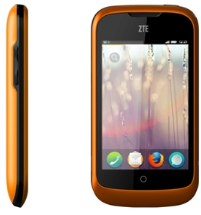
Firefox OS has “unlocked the mobile ecosystem” and is quickly expanding across a broad range of devices and product categories in Europe, Latin America and Asia Pacific, according to a new post from Mozilla. There are those who have questioned whether Firefox OS is finding an enthusiastic audience, but many people questioned Android when it first arrived, too.
According to Mozilla, which has already announced that it will help usher in $50 Firefox OS phone in India this summer, Firefox OS is now available on seven smartphones offered by five major operators in 15 countries. That’s nothing to shake a stick at.


Read more at Ostatic

MIT Research Shows the Future of Datacenter Networking

MIT researchers are presenting a paper (next month at the annual meeting of the ACM Special Interest Group on Data Communication) on a network management system they are calling “no-wait datacenters.” The researchers have experimentally shown that the system can reduce network transmission queue length by over 99 percent.

With testing done in cooperation with Facebook — making use of one of their data center facilities — the researchers were able to show latency reductions that effectively did away with the normal queue. Their report stated that even in times of heaviest traffic, the average latency per request dropped from 3.56 microseconds to .23 microseconds.

6 Excellent Lightweight Linux Distros for x86 and ARM

Presenting a nice assortment of lightweight yet fully-functional Linux distros for all occasions. All of these are full distros that do not depend on cloud services; four for x86 and two, count ’em, two for ARM hardware. (Updated Feb 2016: Read the latest.)

Elementary OS

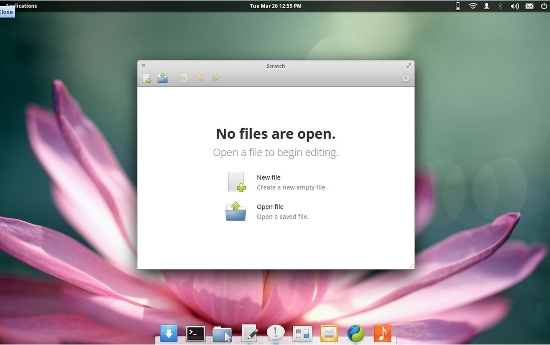
Elementary OS is a beautiful, fast, lightweight Linux for 32- and 64-bit x86. It is built on an Ubuntu core, and Elementary’s desktop environment, Pantheon, started out with some stripped-down GNOME 2 elements. But it is more than an Ubuntu respin or GNOME fork– a lot of custom development goes into Elementary OS, including apps and its development toolkit.

 fig1-elementary os distro

A significant aspect of Elementary OS is the inclusion of accessibility features for hearing, sight, and motor-impaired users. The state of accessibility technologies in Linux is far behind where they should be, so it’s encouraging to see a distro building them into its core system. Elementary OS has a bit of a Mac-like feel with a sleek, elegant appearance, subtle highlighting cues, minimal clicks to get from one place to another, and lots of useful super key shortcuts. I expect that even inexperienced Linux users could start using Elementary OS and be productive with just a little bit of poking around.

There is currently $5,755 of cash bounties available for bug-fixing some applications and base libraries. If you can’t code, putting a few bucks in the bounty kitty is a great way to support Elementary OS.

LXLE

LXLE takes Lubuntu LTS (long-term support), customizes the LXDE desktop, adds proprietary codecs and drivers and a thoughtful selection of default applications, and advertises it as a drop-in replacement for Windows. Me, I think anything is a good replacement for Windows, including an Etch-a-Sketch. But LXLE (Lubuntu eXtra Life Extension) really is an excellent choice for users who want to swap Linux for Windows.

fig2-lxle-distro

LXLE is not amazing new revolutionary technology, but rather an excellently-crafted and refined enhancement of Lubuntu 12.04 and 14.04. The last 5 percent is the hardest, and LXLE goes all the way and finishes that last 5 percent. Installation is fast and simple, and it boots up very quickly. LXLE has five desktop looks to choose from: Unity, Windows XP, GNOME 2, Mac OS X and Netbook. Its most fun feature for me is the 100+ included beautiful wallpapers, and the Random Wallpaper button to cycle them automatically. Windows refugees, or any casual user, will find their way around easily. It also includes the full capabilities of Linux for power users. That is why I love Linux: we can have it all. (32- and 64-bit x86)

Arch Linux ARM

arch linux logoArch Linux is the choice of fine nerds everywhere who want a simple yet versatile, up-to-date, lightweight rolling distribution. Arch calls itself simple because it comes with a minimum of bells and whistles, and is for users who want maximum control of their systems with no backtalk from “helpful” utilities.

Arch supports x86, and also has an excellent ARM port. ARM devices are everywhere thanks to single-board computers like Raspberry Pi, Beagleboard, and Arduino, smartphones, tablets, and netbooks like the Samsung Chromebook. Arch is extremely customizable, so you can pare it down to fit even the smallest SBC and make it into a router, a special-purpose server, or even a tiny but useful portable desktop computer. Just like x86 Arch, ARM Arch is well-documented and has active community support.

Point Linux

Point Linux is a baby, barely a year old. It is based on Debian 7 and the MATE desktop, which was originally forked from GNOME 2. So it has a traditional system menu and panels– nice and clean, and everything easy to find with no dancing icons, no hidden things that appear only when you luck out and hover your cursor over the exactly correct spot, and virtual desktops that stay put. It runs well on old feeble hardware, and comes with a good basic selection of applications. Point Linux is based in Russia, and has good comprehensive localization. If you miss the Ubuntu of old, when it had the best GNOME 2 implementation of any distro, then you might like Point Linux. (32- and 64-bit x86)

pointlinux distro

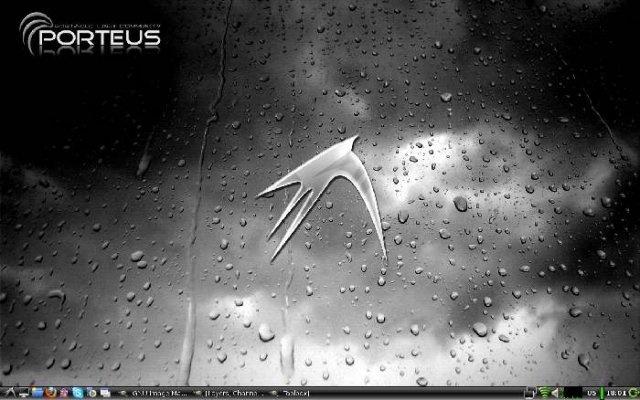
Porteus

Porteus was originally named Slax Remix. Porteus is a combination of “portability” and “Proteus”, the god of the sea who could change his form. This is a reference to Porteus’ flexibility; it weighs in at less than 300MB, and is optimized to run from a USB stick, CD, Compact Flash, or hard disk. It’s a great way to get a prefab version of Slackware all ready to go to work.

fig5 porteus

You get a choice of five, count ’em, five desktop environments: KDE4, Razor, LXDE, MATE, or Xfce. Porteus includes a package manager, so you can install and remove packages to your heart’s content. In my un-humble opinion it is the best portable Linux.

Fedora ARM

Fedora’s ARM port has finally been promoted to primary architecture status, as of the Fedora 20 release in December 2013. This is a significant step because it now gets equal priority with the x86 releases, and no packages are pushed into repositories if they fail to build. In typical Fedora fashion, ARM support is broad and pushes into the bleeding edge with support for 64-bit ARM, all the popular ARM SBCs, and a nice selection of unofficial remixes for unsupported devices including the Samsung Chromebook. Which I keep mentioning because it looks like a perfect travel notebook once you clear the Google gunk off and install a good proper Linux on it. Visit the Fedora ARM wiki page to learn everything.

fig6 fedora unity desktop


KernelASan: Bringing Address Sanitizer To The Linux Kernel

Work being done by Samsung and other Linux stakeholders is bringing the Address Sanitizer capabilities found in GCC as being useful for detecting potential memory issues within the Linux kernel…

Read more at Phoronix

Mirantis and Oracle Partner on OpenStack

The deal could be worth tens of millions of dollars as Oracle digs deeper into the cloud.

Read more at eWeek