
NEWS ANALYSIS: Although researchers find that password manager technology is at risk of exploitation, that doesn’t mean that passwords should be abolished.
Read more at eWeek

 Once the Raspberry Pi Foundation set the hacker board price record two years ago with its $35 Raspberry Pi Model B, it could never go back. Whatever novelties that might appear in the next-generation Pi would have to be added without raising the price.
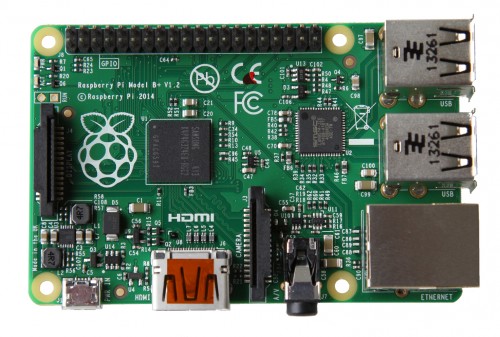
The Raspberry Pi Model B+ which launched this week for $35 at online retailers like Element 14 and R2, does a good job with this balancing act. While many Pi fans will be upset that there’s no advance from the ARM11-based Broadcom BCM2835 system-on-chip to a more robust Cortex-A processor, by sticking with the same SoC and keeping the RAM at 512MB, the Model B+ avoids controversies over software compatibility and keeps the cost within reach for students and tinkerers.
With the Model B+, the Pi may lose some of its millions of devotees to faster hacker SBCs like the Cortex-A8-based BeagleBone Black ($55), Pi-compatible, Cortex-A7-based Banana Pi ($49), or even faster, quad-core, Cortex-A9 Odroid-U3 ($59). However, the B+ adds enough connectivity to match or exceed the competition on that score.
The major enhancement to the Model B+ is the addition of two more USB ports for a total of four. All four have improved hotplug and overcurrent behavior, according to the Pi Foundation. In other words, Pi users can avoid costly, ungainly USB hubs.
The B+ also advances from a 26-pin GPIO connector to a pin-compatible 40-pin connector, which is claimed to handle most expansion boards without modification. As a result, the Pi can support more interfaces, sensors, motor controllers and the like at the same time. Other enhancements include an improved audio circuit, as well as switched, as opposed to linear regulators, which reduces power consumption by a claimed 0.5 to 1 Watts.
Two other changes move away from legacy interfaces, as well as the original focus of providing a cheap computer for students to plug into the antiquated gear found in schools. First, the too-tight fitting SD slot has been replaced by a more modern, and easier to connect microSD slot. Also, the Composite video port has been integrated into the 3.5mm stereo out jack, and now requires an extra-cost adapter to plug in. Apparently, even in schools, HDMI is becoming standard issue.
All told, that’s not a bad mix of features, considering the $35 price. The only SBCs that can match that price run OpenWRT Linux on low-end MIPS processors, such as the new DPT Board Indiegogo project from DPTechnics.
Granted, at $35, pricing is more of a psychological barrier than a hard-nosed business issue. Whether you’re hacking together a home automation device, a robot, or a science experiment, spending an extra $20 or so for your single board computer is not a major factor. It does, however, make a difference for developers of clustering projects like lighting arrays, as well as budget-constrained organizations such as schools.
Even if it is mostly a matter of impression over ROI, psychology is as real and powerful now as it was two years ago when the Pi took the hacking world by storm. One could argue that the foundation and its manufacturing partners would have had the necessary volume to add a Cortex-A7 SoC and boost RAM to 1GB without raising the price more than $10. It’s also likely that most Pi fans would have applauded. After all, we have yet to hear about mass defections from the BeagleBone Black after the Rev C jumped in price from $45 to a current $53 — and BeagleBoard.org didn’t even upgrade the processor.
Meanwhile, Pi owners and other would-be hackers looking for more power will have to wait for the next big thing. In the Model B+ blog announcement, the Raspberry Pi Foundation notes that this is not “Raspberry Pi 2,” but rather the final revision of the Pi. That would suggest that something like a Pi 2 could arrive by next year.
For the time being, assuming most expansion boards actually work in the new 40-pin connector, the Model B+ should fit in smoothly. The Pi Foundation can avoid fragmentation issues caused by software incompatibility while still showing it hasn’t fallen asleep at the wheel.
Despite finally posting documentation for the Broadcom SoC’s VideoCore IV GPU. the Pi Foundation still gets criticized for not being as open as many other community-based SBC projects. Yet, it ably performs one of the key tasks of a community project: listening to its users. The USB limitations were getting to be a problem, and a growing number of users who trained on the Pi have moved to other boards with more expansion pins. As for the users who dared to crave more than a decade-old processor architecture, well, two out of three ain’t bad.
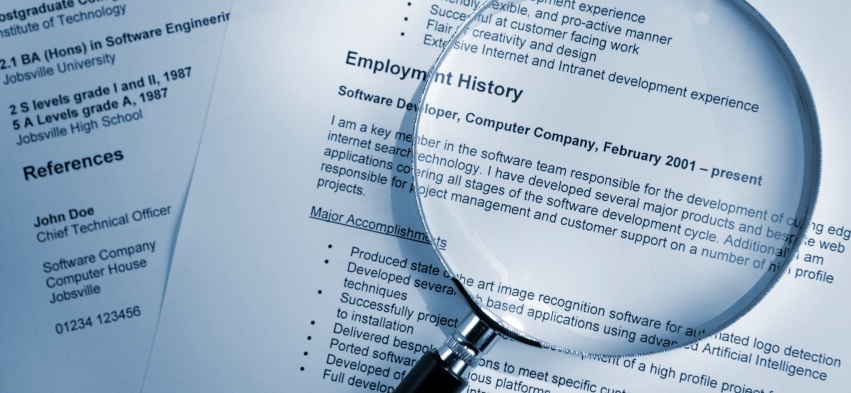
Linux jobs are plentiful these days but all hopeful applicants still need a solid resume to land a position. And chances are yours could stand an upgrade.
Women especially should take a closer look at their resumes for language or omissions that undermine their own accomplishments and abilities, says Leslie Hawthorn, community manager at Elasticsearch and a former corporate recruiter for Google’s Linux kernel team. Women, more so than men, tend to sell themselves short, she says.
“I’m frequently called upon by my colleagues to help them brush up their resumes and I consistently find my female friends making the same mistakes with regards to promoting their own accomplishment and skill set,” she said. “It bums me out to see such accomplished people sell themselves short.”
 Through three years of experience in human resources and almost a decade working as a program manager overseeing developer programs, Hawthorn has cultivated many tips and tricks for finding and fixing the common pitfalls women encounter preparing their resumes. She’ll share these insights and more in a resume workshop for women at LinuxCon North America in Chicago on Wednesday, Aug. 20 from 2:30-4 p.m. Here she discusses why she’s holding the workshop and what you’ll learn, some do’s and don’ts of resume writing for women, and why your resume is so important.
Linux.com:What willyour resumeworkshopcover?
Hawthorn: The workshop is divided into two segments. The first focuses on common pitfalls when preparing your resume that ladies may find themselves encountering more often than men. I’ll go over three sample resumes from highly accomplished women I know and do before and after feedback from me. The audience will identify things that could be problematic, then we’ll go through each resume and discuss them. In the second part, we’ll break into small groups and augment each others’ resume and do a before and after look. So bring your resume.
Why is the workshop geared toward women? Can men still attend?
Men are welcome to attend if they’re invited by female workshop participants. Imposter syndrome is well documented – women tend to suffer from it more. I want to provide a safe environment for women to talk about their accomplishments as well as their fears around how to present their skills without humble about it.
Should a woman’s resume really be any different than a man’s?
Absolutely not. A woman’s resume shouldn’t be any different. We need to bring feature parity to resumes from both men and women. Resumes from my female colleagues don’t do justice to their accomplishments, while my male colleagues’ resumes make them shine. Men will think, “I looked at Javascript once so I’m going to say I’m proficient,” while a woman who has written thousands of lines will present herself as a beginner.
What are some of the essentials of a resume for anyone looking for a Linux job?
Experience with Linux is an important thing – a track record of tinkering and involvement in the open source world. Working in drivers, embedded Linux, etc. At this point companies are desperate for Linux talent. The most important thing to show is you’ve gotten hands-on with bits of the kernel, whichever ones are interesting to you personally. Time spent as a site reliability engineer or working in a DevOps environment is particularly attractive to employers these days, as are well rounded sys admin skills. Even if you just run Linux as your primary operating system and know how to tinker with your machine, you’re ahead of many candidates.
What tips can you offer women, in particular, when it comes to working on a resume?
When you’re writing your resume, pretend you’re writing about your best friend, not yourself. Then compare your resume to the one you wrote for you best friend and ask why there are differences. How do you better position yourself for the next job you want to be in?
What one thing should women avoid completely when writing their resume?
You need to be more willing to use the word “I” and drop words like “co-” and “team.” I makes the individual writing the resume seem more accomplished and authoritative. There’s a tendency for women to focus on their accomplishments as a member of their team. That can make women seem less authoritative and capable.
For example, take these two descriptions:
a) Implemented Foo, the most requested enhancement to our product, in just 6 months.
b) Worked with a team of six to implement Foo, the most requested enhancement to our product, in just 6 months.
Both statements are true. Which ones makes the candidate look more attractive to the hiring manager? I’ve repeatedly seen that the language in option a garners more interest from hiring managers.
How would you describe your approach to writing a resume?
It’s great to be humble, but never deny your own awesomeness. As long as the statements on your resume are true, never feel bad about making them.
If there are so many Linux jobs out there, why is resume writing important?
Just because there’s a plethora of open positions available doesn’t mean the initial presentation of yourself to hiring managers and recruiters isn’t important. If your resume doesn’t do justice to all you’ve accomplished (and have the right keywords), you’ll never get the call back even if they have 16 open positions. If you don’t craft your calling card well, you’re not going to get a call.
Posted by Openness Team
As thousands of our partners gather in Washington D.C. for Worldwide Partner Conference 2014 this week, Microsoft will illustrate how openness translates into partner opportunity, including how Microsoft and open source solutions can work together.
 We’ve been fortunate to be on this openness path with SUSE – a 20-year veteran in the Linux space – for several years already, delivering unified solutions, integrated tools, and first-class support for mixed Windows and Linux environments.
Since 2006, the Microsoft-SUSE alliance has helped more than 1,000 customers benefit from joint efforts to improve interoperability and support between Windows and Linux. We extended this agreement through 2016 and remain committed to working in tandem on solutions that help our customers manage critical workloads in mixed-source environments.
For more, check out the below video with Michael Miller, VP of Global Alliances and Marketing at SUSE, talking about our longstanding alliance and how customers like National Stock Exchange and Baloise Group are benefiting from Microsoft-SUSE interoperability solutions.
