The third “early adopter” release of Jolla’s Sailfish OS platform is now available for Google’s Nexus 4 “Mako” smart-phone…
CentOS and RHEL 7: Install Linux, Apache, MariaDB, PHP (LAMP) Stack
I am new Red Hat Enterprise Linux version 7 user/sysadmin/developer. This version made the big number change for RHEL 7/CentOS 7. How can I install LAMP (Linux, Apache, MariaDB, PHP) stack on a RHEL version 7 or CentOS Linux version 7 using CLI or over ssh based session?
CentOS and RHEL 7: Install Linux, Apache, MariaDB, PHP (LAMP) Stack
Heartbleed Saga Goes On as Google Announces BoringSSL
NEWS ANALYSIS: Given the prediction that servers vulnerable to Heartbleed will still be found a decade from now, chances are OpenSSL won’t be boring for a while.
ARM Linux Thin Client Does Citrix, RDP, and VMWare
Atrust unveiled a “t66″ thin client that runs Linux on a quad-core Freescale i.MX6 SoC, and supports Citrix ICA/HDX, RDP, and VMWare Horizon View protocols. As power consumption grows in priority, the thin client world is increasingly turning to ARM processors. Atrust Computer Corp. offers a number of ARM-based thin clients, and like its x86-based […]
IBM, Toyota Team on Connected Car App Dev Platform
Toyota has tapped IBM to build an application development platform for Toyota’s telematics service known as T-Connect.
Switching to Ubuntu: User Tips
Switching to Ubuntu isn’t hard, but these useful tips should ease any potential hassles.
Needed More Than Ever: DevOps to Manage Cloud Unpredictability
Cloud is illusory; there’s still hardware somewhere on the other side of the mist.
Distribution Release: Linux Mint 17 “KDE”
Clement Lefebvre has announced the release of Linux Mint 17 “KDE” edition: “The team is proud to announce the release of Linux Mint 17 ‘Qiana’ KDE. Linux Mint 17 is a long-term support release which will be supported until 2019. It comes with updated software and it brings….
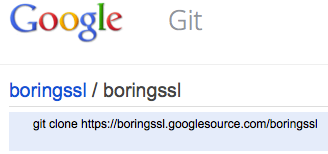
Google’s BoringSSL Aspires to Be the Hassle-Free Version of OpenSSL
If you mention OpenSSL to many people, the first thing that comes to mind is the notorious Heartbleed bug that surfaced in April and can possibly allow hackers to compromise encrypted systems and connections.
But OpenSSL is actually one of the most influential open source projects ever, and had a sterling reputation until its involvement in the Heartbleed debacle.
Now, Google is developing its own version of OpenSSL that will be especially relevant for its own platforms and applications. Welcome to BoringSSL.
Adam Langley, a Google software engineer, confirmed on his personal blog that in addition to creating BoringSSL, Google will contribute its changes to the OpenSSL open source community and leverage bug fixes from that team.
Second Version Of SUSE’s kGraft Patches Published
The second revision to SUSE’s kGraft mechanism for live kernel patching of running systems is now available…