
While users were uncertain at first about a Web-based OS, Chrome OS proved to be usable and appealing. Here are some key features of the platform.
Read more at eWeek
OpenDaylight is an active community of developers who are passionate about transforming networking. This blog series highlights the people who are collaborating to create the future of SDN and NFV.
Luis Gomez is Principal Software Test Engineer at Brocade and currently coordinates the Integration Group at OpenDaylight. Prior to this, Luis worked many years at Ericsson in end-to-end solution integration and verification for radio, fixed, core and transport functions.

What project in OpenDaylight are you working on? Any new developments to share?
I work in the Integration Group, the people in charge of creating and verifying the release editions. Our project is very diverse in terms of contributions and companies, but we all share a common test background and a passion for testing and improving the OpenDaylight code. We have a few novelties for the Helium release such as the test plan and test case documentation in Testopia (an extension of Bugzilla), or new tests like performance, cluster, longevity or fuzzy.
Read more at OpenDaylight Blog
 Following “one of the busiest development cycles ever,” in the words of kernel developer Jonathan Corbet, Linux 3.15 on Sunday made its official debut.
“I ended up doing an rc8 because I was a bit worried about some last-minute dcache fixes, but it turns out that nobody seemed to even notice those,” wrote Linux creator Linus Torvalds as he unleashed the new release. “We did have other issues during the week, though, so it was just as well.”
Linux 3.15 packs a few key new features as well as a significant amount of “under-the-covers cleanup and restructuring,” Corbet said in an LWN article on the 3.15 merge window. Here’s a look at some of the highlights.
Linux users across the board will likely appreciate a new feature in Linux 3.15 that allows systems with SATA disk controllers to resume from suspend much faster than they could before.
“Much of the time spent waiting for a system to resume goes into waiting for the ATA controllers to power up and get into a working state,” Corbet explained.
Now, with a pair of new patches, the drivers start the process immediately rather than waiting for the controller to return to a working state, allowing the rest of the kernel to continue working toward resuming the system while the controller powers up.
Bottom line? Resume time on a drive-heavy system dropped from 11.6 seconds to 1.1 seconds, Corbet noted; on single-drive systems, it went from more than five seconds to less than one.
“It is clearly a worthwhile improvement, especially since it requires little in the way of added complexity overall,” he said.
Of particular interest to users running workloads with large working sets is a patch set that improves memory management — specifically, the assessment of whether individual pages are being actively used or not.
Traditionally, Linux has maintained lists of both active and inactive pages, but it restricted the “active” list such that it couldn’t get longer than the “inactive” one, thereby causing problems. Now, through better balancing of those lists, performance can be improved, Corbet said.
Also improving performance in the new kernel is the fact that the FUSE (filesystems in user space) subsystem can now perform writeback caching, thus improving performance on write-heavy workloads. A per-thread virtual memory area (VMA) caching patch set, meanwhile, “should improve memory management performance for a number of workloads,” Corbet said.
Support for a raft of new hardware has been added to Linux 3.15, including numerous ARM-based boards. Support for user-space probing with uprobes on ARM has been added as well.
The list of other freshly supported hardware includes several processors and systems, including two from Broadcom, as well as audio, graphics, networking equipment and more.
There are, of course, numerous other changes in Linux 3.15 as well. For a full summary, check out the changelog on KernelNewbies.org.
 Mirantis, which has been expanding its bets on the OpenStack cloud computing platform throughout 2014, has announced the availability of Mirantis OpenStack Express, an on-demand private Cloud-as-a-Service for enterprises. “The new web service enables companies to stand up private clouds and make them available to developers and end users in minutes,” the company claims. The news comes directly on the heels of Mirantis’ and Canonical’s announcement of a joint collaboration to offer private cloud solutions based on Mirantis OpenStack and Ubuntu.
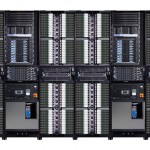 This week HP rolled out a new lineup of density-optimized servers with innovative cooling technology. Tailor-made for the HPC market, the Apollo Series combines a modular design with innovative power distribution and air- and liquid-cooling techniques for extreme performance at rack scale, providing up to four times more performance per square foot than standard rack servers.