Home Blog Page 1484

Samsung to Leverage Open Source in Advancing Digital Health Monitoring

This week Samsung is drawing a lot of buzz with its announcement of the Samsung Digital Health Initiative, which will be based on open hardware platforms and open software architecture. The initiative has several arms, but one primary area of focus will be on delivering very smart wearable devices that go well beyond the capabilities of wearable health devices such as Fitbit. In fact, Samsung officials are touting wearable devices that monitor blood pressure, deliver electrocardiogram (ECG) readings, and more.

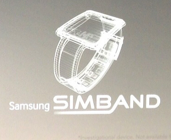
Samsung has said that it is seeking the resources and innovation of open source developers, entrepreneurs and partner companies with the initiative. Samsung’s Simband is an open hardware reference design for wearable devices.

 
Read more at Ostatic

OpenSSL to Get a Security Audit and Two Full-Time Developers

A Linux Foundation project inspired by the Heartbleed security flaw announced that it will fund a security audit for the OpenSSL code base and the salaries of two full-time developers.

The Heartbleed flaw shone a spotlight on how poorly funded the OpenSSL cryptographic software library is despite being used by many of the world’s richest technology companies. The Linux Foundation, with support from those tech companies, created the Core Infrastructure Initiative (CII) to boost the security of OpenSSL and other open source projects in need of help.

Today, the foundation announced that the first projects to get funding will be OpenSSL, OpenSSH, and Network Time Protocol.

Read 8 remaining paragraphs | Comments

Read more at Ars Technica

Red Hat Teams with Telefonica, Expands Focus on OpenStack and Telecom

Earlier this month, when Red Hat was busy delivering a flurry of OpenStack-related announcements, news also came from the company that it is collaborating to drive Network Functions Virtualization (NFV) and telecommunications technology into OpenStack. Red Hat is forming alliances aimed at delivering a carrier-grade telecommunications offering based on Linux, Kernel-based Virtual Machine (KVM), and OpenStack.

And now, huge telecom player Telefonica has announced that it will work with Red Hat and Intel to create a virtual infrastructure management (VIM) platform based on open source software running on Intel-based servers. Telefonica’s Network Functions Virtualization (NFV) Reference Lab will be targeted to help partners and developers build telecom-grade infrastructure and Red Hat will protect the open source focus of the effort.


Read more at Ostatic

A Core Infrastructure Initiative Announcement

The Linux Foundation has put out a press releasedescribing the evolution of its new “Core Infrastructure Initiative,” which directs funding to developers of projects deemed to be both critical and short of resources. The first projects to be funded will be OpenSSL, OpenSSH, and the network time protocol (NTP) implementation. The steering committee for the initiative has been picked; it includes Alan Cox, Eben Moglen, Bruce Schneier, and Ted Ts’o. And a few more companies (Adobe, Bloomberg, HP, Huawei and salesforce.com) have added their support to the program.

Read more at LWN

PathScale Is Hiring To Work On Open-Source AMD Drivers

PathScale, the company behind the EKOPath compiler and other compiler technologies for both CPUs and GPGPU solutions, is looking to hire one or two kernel developers to work on improving the open-source AMD Linux graphics drivers… Particularly, to improve the GPGPU/OpenCL compute support in the driver, improve the Hawaii GPU and APU support, and potential optimizations for GPUs with 4GB+ of video memory…

Read more at Phoronix

Server Sales: It’s Tough Out There but Cisco and IBM See Some Light

Gartner’s server sales figures for the first quarter show a market still in decline from its giddy heights but there are some glimmers of optimism.

The Perfect Desktop – Xubuntu 14.04 LTS (Trusty Tahr)

The Perfect Desktop – Xubuntu 14.04 LTS (Trusty Tahr)

This tutorial shows how you can set up a Xubuntu 14.04 desktop that is a full-fledged replacement for a Windows desktop, i.e.that has all the software that people need to do the things they do on their Windows desktops. The advantages are clear: you get a secure system without DRM restrictions that works even on old hardware, and the best thing is: all software comes free of charge. Xubuntu uses the lightweight XFCE desktop environment.

Read more at HowtoForge

QEMU 2.1 To Bring More Complete 64-bit ARM Support

QEMU 2.1 should be released two months from today and with it will come ARM architecture improvements and other enhancements…

Read more at Phoronix

Reminder, Student Developers Register FREE for the Tizen Developer Conference #TDCSF14

  Dear Student Developers, here is a quick reminder that you can register for the upcoming Tizen Developer Conference next week for the amazing price of FREE !!! The â€‹3rd â€‹annual â€‹Tizen â€‹Developer â€‹Conference â€‹is â€‹a â€‹technical â€‹conference â€‹for â€‹Tizen â€‹developers, â€‹App â€‹developers, â€‹ISVs, â€‹Platform â€‹designers, â€‹Operators, â€‹OEMs, â€‹Hardware â€‹vendors, â€‹Software â€‹vendors, â€‹Open â€‹source â€‹enthusiasts, â€‹and â€‹anyone â€‹engaged â€‹in â€‹Tizen. 

Read more at Tizen Experts

Google Admits Company Diversity ‘Miles Away’ From Ideal

In Google’s workforce demographics report, the firm says that 70 percent of employees are white males, and diversity is an issue that needs to be tackled.