
The 7 Plus uses a quad-core ARM processor and runs Android 4.2.2 Jelly Bean, but includes just 8GB of built-in storage.
Read more at Enterprise Open Source Toolkit
Béla Markus has announced the availability of a new version of “piCore”, a specialist edition of Tiny Core Linux designed for the Raspberry Pi single-board computer: “Team Tiny Core is pleased to announce the immediate availability of piCore-5.3. Changelog: Linux kernel updated to 3.14.4; Raspberry Pi firmware updated….
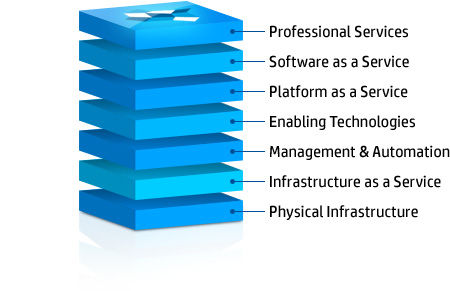 As a platinum member of both the Linux Foundation and the OpenStack Foundation, HP hasn’t exactly kept its interest in open source a secret. Recently, however, it upped its commitment to open source in two key areas. First, it added the OpenDaylight project — one it helped found — to its list of platinum memberships. Second, it launched the Helion portfolio and pledged to invest more than $1 billion in support of new open source cloud products and platforms.
“Our views on open source are captured by our commitment to base HP’s cloud product and services strategy entirely upon the open source OpenStack framework,” Mark Pearson, chief technologist for HP Networking, told Linux.com. “We believe openness speeds up innovation.”
HP is already one of the leading contributors to projects such as OpenStack in terms of both lines of code and number of employees involved, Pearson noted. Now, with HP Helion, it aims to create a portfolio of cloud products and services that help organizations build, manage and consume workloads in hybrid IT environments.
Helion encompasses “everything we are doing in cloud computing — from core enabling technologies based on OpenStack, to public and private infrastructure-as-a-service, to developer platforms and tools to management and automation solutions — plus a wide range of managed services, professional and support services,” Pearson explained.
HP’s upcoming $1 billion-plus investment, meanwhile, will take place over the next two years and will be focused on cloud-related product and engineering initiatives, professional services, and expanding HP Helion’s global reach.
As for HP’s increased commitment to the OpenDaylight Project and its efforts to advance Software-Defined Networking (SDN) and Network Functions Virtualization (NFV), “OpenDaylight’s collaborative approach to solving common problems in the SDN and NFV space paves the way for interoperability between vendors and the emergence of an SDN ecosystem that gives users flexibility with their networks,” Pearson said.
“We see our work in OpenDaylight and SDN complementing the work we are doing across OpenStack,” he said. That’s especially true in OpenStack’s Neutron networking component, he added, where “HP is committed to making sure core Neutron is stable and production-ready at scale — without requiring proprietary plug-ins — by contributing features and fixes that have allowed our own public cloud instance to scale.”
Other OpenDaylight platinum members include Cisco, IBM, Juniper, Microsoft and Red Hat. As part of HP’s elevated commitment, Sarwar Raza, director of cloud networking and SDN for HP Networking will join OpenDaylight’s board of directors, and David Lenrow, a distinguished architect with the company, will join the project’s Technical Steering Committee.
HP is “one of the only players in the world that has assets around everything cloud,” OpenDaylight Executive Director Neela Jacques told Linux.com. “Other than maybe IBM, there’s nobody akin to HP, in general, and in their role in the networking industry. If the goals of OpenDaylight are to create a platform that the entire industry adopts and builds solutions around, HP is a critical player in the space.”
Now, with HP on board at the platinum level, “this represents in many ways a turning of the corner” for OpenDaylight, Jacques added.
OpenDaylight is still a young project, so the degree to which the industry would coalesce around it hasn’t yet been clear, he noted.
“I look at HP doubling down on OpenDaylight as validation in a sense that we’ve passed the test,” Jacques concluded. “They’ve looked at our governance, structure and community. Others who might have been on the fence will see this as a vote of confidence.”
Steven Shiau has released a new stable version of Clonezilla Live, a Debian-based live CD designed primarily for disk imaging and cloning tasks: “This release of Clonezilla live (2.2.3-10) includes major enhancements and bug fixes. Enhancements and changes: the underlying GNU/Linux operating system has been upgraded, this release….
We recently published part 1 of a new series designed to help organizations build resiliency against targeted attacks. In the spirit of Maslow, we designed our Targeted-Attack Hierarchy Of Needs. One factor that significantly drove the tone and direction of this research was Forrester client inquiries and consulting. Many organizations were looking for a malware sandbox to check off their targeted attack/advanced persistent threat/advanced threat protection/insert buzzword needs. Malware analysis has a role in enterprise defense, but focusing exclusively on it is a myopic approach to addressing the problem.
Part 1 of the research is designed to help organizations broaden their perspective and lay the foundation for a resilient security program. Part 2 (currently writing at a non George R.R. Martin pace) will move beyond the basics and address strategies for detecting and responding to advanced adversaries. Here is a preview of the research and the six needs we identified: 
Read more at the Forrester Blog.