
 The inside story of how CVE-2020-10713, a.k.a. the GRUB2 “BootHole” vulnerability was reported and resolved.
Click to Read More at Oracle Linux Kernel Development
An inside look at CVE-2020-10713, a.k.a. the GRUB2 “BootHole”

An inside look at CVE-2020-10713, a.k.a. the GRUB2 “BootHole”

The inside story of how CVE-2020-10713, a.k.a. the GRUB2 “BootHole” vulnerability was reported and resolved.
Click to Read More at Oracle Linux Kernel Development
Oracle Linux sessions at Open Source Summit Europe 2020

Open Source Summit connects the open source ecosystem under one roof. It covers cornerstone open source technologies; helps ecosystem leaders to navigate open source transformation; and delves into the newest technologies and latest trends touching open source. It is an extraordinary opportunity for cross-pollination between the developers, sysadmins, DevOps professionals, IT architects, and business & community leaders driving the future of technology. Check…
Click to Read More at Oracle Linux Kernel Development
Oracle Linux sessions at Open Source Summit Europe 2020

Open Source Summit connects the open source ecosystem under one roof. It covers cornerstone open source technologies; helps ecosystem leaders to navigate open source transformation; and delves into the newest technologies and latest trends touching open source. It is an extraordinary opportunity for cross-pollination between the developers, sysadmins, DevOps professionals, IT architects, and business & community leaders driving the future of technology. Check…
Click to Read More at Oracle Linux Kernel Development
Oracle Linux sessions at Open Source Summit Europe 2020

Open Source Summit connects the open source ecosystem under one roof. It covers cornerstone open source technologies; helps ecosystem leaders to navigate open source transformation; and delves into the newest technologies and latest trends touching open source. It is an extraordinary opportunity for cross-pollination between the developers, sysadmins, DevOps professionals, IT architects, and business & community leaders driving the future of technology. Check…
Click to Read More at Oracle Linux Kernel Development
Q&A: Unleashing the Beast—Bringing Linux to IBM Z
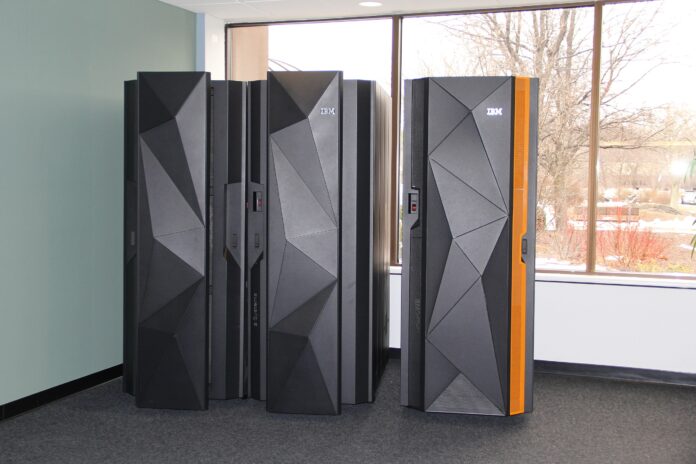
IBM has detailed the oral history of bringing Linux to the mainframe:
Two of the original team members from the IBM Böblingen Lab in Germany, Ingo Adlung and Boas Betzler, played crucial roles in bringing Linux to the IBM Z. Adlung is now Distinguished Engineer, Chief Architect & CTO, IBM Z, and LinuxONE Virtualization and Linux. Betzler is IBM Distinguished Engineer and Master Inventor. Here, they recall that work of 20 years ago.
Online Bootcamps Provide Clear Onramp to Cloud Engineering Careers

Since launching the Cloud Engineer Bootcamp and Advanced Cloud Engineer Bootcamp, thousands of individuals have begun their journey to becoming a qualified, certified cloud engineer. These programs offer newbies and experienced IT professionals respectively the opportunity to gain the skills needed to launch their cloud career. With a recent D2IQ study finding “only 23% of organizations believe they have the talent required to successfully complete their cloud native journey”, now is the time to make a move into this rapidly growing space.
Source: Linux Foundation Training
New, Free Training Course Explores How to Deploy a Microservice-Based Architecture Using the TARS Project

The Linux Foundation and The TARS Foundation have released a new, free training course, Building Microservice Platforms with TARS, on the edX platform. The course explains how to efficiently develop microservices programs using different programming languages and quickly deploy the corresponding services into applications. It also delves into the powerful functionalities of TARS – a high performance, open source RPC framework developed by Tencent as a full-fledged enterprise solution for microservice maintenance, development and operation – and the components that make up the TARS ecosystem.
Source: Linux Foundation Training
IBM Contributes A2O Processor Core and PowerAI as Open Source at OpenPOWER Summit

Today at OpenPOWER Summit 2020, OpenPOWER Foundation announced two key technologies contributed by IBM to the open source community.
- A2O POWER processor core, an out-of-order follow-up to the A2I core, and associated FPGA environment
- Open Cognitive Environment (Open-CE), based on IBM’s PowerAI to enable improved consumability of AI and deep learning frameworks
The contributions follow the open sourcing of the POWER ISA and associated reference designs in August 2019 and the A2I POWER processor core in June 2020. They represent IBM’s continued commitment to fostering innovation around the POWER architecture from the OpenPOWER ecosystem.
What’s new in the Linux kernel (HP enterprise.nxt)

Steven J. Vaughn-Nichols writes at HP enterprise.nxt
Linux runs pretty much everything: all 500 of the world’s 500 fastest supercomputers; most of the public cloud, even on Microsoft Azure; and 74 percent of smartphones. Indeed, thanks to Android, Linux is the most popular end-user operating system, nudging out Windows by 4 percent (39% vs. 35%).
So, where does Linux go next? After covering Linux for almost all 29 years of its history and knowing pretty much anyone who’s anyone in Linux development circles, up to and including Linus Torvalds, I think I have a clue.