
The dream of customizing mobile devices with 3D printed modules took another step forward this week when Jolla opened sales of its promised “The Other Half” customizable backplates for Jolla smartphones. The Finnish company has even posted an SDK to let developers construct their own 3D printed backplate designs for the phone, which runs the Linux-based Sailfish OS.
In other good news for hardware customization advocates, when Google sells Motorola to Lenovo for $2.9 billion, it will not only retain Motorola’s mobile patents, but also the mobile device maker’s Advanced Research and Projects (ATAP) group. Last year the R&D group announced a Project Ara for creating modular, customizable phone hardware (see more below).
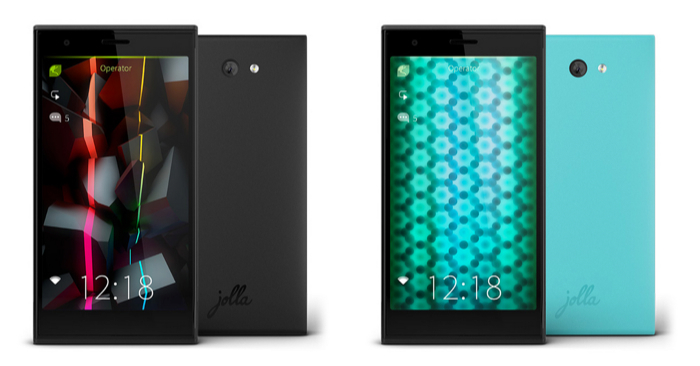 Jolla’s The Other Half backplates, which the company announced back in May when it unveiled its first phone, each measure 5.5mm thick and replace the neutral backplates of the Jolla phone. The polycarbonate cover communicates with the phone via an NFC radio and a data transfer bus, and also draws power from the phone.
Initially, Jolla is offering only two designs: the “calm and relaxing” Aloe and the “electric, urban and industrial” Keira Black, each available for 29 Euros, or about $40. The designs provide different colors, ringtones, system sounds, and wallpaper to match their intended ambience.
Jolla has also released a development kit for The Other Half under a community license that grants a royalty-free copyright to non-commercial designs. The SDK lets developers customize the plates with similar features, as well as adjust fonts and personalization profiles to do things like turning the phone into a child-friendly device.
The idea is that carriers, vendors, resellers, organizations, and just plain folks could customize the backplates with logos, and perhaps promotional media clips. Jolla will eventually let users upload designs to a 3D printing service, which will offer custom runs.
Jolla hopes to go beyond these cosmetics, with customized hardware additions such as a QWERTY keyboard, sensor arrays, or ebook screens. The winner of a recent Jolla contest for The Other Half design ideas was an Ambience Light backplate studded with LEDs that glow in response to phone events.
Some may dismiss Jolla’s The Other Half as a bit of a gimmick. Yet any phone OS intending to compete with Android needs something different to set it apart. Mozilla’s Firefox OS has its low cost and all-HTML5 focus, and Ubuntu Phone is unique with its plans to create a universal cross-platform OS. Tizen has always intended to offer extensive carrier firmware customizations.
Without major vendor or carrier partnerships, Jolla has flown under the radar compared with other mobile Linux upstarts like Tizen and Ubuntu Phone. Yet with those projects’ first phones likely delayed until late 2014 or 2015, the Jolla phone, which is now on sale across Europe, has emerged as the only major shipping open smartphone platform along with Mozilla’s Firefox OS.
Google holds on to Project Ara
Google’s Motorola unit experimented with somewhat similar cosmetic hardware/software customizations of the Moto X phones with its MotoMaker service. Although it didn’t go as far as offering user-swappable backplates, by many accounts, the ability to order the phones with choices of styling, color, memory, and accessories, was one of the more popular aspects about Moto X. Like Jolla, Google has more extensive customizations in mind. In October, Motorola announced a Project Ara, which aims to create modular smartphones with the help of an online 3D printing service.
Inspired in part by startup Phonebloks, which is collaborating with the project, Project Ara will let users pick and choose core features, as well as swap out parts for upgrades. Motorola was planning to build the endoskeleton (endo) of the phone while third parties would manufacture snap-on modules including processors, displays, keyboards, battery extensions, and medical/fitness sensor devices.
Interestingly, Google decided to retain the ATAP research unit behind the project when it sells Motorola to Lenovo. Patents emerging from the 100-employee skunkworks group, which is led by former DARPA director Regina Dugan, will go to Google, but Lenovo will also be given a license.
According to an MIT Technology Review report this week, Project Ara is ATAP’s central project, but it’s also working on cutting-edge gizmos including wearable devices. One project aims to dispense with passwords in favor of wireless-enabled pills or tattoos. It’s unlikely Google would keep ATAP, but kill Project Ara, especially since it fulfills Google’s announced plans to encourage longer lasting, more environmentally friendly mobile devices. Yet, this appears to be long-term “moonshot” experiment.
Unlike The Other Half, which is limited to a single backplate component, Project Ara is intended to modularize most of the phone’s functions. Among other issues, this would likely make the phone too large, and potentially slow and power hungry. Initially, the phones would also likely be more expensive, and it could create compatibility problems of the type that makes Android fragmentation look like a cakewalk.
Still, size, performance, and power issues may eventually be solved via miniaturization and fiber optics. In addition, the growth of 3D printing technology and the coming scarcity of precious metals used in mobile devices play in Project Ara’s favor.
 ParElastic, which had been focused on database virtualization and MySQL,