Lini PC is a low-volume system builder of Linux-friendly PCs that recently sent over their new Intel Pentium Haswell-based desktop that runs Xubuntu 13.10. Let’s see how this Intel Linux desktop system performs with our first testing of a Lini PC.
With Fedora 20 out the door, the latest feature to talk about for Fedora 21 is that they will be switching over to the Hawkey package management library…
The electronics giant announces a full HD 21.5-inch screen desktop computer that easily runs Google products, like Gmail, Drive, Play, and Google+ Hangouts. [Read more]
OpenStack is an open source cloud services platform that has gathered quite a bit of attention and investment. eNovance believes that its “factory” approach to creating customized OpenStack platforms can make the creation and deployment of private, public and hybrid clouds easy.
It was a phenomenal year of growth for Linux. It is the fastest-growing operating system in the enterprise where it’s supporting the latest advancements in cloud computing, big data, storage, power and more. Linux is also being used to bring new technologies to consumers on their phones, tablets and even into their living room and kitchens (TVs, refrigerators and more). And, some of the greatest advancements in high performance computing this year can be, at least partially, attributed to the help of Linux.
We hope you will join us in celebrating 2013, because it is all of you who are making this happen. There is no other technology that is built by all of us for all of us. Together, we’re able to literally change the world, one line of code at a time.
So, give this new video a look and tell us which quote inspires you and who you think said it. Share your thoughts in the comments below and/or play our quote guessing game using the #Linux2013 hashtag on Twitter, Facebook and Google+ for extra entries into the contest. Winners who are randomly chosen by drawing on January 3 are in store to win some cool Linux loot, so get to guessing.
I get a lot of security predictions pitched at me and I was intrigued by quite a few this year. There’s good and bad news, and good and bad predictions.
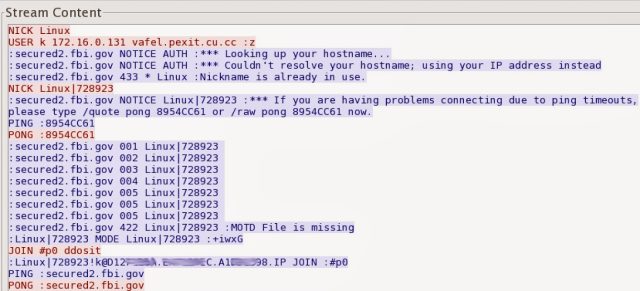
Like most mainstream operating systems these days, fully patched installations of Linux provide a level of security that requires a fair amount of malicious hacking to overcome. Those assurances can be completely undone by a single unpatched application, as Andre’ DiMino has demonstrated when he documented an Ubuntu machine in his lab being converted into a Bitcoin-mining, denial-of-service-spewing, vulnerability-exploiting hostage under the control of attackers.
A security researcher with George Washington University, DiMino noticed several IP addresses attempting to hijack the Linux server by exploiting a now-patched PHP flaw that gave attackers the ability to remotely execute commands on vulnerable machines. DiMino was curious to know what the people behind the attacks intended to do with his machine, so he set up a “honeypot” box that, for research purposes, ran an older version of the Web development language.
The attackers’ HTTP POST request contained a variety of commands that in short order downloaded a Perl script that was disguised as a PDF document file, executed it, and then deleted it. To ensure success, the attackers repeated the steps using the curl, fetch, lwp-get requests. The Perl script was programmed to sleep for periods of time, presumably to prevent administrators from noticing anything amiss. Eventually, the compromised machine connected to an Internet relay chat channel, where it downloaded another script and executed it. Then he ran forensic software and snapped lots of screen shots so everyone could follow along.
Security experts have long opined that one way to make software more secure is to hold software makers liable for vulnerabilities in their products. This idea is often dismissed as unrealistic and one that would stifle innovation in an industry that has been a major driver of commercial growth and productivity over the years. But a new study released this week presents perhaps the clearest economic case yet for compelling companies to pay for information about security vulnerabilities in their products.
Before I delve into this modest proposal, let’s postulate a few assumptions that hopefully aren’t terribly divisive:
In the Linux community we love predicting that this is the year of Linux in cars, or in gaming, or yes, even the desktop.
But in fact, this was the year of Linux in everything. From smartphones, tablets, consumer appliances and cars, to the open cloud and high-performance computers, to gaming platforms and more, Linux was, and is, literally everywhere. It’s the software that is running our lives.
The last report showed more than 1.5m Android phone activations are happening every day. Android continues to dominate on phones, and embedded Linux variants are bringing Linux into the living room with it running everything from your TV to your washer and dryer to your fridge and heating/cooling system.
Linux’s success in cars is demonstrated by, among other things, its role in the Motor Trend Magazine’s car of the year for two years running. Both the Cadillac CTS sedan (2014 Motor Trend car of the year) and the all-electric Tesla Model S (won in 2013) run Linux. Furthermore,IHS Automotive recently reportedthat sales of automotive Linux are expected to overtake Microsoft and Blackberry QNX in the global automotive infotainment market by 2020.
The cloud computing space is one of the fastest growing areas of IT with Gartner forecasting it will account for the bulk of IT spending in 2016. The cloud is built from the ground up using Linux and open source software, which is helping to accelerate innovation in this area (Open Cloud Directory).
And, of course one of the year’s most exciting Linux success stories is that of Valve and SteamOS. Well known for its award-winning games and more than 65 million active users, Valve announced that itsSteamOS would be based on Linuxand thenjoined the Linux Foundationjust a few weeks ago. This represents a major shift in the way the gaming industry looks at Linux and open source and is poised to transform the competitive dynamic among companies in that space and the way in which users interact with their games. Linux is making this happen.
The community also celebrated a number of milestone anniversaries in 2013. Thirty years ago, the GNU system announcementfired a seminal shot in the open source movement. And 20 years ago, we saw SUSE and Red Hat emerge, both of which celebrated these important anniversaries this year. The community also rallied around increasing opportunities for women and other minorities to contribute to Linux and open source. We and many others took part in and organized a variety of new initiatives in this area in 2013 and are encouraged by thehigh participation.
We’re always thinking about what’s next for Linux and how we can continue to support the community and industry to protect, promote and advance the operating system and the principles that make it so successful for the long term.
We found this year that companies and community members are increasingly looking to Linux’s groundbreaking development model as a template for more effective collaboration and accelerated R&D efforts. Look no further than the successes I just shared to understand the impact this is having on technology and business. Also consider Google and Samsung, both of which were among the top 10 companies contributing to the Linux kernel this year, to understand how companies are leveraging Linux and collaborative development to compete.
Companies from networking, virtualization, the Internet of Things and even life sciences came together in 2013 to adapt these principles to advance technologies in their markets. Some examples of this work can be seen in efforts that have become Linux Foundation Collaborative Projects such as theAllSeen Alliance, OpenBEL, OpenDaylight, Open Virtualization Alliance and Xen Project.
We also continue to see demand for Linux talent in the marketplace and an increasing number of attendees atLinux eventsworldwide. Together with our members and the community we are helping to equip thousands of developers and sysadmins with the skills and training required to become Linux professionals. And, we’re looking towards the new year with a keen eye on what we can do to increase access toLinux trainingmaterials and event forums for more people around the globe.
All of the efforts by the community continue to inspire us to do what we can to support the world’s largest collaborative development project and apply its principles to new areas for the benefit of everyone. One of the reasons I’m so excited about what comes next for Linux and open source is that collaborative development keeps pushing the limits of technology innovation into the future, a future we can’t predict, but one in which we know Linux and collaborative development will play a defining role – one line of code at a time.
Please join us in celebrating another amazing year for Linux.