Home Blog Page 1751

How to Create Custom Business Cards or Labels in Linux

A savvy business person may believe that a lasting impression starts with a good looking business card. That doesn’t necessarily mean that you need to order expensive business cards from somewhere. There are plenty of image editor software that can be used to create DIY great looking business cards or name labels. In Linux, there […]
Continue reading…

The post How to create custom business cards or labels in Linux appeared first on Xmodulo.

Read more at Xmodulo

Why SUSE Likes The Btrfs File-System

While many assumed Fedora would be the first tier-one Linux distribution shipping with Btrfs by default, it looks like openSUSE may end up being the one. OpenSUSE has been looking at switching to Btrfs for their next release (post-13.1) and already in its current state feel Btrfs is safe for users — nearly one year after SUSE Enterprise felt Btrfs is production-ready…

Read more at Phoronix

Intel Says Get Ready for $99 Tablets, $299 Haswell Notebooks, $349 2-in-1 Hybrids

Intel chief executive Brian Krzanich says that he expects OEMs to push prices down over the coming weeks, and that this will result in $99 tablets, $299 Haswell laptops, and $349 2-in-1 hybrid tablets and notebooks.

How to Design — And Defend Against — The Perfect Security Backdoor

Having lost that public battle, the NSA decided to get its backdoors through subterfuge: by asking nicely, pressuring, threatening, bribing, or mandating through secret order. The general name for this program is BULLRUN.

Defending against these attacks is difficult. We know from subliminal channel and kleptography research that it’s pretty much impossible to guarantee that a complex piece of software isn’t leaking secret information. We know from Ken Thompson’s famous talk on “trusting trust” (first delivered in the ACM Turing Award Lectures) that you can never be totally sure if there’s a security flaw in your software.

Since BULLRUN became public last month, the security community has been examining security flaws discovered over the past several years, looking for signs of deliberate tampering. The Debian random number flaw was probably not deliberate, but the 2003 Linux security vulnerability probably was. The DUAL_EC_DRBG random number generator may or may not have been a backdoor. The SSL 2.0 flaw was probably an honest mistake. The GSM A5/1 encryption algorithm was almost certainly deliberately weakened. All the common RSA moduli out there in the wild: We don’t know. Microsoft’s _NSAKEY looks like a smoking gun, but honestly, we don’t know.

Read more at Wired.

Does the Level of Choice on the Android Scene Work Against Users?

Over on the Six Revisions site, Dave Feldman has stirred up some controversy with his post, “The Problem with Android is Choice.” You’ve heard this argument before–the one about how the Android arena is overly fragmented and not organized around common standards–but Feldman makes it pointedly. According to him: Choice reduces user satisfaction, reduces usability and reduces product quality.

As far back as 2011, I covered surveys of developers expressing concerns about too much Android fragmentation.  According to Feldman

“As a society we’re deluded about choice. We perpetuate the myth that more is better — yet there’s research going back decades to suggest the opposite…”


Read more at Ostatic

GNOME To Work On Wayland Accessibility Support

Now that GNOME 3.10 has shipped and with it comes initial native Wayland support, GNOME developers are beginning to focus on the GNOME 3.12 release cycle and working on some of the open work items in Wayland enablement…

Read more at Phoronix

Upgrade Your PCs, Servers, and Phones: Ubuntu 13.10 Lands Tomorrow

Ubuntu is ready to be installed on phones.
Andrew Cunningham

The newest version of Ubuntu is a big one, but not for the usual reasons. With Ubuntu 13.10 (aka Saucy Salamander) coming out tomorrow, the desktop and server editions will get some upgrades as always. But the biggest change is that Canonical is delivering the first stable version of Ubuntu for phones.

Beta versions of the mobile Ubuntu have been available to test for months, and now version 1.0 will be ready for supported devices, namely the Galaxy Nexus and Nexus 4 phones. Preview versions have also been running on the Nexus 7 and Nexus 10 tablets, but Canonical isn’t quite ready to declare Ubuntu stable for those larger touchscreens.

Ubuntu 14.04, slated for arrival in April 2014, is Canonical’s target for delivering an operating system that runs on everything, including phones, tablets, desktops, and servers. Phones preinstalled with Ubuntu should also ship sometime in Q1 or Q2 next year, assuming Canonical can get the right deals in place with carriers and hardware makers.

Read 17 remaining paragraphs | Comments


Read more at Ars Technica

Linux Won’t Get Aura UI Stack Until Google Chrome 33

While Google’s Chrome 32 web-browser will feature the Aura UI stack from Chrome OS, the Chrome desktop web-browser on Linux won’t get the GPU-accelerated interface until one version later…

Read more at Phoronix

GCC 4.8.2 Compiler Brings 70+ Bug Fixes

Jakub Jelinek of Red Hat released GNU Compiler Collection 4.8.2 this morning…

Read more at Phoronix

Yocto Project Adds Mac and Windows Cross-Compiler for Intel’s Linux-Based Galileo Board

Intel last week announced its Arduino-compatible Galileo board, a Raspberry Pi competitor aimed at enticing the DIY and maker set that’s also robust enough for embedded pros.

The board specs alone are impressive. Based on a 400 MHz Quark SoC, the Galileo comes with a mini-PCI Express slot, USB and Ethernet ports, and more, all for under $60.
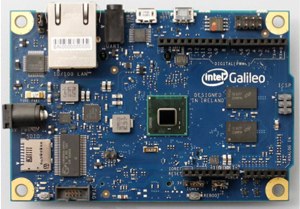
Intel-GalileoBut the less obvious engineering feat was achieving cross compatibility between the board’s custom Linux OS and Arduino’s application development software necessary to port C code to the device from Windows and Mac, as well as Linux.

This feature was key to expanding the Galileo’s potential market, and thus the reach of Intel’s architecture, to include a sizeable portion of artists, students and educators who don’t write their applications on a Linux machine, said Pete Dice, a product marketing manager at Intel on the Galileo board team.

“We can make all the Linux calls directly from the inside of the (Arduino) sketch and that opens up so many new avenues for the coders there,” Dice said. “Not just for people familiar with sketch on Arduino, but everyone who knows Linux APIs or a particular stack. They can cut right through and incorporate existing libraries and code directly there.”

Built with the Yocto Project

Working with the Yocto Project, Intel was able to build both the lightweight Linux OS running on the device and the Arduino software toolchains for all the various platforms. Tying the host and target sides together is a cross-compiler built by Richard Purdie, Yocto Project chief architect and a Linux Foundation fellow.

“That cross compiler Richard came up with was the ticket,” Dice said. “If we didn’t have that we’d have to do some very strange things with VirtualBox and whatnot to make it work.”

Intel did its own fair share of engineering to knit it all together. It took a team of 10 or more Intel engineers two months working 16-hour days to pull it off, Dice said. But because they were building with the Yocto Project they didn’t have to worry about how to compile Linux. They could focus on the features specific to the new hardware instead.  The new cross-compiler was one piece of the puzzle.

“We already had the Yocto pieces thought through in terms of the underpinnings from work done up to that point. We’d been booting that kernel and using those tools for a year,” Dice said. “The Yocto toolchain definitely made things easier.”

A Pre-Packaged Solution for Cross-Compatibility
Yocto LogoThe core compiler changes have since been merged into the Yocto Project’s upcoming 1.5 release, expected sometime in the next week. Anyone who builds an embedded project with Yocto will now have access to the ability to compile Linux binaries on all three platforms.

“We’ve taught the system all the magic that makes this work, you just run the bitbake command and it builds it for you,” Purdie said.

It also opens the door to further expanding the Yocto Project’s Application Developer Toolkit. Purdie expects future versions to include cross-platform integration on other core Yocto components, such as Eclipse, automake and autoconf.

“Doing the first set of binaries is the hard part,” Purdie said. “Now that we’ve proven it works, it should be easier to extend to other tools.”

Purdie noted that others before him have built Windows binaries with OpenEmbedded but the capability had been lost for many years. This new development brings it to the Yocto Project and its updated architecture. The ability to build for Mac OSX is completely new.

“Nobody has ever contained it into a set of recipes for the Yocto Project,” Purdie said. “You have a pre-packaged solution.