Home Blog Page 1752

Yocto Project Adds Mac and Windows Cross-Compiler for Intel’s Linux-Based Galileo Board

Intel last week announced its Arduino-compatible Galileo board, a Raspberry Pi competitor aimed at enticing the DIY and maker set that’s also robust enough for embedded pros.

The board specs alone are impressive. Based on a 400 MHz Quark SoC, the Galileo comes with a mini-PCI Express slot, USB and Ethernet ports, and more, all for under $60.
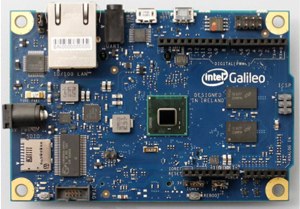
Intel-GalileoBut the less obvious engineering feat was achieving cross compatibility between the board’s custom Linux OS and Arduino’s application development software necessary to port C code to the device from Windows and Mac, as well as Linux.

This feature was key to expanding the Galileo’s potential market, and thus the reach of Intel’s architecture, to include a sizeable portion of artists, students and educators who don’t write their applications on a Linux machine, said Pete Dice, a product marketing manager at Intel on the Galileo board team.

“We can make all the Linux calls directly from the inside of the (Arduino) sketch and that opens up so many new avenues for the coders there,” Dice said. “Not just for people familiar with sketch on Arduino, but everyone who knows Linux APIs or a particular stack. They can cut right through and incorporate existing libraries and code directly there.”

Built with the Yocto Project

Working with the Yocto Project, Intel was able to build both the lightweight Linux OS running on the device and the Arduino software toolchains for all the various platforms. Tying the host and target sides together is a cross-compiler built by Richard Purdie, Yocto Project chief architect and a Linux Foundation fellow.

“That cross compiler Richard came up with was the ticket,” Dice said. “If we didn’t have that we’d have to do some very strange things with VirtualBox and whatnot to make it work.”

Intel did its own fair share of engineering to knit it all together. It took a team of 10 or more Intel engineers two months working 16-hour days to pull it off, Dice said. But because they were building with the Yocto Project they didn’t have to worry about how to compile Linux. They could focus on the features specific to the new hardware instead.  The new cross-compiler was one piece of the puzzle.

“We already had the Yocto pieces thought through in terms of the underpinnings from work done up to that point. We’d been booting that kernel and using those tools for a year,” Dice said. “The Yocto toolchain definitely made things easier.”

A Pre-Packaged Solution for Cross-Compatibility

Yocto LogoThe core compiler changes have since been merged into the Yocto Project’s upcoming 1.5 release, expected sometime in the next week. Anyone who builds an embedded project with Yocto will now have access to the ability to compile Linux binaries on all three platforms.

“We’ve taught the system all the magic that makes this work, you just run the bitbake command and it builds it for you,” Purdie said.

It also opens the door to further expanding the Yocto Project’s Application Developer Toolkit. Purdie expects future versions to include cross-platform integration on other core Yocto components, such as Eclipse, automake and autoconf.

“Doing the first set of binaries is the hard part,” Purdie said. “Now that we’ve proven it works, it should be easier to extend to other tools.”

Purdie noted that others before him have built Windows binaries with OpenEmbedded but the capability had been lost for many years. This new development brings it to the Yocto Project and its updated architecture. The ability to build for Mac OSX is completely new.

“Nobody has ever contained it into a set of recipes for the Yocto Project,” Purdie said. “You have a pre-packaged solution.

Intel’s Broadwell Delayed: Good News For Linux Users?

During Intel’s quarterly earnings call this week it was warned that Broadwell, the successor to Haswell, has been delayed due to a manufacturing problem. But is this actually somewhat refreshing news to Linux users?..

Read more at Phoronix

Painkiller: Hell & Damnation Now Out For Linux

Painkiller: Hell and Damnation, a first person shooter by The Farm 51 and released in 2012 for Windows, is now out for Linux. This Unreal Engine 3 title can be found in beta on Steam for Linux…

Read more at Phoronix

How to Identify CPU Processor Architecture on Linux

Multi-core processor architecture becomes increasingly popular nowadays. This trend is accelerated by the need for supporting multi-tenant hardware virtualization, high-performance computing applications, and Internet-scale workloads in data centers. As a server administrator and cloud architect, you must be aware of the CPU processor architecture of servers, so that server applications can take full advantage of […]
Continue reading…

The post How to identify CPU processor architecture on Linux appeared first on Xmodulo.

Read more at Xmodulo

How the Linux Foundation is Helping the Auto Industry Shift to Open Source Infotainment System

open source in vehicles

If you’re a Linux fan and a car enthusiast, then you might be a little jealous of Rudolf Streif’s job. As the director of embedded solutions for The Linux Foundation, Streif is in charge of helping to foster the adoption of Linux and open source in the automotive industry.

read more

Read more at OpenSource.com

Community Management Tips from Greg DeKoenigsberg of Eucalyptus

why open source
All Things Open 2013 conference

This article is part of an interview series highlighting the speakers of the upcoming All Things Open 2013 conference in Raleigh, NC


Leading communities as individually unique as those found in open source software is not a job that many people would want to take on. Yet, Greg DeKoenigsberg has done just that for not just one community but several major projects and organizations, for over a decade.

Seasoned through the early, gnarly years of the Fedora Project as the first Chairman of the Board as well as community leadership roles within Red Hat itself, Greg has embarked on a new adventure into the cloud with Eucalyptus as the Vice President of Community.

read more

Read more at OpenSource.com

Mir Bumped To Version 0.0.15 & Mir Server 7

With the 1100th revision to Mir’s Bazaar repository, Mir graduated to version 0.0.15 and the Mir Server Library (libmirserver) had an ABI bump to version 7…

Read more at Phoronix

Android Security Relies on ZOMBIE CRYPTO, Argues Infosec Pundit

Java compatibility equals RUBBISH security

A German researcher is asking why Google is using the “horribly broken” RC4 and MD5 cipher as its first-default for SSL.…

Read more at The Register

Cisco Projects Data Center-Cloud Traffic to Triple by 2017

Cisco projects that cloud network traffic will grow more than threefold by 2017. As this happens, cloud server workloads will also surpass conventional data center workloads by 2014.

Three Ways to Follow LinuxCon and CloudOpen Europe Live From Edinburgh

LinuxCon and CloudOpen Europe will kick off next Monday morning in Edinburgh Scotland. How do you plan to follow the action?

The Linux Foundation will offer live coverage of the event on Oct. 21-23 with streaming video, Twitter and a live blog right here on Linux.com. We’ll also be posting photos in our Linux.com galleries and on Flickr.

logo linuxcon europeWe hope to see you there. But if you can’t make it, join us online! Here are the details.


Live blog

Catch the highlights and most quotable moments of the daily keynote sessions in our live blog on Linux.com, via CoverItLive. I will be live blogging sessions from 9:30 – 10:30 a.m. GMT each day.

Monday, Oct. 21, 2013:

“State of the Linux Union,” Jim Zemlin, The Linux Foundation

“We Won, What’s Next?” Mark Hinkle, Citrix.

“The Twitter Stack,” Chris Aniszczyk, Twitter.

Tuesday, Oct. 22, 2013:

“Gain the Competitive Edge With Next Generation Cloud Platforms,” Mac Devine, IBM Cloud Services.

“Panel: Next Generation Cloud Platforms,” moderated by Duncan Johnston-Watt, CloudSoft.

“Fueling Samsung R&D Innovation with Collaborative Open Source Development,” Yannick Pellet, Samsung Research America.

Wednesday, Oct. 23, 2013:

“Linux, where are we going?” Dirk Hohndel, Intel and Linus Torvalds, The Linux Foundation.

“Living in a Surveillance State” Mikko Hypponen.

See the full program schedule.

Live video feed

Watch the keynotes live on our streaming video feed (registration required.) Keynotes will be held each day from 9:30 – 10:30 a.m. GMT.

Live tweeting

Get live updates and photos from @LinuxFoundation on Twitter by following the #LinuxCon and #CloudOpen hashtags.