
Cloud computing has become very topical in Asia, but the industry as a whole must address certain challenges if cloud is to become an integral part of every organization’s business model.
Read more at Enterprise Open Source Toolkit
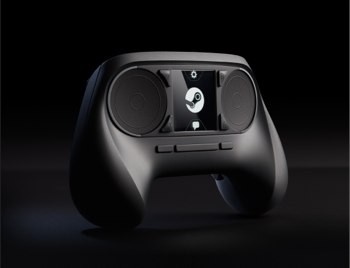
Since Valve announced its open source Linux SteamOS distribution and Steam Machines prototype in late September, numerous questions remain. Valve has yet to unveil a photo of the prototype or name the multiple hardware licensees that will build various console-like embedded variations of Steam Machines starting next year. Valve’s unusual, haptic and touchscreen-enabled Steam Controller has been more fully divulged, but is still a bit of a mystery, as well.
Last week, however, Valve released more details on the Steam Machines prototype. The PC-like device will run SteamOS Linux on different 4th Generation Intel Core “Haswell” processors, including Core Intel i7-4770, i5-4570, and an i3 model, as well as various Nvidia GPUs, including the Titan, GTX780, GTX760, and GTX660. The computers will ship with 16GB of DDR3-1600 RAM and 3GB GDDR5 RAM for the GPU, plus a 1TB hard disk and 8GB SSD. Powered by a 450-Watt 80Plus Gold power supply, the prototype will measure 12 x 12.4 x 2.9 inches.
 The specs suggest the prototype is not simply a rehash of Xi3’s AMD-based Piston Console, which targets Steam gamers and developers. Assuming Valve plans to release a commercial version of its Steam Prototype, one would hope the price will run well shy of the Piston Console’s $999. In its spec unveiling, Valve suggested that next year’s more embedded third-party Steam Machine models will be cheaper than the prototype.
The prototype will run over 3,000 Steam platform games, and support keyboard and mouse set-ups as well as gamepads. The beta version of the Steam Controller will also be supported, although it will lack key features that will appear in the final version, including WiFi and the touchscreen.
Gaming developers have until Oct. 25 to convince Valve they are among the crème de la crème of of the Steam community, and therefore worthy of receiving one of the first 300 Steam Machines prototypes. Those who don’t make the cut on the beta program now have another pathway toward SteamOS enlightenment. Valve has announced a Steam Dev Days event to be held Jan. 15-16 in Valve’s home turf of Seattle. Attendees will be able to test-drive and provide feedback on Steam OS, the Steam Machines prototype, and the Steam Controller.
Steam Dev Days will let developers explore topics including game economies, VR, Linux/OpenGL, and user-generated content. Attendees need to pre-pay a $95 fee to ensure entry, and pesky reporters need to apply to this “off the record” event.
With SteamOS, the gaming world appears to finally be taking Linux gaming seriously. Pundits who have laughed off earlier open source Linux consoles such as OpenPandora’s Pandora device, now give Valve half a chance to grab some of Microsoft’s downloadable game market. Among other positive responses, PC Gamer’s Phil Savage wrote: “SteamOS may not be a Windows killer on release. In the years to come? I wouldn’t bet against it.”
Competitors have taken notice as well. Microsoft VP Phil Harrison and Sony UK chief Fergal Gara have separately told reporters they are taking the SteamOS threat seriously. Longtime open source foe Nvidia has not only announced open GPU drivers for the platform, it has been one of Valve’s closest collaborators. AMD has also vowed Radeon driver support.
The respect for Valve stems less from game hits like Portal and Half Life than from its Steam online distribution service and gamer community. The Steam service is now widely imitated by PC gaming giants, and still represents at least half of the online distribution market. The downloadable game concept also appears to be moving into the console game market, potentially threatening retailers of console games like GameStop.
Valve’s technical innovations have contributed to the widespread interest in Steam Machines, as well. In particular, its Big Picture Mode, already available on Steam PC clients, enables a computer to act as a server to mirror games from the Steam service to multiple screens in the house simultaneously, including TVs. Earlier this week, the Steam clientwas updated with Big Picture bug fixes, among other enhancements such as an improved connection ping for connecting servers. Valve also has a number of R&D projects exploring motion and gesture control, biometrics feedback, virtual reality goggles and other wearable devices, as well as the potential for a Steam server streaming multiple games simultaneously.
SteamOS is an intriguing wildcard in a gaming world that has been growing more fluid and unpredictable. The questions are a lot more complex than simply Xbox vs. PlayStation vs. Wii.
Although PC gaming is advancing the downloadable paradigm, people are buying fewer PCs, suggesting a continuing strong market for consoles. Yet at the same time, the console giants are competing with more casual gamers who get by with a smartphone and tablet. Android-based mobile game consoles like the Nvidia Shield, as well as the recently updated Ouya, and Madcatz’ new MOJOare attempting to enable a wider range of Android games.
Gaming is also increasingly merging into the world of IP set-tops and media players, most based on Linux or Android, which aim to provide a universal interface toward games, multimedia content, and web browsing on a TV. PC Gamer’s Savage suggests that Valve may be working on a lightweight version of SteamOS that could be loaded onto smart TVs.
Meanwhile, the long suffering Linux gaming community can enjoy a little celebration over SteamOS. Not only does it appear that Linux-based gaming titles can be easily ported to the new platform, but Valve has claimed that unlike the Steam distribution service, SteamOS and the Steam Machines platform will be completely open source. On the other hand, if SteamOS fails, it may be a while before another game company attempts a similarly FOSSy gamble.
 Ever since Oracle bought MySQL a fair number of MySQL users started looking for an alternative, due mainly to doubts that Oracle would be a good steward of a key software project. Let’s go back in time a little bit to understand what’s at stake, and look at the reasons to move away from, or stay with MySQL.
Once upon a time there was a speedy relational database called MySQL. It was invented by a Swedish company, MySQL AB, which was founded by David Axmark, Allan Larsson and Michael “Monty” Widenius. It is named for Widenius’ daughter, My. MySQL was born about the same time as the World Wide Web, in 1994. It was popular from its inception and quickly became a standard part of the LAMP stack (Linux, Apache, MySQL, Perl/PHP/Python) that powers most Web sites. MySQL has been dual-licensed from the beginning: free for personal use, but you had to purchase a commercial license to use it on commercial sites or on Windows servers. In 2000 they changed the free license to the GPL, which meant that commercial users no longer had to purchase licenses. MySQL AB took a huge financial hit from this, losing as much as 80 percent of revenues by some accounts.
But, to their credit, they stuck with the GPL. MÃ¥rten Mickos became CEO in 2001, and the company’s market reach and revenue steadily increased. But even though they were becoming dominant when measured by installations (about a third of the total market share), their revenues were still smallish– for example, they grossed about $50 million in 2007, which to me is a nice pile of money, but to industry giants like Microsoft and Oracle it’s a rounding error. Oracle looked upon MySQL and decided they had to have it, and started making purchase overtures around 2006. MySQL AB said no.
In 2007 MySQL AB raked in a cool $75 million. In 2008 Sun Microsystems bought them for approximately $1 billion. At the time I thought that was a heck of a lot of money when Sun could have forked it without buying it. Though purchasing the whole company meant buying the talent that built MySQL. But Widenius and Axmark didn’t last long at Sun and left in 2008, with many public complaints. Widenius was a vocal critic of Sun’s MySQL 5.1 release and called it buggy and crashy. Then Mickos left in 2009, and the original MySQL visionaries were gone.
In 2009 Oracle stunned both the geek- and blogospheres (I always wanted to use those words) by announcing it was going to purchase Sun Microsystems for a cool $7.4 billion. Monty Widenius, in one of the most amazing cases of seller’s remorse ever, arose in a mighty dudgeon and tried to derail the deal with his “Save MySQL” campaign. He urged people to write to the European Union and ask them to either shoot down the whole deal, or require Oracle to obey certain conditions. MySQL was firmly entrenched as an extremely important piece of technology, the foundation of the Internet and of many private businesses, and he feared that Oracle would not be a good steward of MySQL, but would kill it, or close the source.
The deal went through anyway and Oracle, at last, owned MySQL.
Monty did not retire to count his giant pile of Sun money, but instead forked MySQL and created MariaDB in 2009. (Fortunately for his naming convention he has another daughter, Maria.) MariaDB is a non-commercial community venture, always free software and always free of cost, though donations are welcome. MariaDB is now managed by the MariaDB Foundation, which is led by Michael Widenius, David Axmark, and Allan Larsson (sound familiar?). So they created it, sold it, and got it back for free, which makes this the all-time having-your-cake-and-eating-it winner.
What if you want commercial support? Then you talk to the nice people at SkySQL, who provide support and custom engineering for MariaDB, and migration assistance from MySQL.
MariaDB has a different numbered versioning system than MySQL, but otherwise it aims to be a drop-in replacement for MySQL, with complete binary compatibility with all APIs and protocols, all MySQL connectors (such as PHP, Perl, Python, Ruby, and so on), and important tools like mysql-client. So how do you migrate? Uninstall MySQL and install MariaDB. Really, that’s all there is to it– in theory, anyway. I’ve done it a few times on smallish simple databases and it worked like a charm. For large complex systems, who knows. Be sure to study MariaDB is a binary drop in replacement for MySQL before you try it.
So why would you even think of migrating away from MySQL to MariaDB? There are a number of reasons. Mainly because as a non-profit community project MariaDB is not subject to the whims of a single vendor. This is a very big advantage, because one of the top reasons to use free/open source software is you don’t get locked in to any particular vendor. MariaDB has more features such as multiple storage engines, subqueries, an Optimizer that improves performance, and better replication. MariaDB is MySQL with improved and extra features, and even though the Foundation wants to maintain binary compatibility I expect increasing divergence, and someday they’re going to have to leave MySQL behind.
Yes, I am one of those lonely nerds who adores PostgreSQL and wishes MySQL were not so dominant. Because the world is full of MySQL, and so we database nerds must be fluent in MySQL. Me, if I’m starting from scratch I want PostgreSQL. But not migrate from MySQL or any other RDBMS, because that is a giant and error-prone task.
Thank you to Jeff Cogswell for his excellent MariaDB vs. MySQL: A Comparison. You may also enjoy the informative MariaDB vs. MySQL which details changes you’ll see as you use it. For a good introduction to PostgreSQL try my series Crash course in PostgreSQL, part 1 and Crash course in PostgreSQL, part 2.