Home Blog Page 1834

Nexus 10 Is Not Yet Supported In AOSP 4.3, Graphics Driver Looks Like The Culprit

n10thumbReady for some more Android Open Source Project woes? In addition to the Nexus 7 drama over AOSP builds in the last couple of weeks, it looks like there are some issues with the Nexus 10 as well. Don’t worry, the Android 4.3 factory image for the N10 is sitting on the Google Developers page, proud and happy, but the binaries and drivers for some individual components on the tablet seem to be missing, most notably the graphics driver.


Done With This Post? You Might Also Like These:

Nexus 10 Is Not Yet Supported In AOSP 4.3, Graphics Driver Looks Like The Culprit was written by the awesome team at Android Police.

Read more at Android Police

Elementary OS “Luna” released

The “Luna” release of the elementary OS distribution is now available; see this blog entry for more information on this release. LWN looked at elementary OSin 2011.

Read more at LWN

openSUSE Milestone 4

128px-Icon-yast
openSUSE Milestone 4, and final Milestone before starting the Beta process, is out for everyone to test. The process has worked out normally and although this Milestone came a few hours after it was planned, the process remains steady. openSUSE 13.1 is expected to be released in November of 2013 just in time for our second annual openSUSE Summit. The summit will provide an excellent opportunity for you to meet the people who took your contributions and made them part of the final openSUSE product. There will be plenty to talk about and it is also a good opportunity for you to present on what your worked on for 13.1. Do not miss the fun!

openSUSE 13.1 M4

This January a team of develpers started moving YaST codebase to Ruby. YaST utilized an old proprietary code that made it harder for developers interested in improving YaST to submit changes to it. With the Ruby translation, it makes it easier for anyone acquainted with YaST to contribute code to it. YaST is one of the software pillars for openSUSE. It is one of the oldest and most versatile system configuration tools out there and it is exclusive to openSUSE and SUSE. Is you want to find out more about YaST, go here. As you follow the link, you will notice that there is a good community involved into improving YaST. You can participate too if now Ruby makes it all easier for you to contribute. This milestone is the first to integrate the Ruby version of YaST, so when you test, give installation and configuration a good workout!


Read more at openSUSE News

Distribution Release: Sabayon Linux 13.08

Sabayon Linux 13.08, a desktop distribution based on Gentoo following a rolling release model and providing multiple desktops, was released today: “This is a monthly release generated, tested and published to mirrors by our build servers containing the latest and greatest collection of software available in the Entropy….

Read more at DistroWatch

Canonical Will Win Even if Ubuntu Edge Doesn’t Make Its $32 Million

It looks less and less likely that Canonical will raise the $32-million it needs for the Ubuntu Edge. So what! It won’t matter in the long run.

Linux 3.11-rc5 Celebrates 20 Years Since Windows 3.11

Twenty years ago today Microsoft released Windows 3.11 while today Linus Torvalds released the Linux 3.11-rc5 kernel. He wished he could have released Linux 3.11 kernel final today, but that didn’t happen…

Read more at Phoronix

First Solar-Powered Linux Laptop

A new kind of laptop, the SOL, is being designed for the great outdoors and it’s powered by sunlight and it will be running Linux.

Corelets – A New Paradigm for Cognitive Computing

Over at the Smarter Planet Blog, Dharmendra S. Modha writes that, just as Fortran powered the last 60 years of scientific computing, the coming era will be powered by Cognitive Computing that gathers huge quantities of data, reasons over the data, and learns from interactions with information and people. To make this possible, he contends that scientists will have to re-architect nearly every aspect of computing and develop an all-new programming paradigm.

Enter the corelet model. It’s a high-level description of a software program that is based on re-usable building blocks of code—the corelets. Each corelet represents a method for getting something done using the combination of computation (neuron), memory (synapses), and communication (axons) on individual neurosynaptic processor cores along with inter-core connectivity. Each corelet hides or encapsulates all details except external inputs and outputs. Corelets are like LEGO blocks. Small individual corelets handle simple functions. When combined, they create new, larger corelets that aggregate functions and add new ones while hiding the underlying component corelets. In this way, the programmer can write large and complex programs using existing building blocks. Using this model and the programming language for executing on it, it will be possible for programmers to produce a large quantity of efficient code with relatively little effort and for people who are not programming experts to create sophisticated cognitive applications. That’s much the same effect that FORTRAN had on the computing world in its early days.

Read the Full Story or check out the whitepaper: Cognitive Computing Programming Paradigm: A Corelet Language for Composing Networks of Neurosynaptic Cores.

Related posts:


The post Corelets – A New Paradigm for Cognitive Computing appeared first on insideHPC.

 
Read more at insideHPC

Watch the Movie Trailer for LinuxCon/CloudOpen and Win VIP Gift

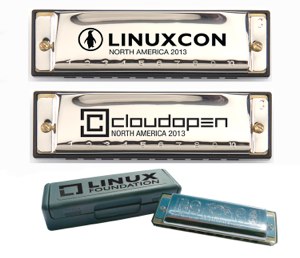
LinuxCon Gift HarmonicaWhat’s been your summer blockbuster favorite? Wolverine? Lone Ranger? Pacific Rim?

You ain’t seen nothin’ yet! Our favorite summer blockbuster comes out September 16 with an exclusive showing only in New Orleans: LinuxCon and CloudOpen North America taking place September 16-18, 2013 at the Hyatt New Orleans. 

This is the largest gathering of Linux and cloud professionals in North America. Deeply technical content has been produced in partnership with the Linux Plumbers Conference to extend the opportunities for learning and collaborating unlike ever before. We hope you will join us. 

Watch the preview here and tell us three of the co-located events that are featured in the movie trailer in the comments section of this blog. You’ll be entered into a drawing to win the LinuxCon/CloudOpen VIP gift: A harmonica that symbolizes the music and color of New Orleans, this year’s host city. We’ll draw two names on Friday, August 23, 2013 and alert the winners. 

https://www.youtube.com/watch?v=YBIQAsoLlvc” frameborder=”0

Ubuntu Edge Is Up To $9 Million USD In Funding

There’s been a slight boost in the crowd-funded Ubuntu Edge smart-phone / converged device project with now being up to $9.175 million dollars in funding…

Read more at Phoronix