
The word ‘community’ has many definitions, especially in the world of open source software and Linux. Urban planner, artist and TED fellow Candy Chang has her own understanding of community, cultivated through collective art projects in her hometown of New Orleans. Her “Before I Die” project, for example, transformed an abandoned house in her neighborhood into an interactive wall for people to share their hopes and dreams — a project The Atlantic called “one of the most creative community projects ever.”
 Chang will share her insights on community and collaboration in her keynote at LinuxCon North America in New Orleans, Sept. 16-18, 2013. Here she gives us a sneak peek at the talk.
Can you tell us what you’ve learned about community since creating the “Before I Die” project?
Candy Chang: Anonymity can nurture community. It can free us to be completely honest and vulnerable before we’ve developed understanding and trust. And that honesty and vulnerability can lead to understanding and trust. The last time I made a wall with students, one of the responses was, “Before I die I want to overcome depression.” It really touched me. I went though a period of depression. We all talked about it and began removing our guards. We’re all trying to make sense of our lives and there’s great comfort in knowing you’re not alone.
From your experience, what motivates people to come together in collaboration to advance a collective mission? Why is that important?
Chang: Belief in the bigger mission. Then you’re passionate enough to overcome the obstacles along the way. You’re full of hope and curiosity and reminded of what you’re working towards. Fear is a strong motivator too, but that’s much less fun.
How do you think your work and art can apply to the open source software and Linux communities?
Chang: Since its earliest days, the internet was considered a kind of public space, and Lee Felsenstein envisioned it as an “information commons.” Linux is a great example of the possibilities. I’ve experimented to see if our physical public spaces can continue to advance and become an information commons as well. There are benefits and limitations to both analog and digital tools. The contexts are different, but there’s a lot we can learn from one another.
Can you give a sneak snapshot of what we might get to see from you in New Orleans in September?
Chang: You’ll see a sincere and personal talk from me about public space and community, the aftermath of some of my projects, how I think it applies to Linux, how I got here, what I learned along the way, and some questions currently on my mind. I’ve been reading a lot of philosophy and psychology. Carl Jung may show up in the mix. And it will be full of pictures. Lots of pretty pictures.
Editor’s note: Don’t miss Candy Chang’s keynote at LinuxCon. Register now!

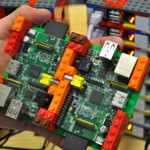 Much has been made about Google’s $35 Chromecast dongle, which lets users stream their desktops and video to large screen TVs, but there is now a similar application for the Raspberry Pi that offers some of the same functionality: PiCast. Its developer has an informational page up
 Last week, the news broke that Android phone users with
