Home Blog Page 2091

Teen boasts on YouTube before bank robbery arrest

Police in Nebraska arrest a teen in connection with a bank robbery — and then discover that she posted a video about, well, robbing a bank.

I have never robbed a bank, but some people find it invigorating.

Different people find different ways of expressing invigoration. So it may well be that one of them — at least in the case of 19-year-old Hannah Sabata — involves making a YouTube video boasting about how you’ve just robbed a bank.

Here, you see, is just such a video. Its contents allegedly fit comfortably with the facts of a robbery at the Cornerstone Bank in Waco, Neb.

Indeed, the Associated Press reports that it was posted the very same day that Sabata was arrested on charges of stealing a car and robbing the bank… Read more at CNET News

Don’t blame me for txtspk, says sender of first SMS (Q&A)

Ppl! Txting is 20 yrs old! Thats soo GR8!

Depending on your perspective, you might thank or blame Matti Makkonen, the pioneer of texting, for how it changed human communication.

Just don’t shoot the first texter.

Neil Papworth is the British-born engineer who actually sent the first text message, 20 years ago today. Typed out on a PC, it was sent to a Richard Jarvis of Vodafone and read: Merry Christmas.

Papworth was working as an engineer at Sema Group Telecoms, which was developing a Short Message Service Centre….  Read more at CNET News

Stable kernels released

LWN.net LogoThe kind folks at Google decided that your editor was in need of a present for the holidays; soon thereafter, a box containing a Nexus 7 tablet showed up on the doorstep. One might think that the resulting joy might be somewhat mitigated by the fact that your editor has been in possessionof an N7 tablet since last July, and one might be right. But the truth of the matter is that the gift was well timed, and not just because it’s nice to be able to install ill-advised software distributions on a tablet without depriving oneself of a useful device.

It was not that long ago that a leading-edge tablet device was a fairly big deal. Family members would ask where the tablet was; the house clearly wouldn’t contain more than one of them. What followed, inevitably, was an argument over who got to use the household tablet. But tablets are quickly becoming both more powerful and less expensive — a pattern that a few of us have seen in this industry before. We are quickly heading toward a world where tablet devices litter the house like notepads, cheap pens, or the teenager’s dirty socks. Tablets are not really special anymore.

They are, however, increasingly useful. Your editor recently purchased a stereo component that locates his music on the network (served by Samba), plays said music through the sound system with a fidelity far exceeding that available from portable music players, and relies on an application running on a handy Android (or iOS) device for its user interface. Every handset and tablet in the house, suddenly, is part of the music system; this has led to a rediscovery of your editor’s music collection — a development not universally welcomed by your editor’s offspring. Other household devices, thermostats for example, are following the same path. There is no need to attach big control surfaces to household gadgets; those surfaces already exist on…

Read more at LWN

NetBSD 5.2 Brings Small Updates

[NetBSD Logo]After knowing it was coming for some time, and nearly two months after the NetBSD 6.0 release, NetBSD 5.2 is now available. NetBSD 5.2 is intended for NetBSD 5.x users who aren’t yet ready to upgrade to NetBSD 6.0 with its more invasive changes…

Read more at Phoronix

30 Linux Kernel Developers in 30 Weeks: John Stultz

This week’s 30 Linux Kernel Developers in 30 Weeks profile is with John Stultz. Based in in Portlandia, John works for IBM and is on assignment with Linaro. His love affair with Linux began in 1997, and he’s never looked back.

 

john stultzName

John Stultz

What role do you play in the community and/or what subsystem(s) do you work on?

My work on the timekeeping subsystem has been the continuous thread through my time with the community, but I’ve also worked on Linux hardware enablement for large NUMA systems, as well as worked on improving the robustness of the CONFIG_PREEMPT_RT patchset.” patchset. Most recently I’ve been focusing on helping to upstream the Android patchset, which has required me to dig in a lot of areas in the kernel I previously haven’t looked.

Where do you get your paycheck?

I work for IBM’s LTC, currently on assignment with Linaro.

What part of the world do you live in? Why there?

I live in Portland, Oregon, and I really enjoy the walkable/bikable neighborhoods, great food and relaxed vibe. The creative scene is really great too, and while the tech scene is somewhat limited, there’s a good community of tech folks who have regular social events (see: calagator.org).

What are your favorite productivity tools for software development? What do you run on your desktop?

ssh, sshfs, git, kvm. Its not a very exciting list. I try to keep most of my development on a big build system in a lab, and then access that machine from different thin-client style systems (mostly a kvm virtual machine desktop environment, and a netbook, so not places you can do any heavy computation). I still like to use gui style editors (I used to love nedit, but modern distros support for it is poor), so I sshfs mount my development machine and that allows for quick local editing and remote building cycles, testing with kvm.  Oh, and Dave Jone’s trinity test tool has been really useful in finding bugs.

Desktop-wise, I try to sort of go with the flow, since I have a few machines, and I don’t want to bother keeping settings or environments synced. The less configuration required, the better. So its usually whatever the distro default decides. Currently: Ubuntu 12.04 w/ Unity. I can’t say I love it, but I get by.

How did you get involved in Linux kernel development?

I started playing with Linux around 1997 at the beginning of college, and back then building your own kernel was a commonly recommended task for a new Linux user. I had switched over to Linux full time shortly there after, and as I took more systems courses, my interest in kernel level development grew. Following lkml.org and lwn.net made it obvious that the Linux community was the most interesting place to do kernel development. After graduation in 2001 I went looking for Linux kernel development jobs and started at IBM’s Linux Technology Center, where I’ve been ever sense.

What keeps you interested in it?

I really like the collaborative nature of the development. Despite the occasional head-butting, folks are really helpful for the most part, and its great having access to very smart people from around the world. Even if a change or approach gets rejected and totally shut down, its all out there in the open and someone else might be able to learn from it and take a different stab at the problem and come up with something better. I also like that even if you change teams or projects, you can still participate, help-out and have wider influence then just what your immediately working on.

The kernel community process is definitely not easy and there are regular setbacks, but the constant iterative improvement and the strong resistance to quick hacks makes the end result worth it. Its a really great feeling when you do finally get something upstream, and know others will be using and building on that work for years.

What’s the most amused you’ve ever been by the collaborative development process (flame war, silly code submission, amazing accomplishment)?

I can’t think of any one specific case but generally, I think the casual and fun attitude that shows that smart folks are really enjoying what they do is always great to see. Usually these are showcased in the lwn.net quotes of the week.

What’s your advice for developers who want to get involved?

Find an area that is unloved and learn about it.

Overall, I think persistence and empathy are important. It takes work to understand someone else’s perspective, especially if you disagree. Avoid letting your ego show. The flames aren’t personal (even when they really sound like it), so if you’re worked up by something, let it sit and reply the next day. Expect to throw away your work and try again, possibly many times.

What do you listen to when you code?

I really like to focus on music when I’m listening to it, so it can be more of a distraction when I’m working. But on occasion I’ll listen to mellower stuff like Polica or Telefone Tel Aviv when I’m coding.

What mailing list or IRC channel will people find you hanging out at? What conference(s)?

#linux-rt, #linaro-kernel, lkml.  I’ve managed to make it to Linux Plumbers Conf a few years in a row, and a number of Linaro Connect conferences, but I’m not really a constant fixture at conferences.

Improving The Ubuntu Search Experience With libcolumbus

Search is at the heart of Ubuntu. Whether you search for applications or content in the dash, search for functionality in your applications the HUD, or search within applications and your file manager, for Ubuntu to be successful we have to get search right.

As we build search more and more into Ubuntu, it becomes increasingly popular. As an example, the HUD has been a really popular feature, but if there is one piece of feedback we hear more than ever is that it would be nice if the search in the HUD was even smarter.

This is a great way in which Open Source and community can iterate and improve.

One core project being worked on to consolidate search best practice is libcolumbus. libcolumbus is an implementation of the Levenshtein distance algorithm, but with a fast search and custom errors…

Read more at jonobacon@home

Opinion: Best Linux Distro for Me Has a Refreshing Burst of Cinnamon


Just in time for the holidays, Clem and the gang from Linux Mint start sprinkling Cinnamon, well, everywhere.

Cinnamon desktop, using the built-in Zukitwo theme

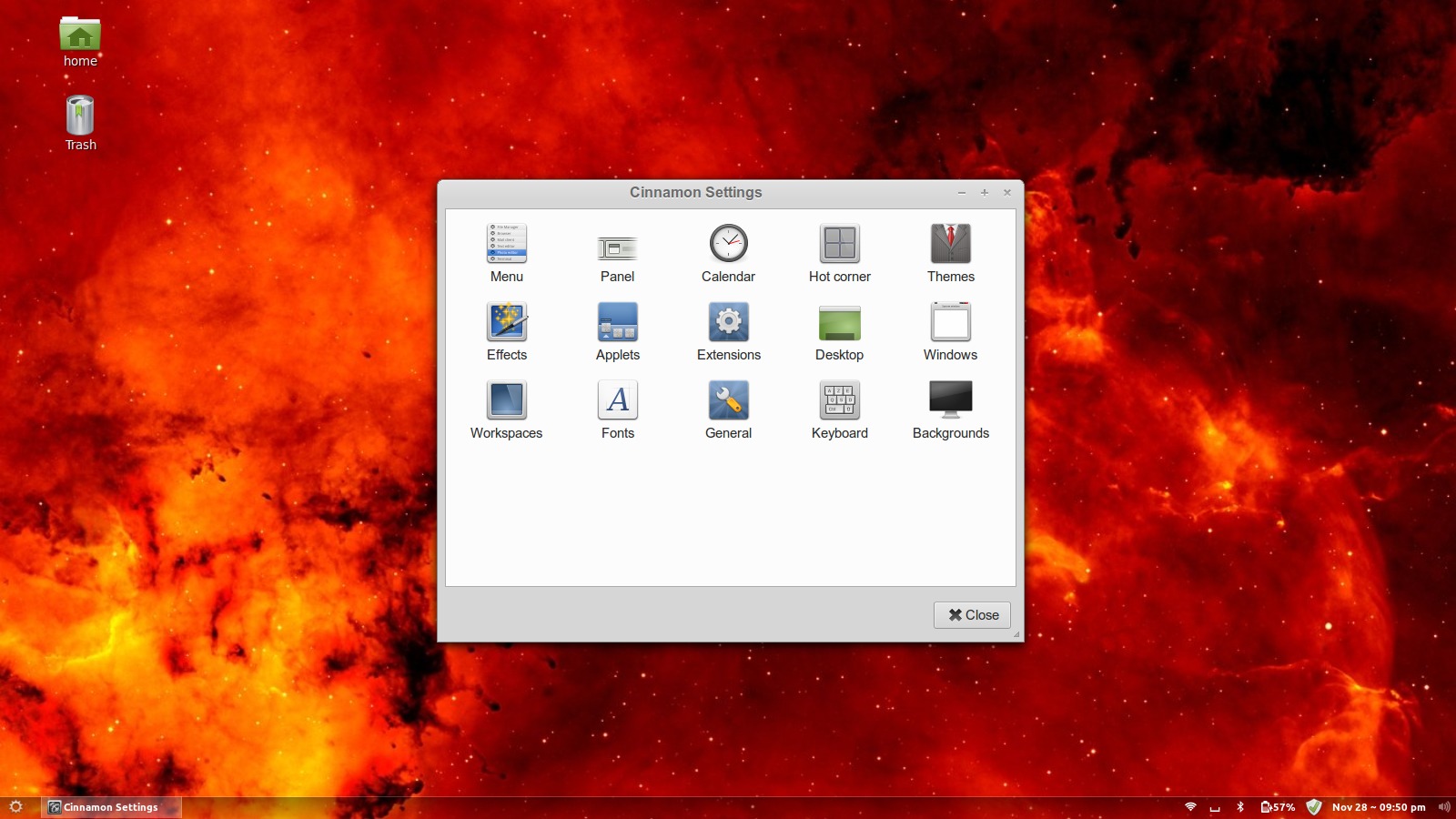
Anybody who’s talked with me about running Linux on the desktop within the past year has almost certainly gotten an earful about Cinnamon. If you haven’t heard of it, here’s the basic description: clean, beautiful, fast, and traditional desktop environment.

I know, I know. That “T” word – and it’s the one that’s unfashionable for desktop UIs these days, too.

Not “T”ablet, not “T”ouch. “T”raditional.

As in, you know exactly what that launcher in the lower left does, the icons make sense; applications each have their own button in the window list; menus are attached to their windows; and you can even launch apps from the menu without ever letting go of your keyboard. That kind of traditional.

Just enough knobs, switches, bells, whistles, etc.

I’ve been a full-time Linux desktop user since 2003, and have given every modern environment out there an honest try. Cinnamon is – hands down – my favorite.

The thing is, I use it on a day-in, day-out basis at work. My laptop runs Linux, so I want something that is fast, intuitive, reasonably stable, and that gets the heck out of the way.

My desktop is like my Galaxy S3 or the IVI system in my wife’s car – I’m thrilled that it runs Linux, but most of the time I don’t want to be reminded of the technology, and least of all when I just need to finish a financial report, make a phone call, or find the airport. It just needs to work without being a distraction, and Cinnamon has performed like a champ in this regard.

I’ll admit to being a sucker for eye candy… if it’s fast

The developers behind Linux Mint have historically done a great job in striking a comfortable balance between beauty and usability, but it’s also worth calling out the team’s ability to execute. While its roots go back to a number of Mint-specific GNOME Shell extensions, Cinnamon itself is quite stable despite being not quite one year old.

They’ve largely accomplished this by reusing components from upstream projects, and tweaking, repackaging, or forking as necessary. For example, Cinnamon uses many GNOME 3 components, but not necessarily the ones exposed to the user, so the end user experience is totally different. In some cases it adds new functionality (the desktop look and feel, for example), in other cases they retain features that have been deprecated upstream (as with Nemo).

The Nemo file manager, new in Cinnamon 1.6.7

Development has been really rapid, so until recently your best bet for running the latest Cinnamon release was Linux Mint or LMDE. (I happen to prefer Debian distros, so Mint has worked well for me.) But it’s steadily making its way into the repos of other distros like Fedora and OpenSUSE, and there’s a Cinnamon PPA for Ubuntu.

It’s great to see Cinnamon gaining traction above and beyond the fast growth of Linux Mint. Clem Lefebvre (founder and maintainer of both Linux Mint and Cinnamon, and release manager for MATE) and the rest of the team have really done a solid job.

If you get some spare time over the holidays, give it a try. Your mileage may vary of course, and I’ve found the occasional rough edge, but it’s certainly worked well for me.

Linux Tips: Fixing Blue YouTube People


There is a Flash video problem that is peculiar to Linux users using certain Nvidia graphics cards, and that is YouTube and other Flash videos render everything with a blue tint, so that people look like Smurfs, or like the Na’vi in Avatar. Figure 1 shows what it does to Limor Fried, founder of Adafruit Industries.

limor fried, colored blue by adobe flash bugLimor Fried, made blue by Adobe Flash


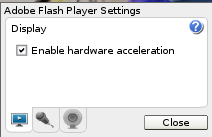
This is due to a bug in Flash 11.2 that interacts incorrectly with the VDPAU (Video Decode and Presentation API for Unix) library. libvdpau moves some video decoding functions to the GPU, which should improve performance and reduce the load on your system’s CPU. libvdpau is used by GeForce 8 and newer Nvidia GPUs. The easy fix is to turn off hardware acceleration for Flash videos. To do this, simply right-click on the video and you’ll see this:

disable hardware acceleration in Flash

Un-check “Enable hardware acceleration”, re-start Flash, and your colors should be back to normal:

limor fried, founder of adafruit industries

There is a good detailed discussion about this, and also the related problem of Flash videos always staying on top in an eerie, ghost-like way, on the Arch Linux forums. There are several other fixes to try if you’re in the mood, like mucking with configuration files and patching libvdpau. Or you could wait until the fixes percolate into your Linux distribution. Or just disable hardware acceleration. Or have a little fun with it, like give the Na’vi normal flesh tones and turn the humans blue.

Humble not so Friendly Anymore Bundle

Everyone by now should know about Humble Bundle, they used to be a provider of great DRM FREE and cross platform (Linux, Mac and Windows) indie games including games like Osmos, Aquaria, Psychonauts, World of Goo etc.

A lot of people including myself used them as shining examples of how things should be done – cross platform, drm free, buy once get all platforms and even support charity! Now is not the case.

They launched a THQ Bundle which has AAA games (that’s not the issue) the issue is that the games are DRM-bound, tied to one service (Steam), not cross platform and from a developer who even supported some rather shady internet bills.

Here is what Humble said to me about it…Read More at Gaming on Linux

KDE 4.10 To Change Windows Grouping

The development on KDE 4.10 is is on full swing (we have created a KDE4.10 update page) and today the KDE project leader Aaron Seigo announe that the upcoming release of KDE will change how window grouping is handled in the task manager.

Currently multiple windows are grouped together in the task manager and this is indicated by a black arrow and a small number showing the number of multiple windows open.

In keeping with the goal to simplify the appearance across the KDE Plasma desktop, Seigo reached out to the community to get a feel for what users want and expect from window grouping. An overwhelming majority mentioned…Read More at Muktware