Home Blog Page 2112

Gartner: Android Accounted For 72% Of Smartphone Sales In Q3, Overall Sales Of Mobile Handsets Down 3%

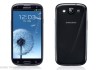
Samsung-Expands-the-GALAXY-S-III-Range-with_3

Gartner has this morning published its numbers for how the mobile handset industry has performed in Q3. The topline figure is that the mobile industry overall continues to see pressure from the wider economic downturn, and the gradual move away from cheaper, low end feature devices: overall sales of 428 million units for the quarter are 3% down on the same quarter last year. But smartphones continue to outshine that by quite a lot: they are up by 47% to 169 milion units. In other words, smartphones accounted for about 40% of al mobile device sales in Q3.

Still, that decline of 3% over last year was seen as encouraging by Gartner, since it was still an improvement over Q2, in which 419 million mobile devices were sold.

“After two consecutive quarter of decline in mobile phone sales, demand has improved in both mature and emerging markets as sales increased sequentially,” writes Anshul Gupta, principal research analyst at Gartner. He points out that in China — currently the world’s largest mobile market — smartphones were the biggest driver of sales, with demand for feature devices “weak.” In mature markets, he says that part of the good news story came in the form of new devices, such as the iPhone 5 and Samsung’s Galaxy S III.


Read more at TechCrunch

SDN: Experimental Networking Tech Gets a Commercial Boost

The SDN suite from Big Switch Networks gives admins access to OpenFlow-based technology for increasing the efficiency of their networks and is backed by Microsoft, Citrix and other major IT companies.

How Do You Solve an IT Skills Crisis Before it Happens? Estonia has the Answer

Estonia’s ProgeTiiger project aims to preventing a future IT skills shortage in the country by teaching some of its youngest citizens how to get to grips with tech and code. It’s proved so popular, it’s hoped local IT companies will step in to finance the initiative.

Survey: How Important is Newcomer Experience in Free, Open Source Software Projects?

Editor’s Note: This is a guest post by Kevin Carillo, a PhD student at the School of Information Management of Victoria University of Wellington in New Zealand. 

Kevin CarilloFree, open source software projects have relied on a wide array of strategies and procedures to attract new contributors. Retaining newcomers and having them become valued sustainable contributors is a much more delicate challenge. What a person experiences when he or she is a project newcomer seems to have an important impact on the kind of contributor this person will become within a project. 

There has been little research about what it takes to provide a greater newcomer experience to ensure that projects keep getting quality contributors. This is what I am trying to find out in my PhD thesis. 

If you have joined Debian, GNOME, Gentoo, KDE, Mozilla, NetBSD, OpenSUSE, or Ubuntu since January 2010, and are willing to help out, I would like to invite you to take part in the project’s survey.

Find What Works

The research project will help to answer a variety of questions such as:

  • Does formal mentorship really help in generating valued contributors? What about informal mentoring?
  • How important is the support of a community towards its newcomers? 
  • How effective are formal joining processes such as those relying on sponsorship? What about informal joining processes?
  • How can we generate a higher sense of identification towards a project? 
  • How can we facilitate the integration of newcomers within a project?
  • Are tasks specifically tailored for project newcomers really helpful?

By comparing the various types of newcomer experiences across projects, it will be possible to identify what works from what does not work when dealing with newcomers. The data will help each project to assess more accurately the extent to which they effectively facilitate the integration of their newcomers. The data can also help to identify and compile the most succesful newcomer practices from each of the involved projects. 

Data Will Be Open Source

The dataset will be released under a share-alike ODbL license so that the participating projects can extract as much value as possible from the data. The software used for this survey is issued under GPL 3.0.

The survey is anonymous and should take around 20 minutes. 

As part of an academic project, the survey is approved by the Human Ethics Committee at the School of Information Management at the Victoria University of Wellington

If you’re a member of any of the above projects, please spread the word! 

If you are a member in a large project that is not in the list of mentioned projects and want your project to take part, please contact me asap, there is still time

I will post news about my progress with this research, and the results on my blog: http://kevincarillo.org. Don’t hesitate to contact me at This e-mail address is being protected from spambots. You need JavaScript enabled to view it
.

The People Who Support Linux: IT Manager Pursues Masters Degree in the Art of Open Source

How is the Linux community like a terrorist organization? This is a question graduate student, IT Manager and Systems Engineer Joel Burleson-Davis recently explored for his master’s thesis on sociological and philosophical systems, including Linux.

Though he has a technical background and is employed remotely by a structural and mechanical engineering company in Western Australia, Burleson-Davis is pursuing a Master of Arts degree, driven by his fascination with the open source community.

Joel-Burleson-Davis“While the technology of Linux and open-source in general is flexible and robust, the community and social dynamics that make it all possible are much more interesting to me,” Burleson-Davis, who lives in Austin, Texas, said via email.

His most recent paper draws on the framework of social researcher Arjun Appadurai from his book “Fear of Small Numbers: An Essay on the Geography of Anger.” The book argues that small numbers of loosely connected terrorist cells are enabled by technology to antagonize and win against large nation-states.

Burleson-Davis equates the Linux community and its development model with the terrorist cells in Appadurai’s book, and organizations like Microsoft and Apple with the massive nations under attack. He writes:

“The Linux community, made up of volunteers, people from various organizations (often competing organizations like SUSE-RedHat-Oracle, Broadcom-Atheros, etc) many of whom work at home (like most of the core Kernel developers as far as I know), have given MS and Apple a run for their money, and actually dominated huge areas of the technosphere…

“Linux is the dominant platform now for Smartphones, WebServers, and super-computers and is a foundational element of the largest and most powerful technology companies and websites today (Google, Amazon, Samsung, IBM, Facebook, Wikipedia, etc).”

Linux Insider

Burleson-Davis’ intellectual curiosity with Linux comes from more than a decade working with the platform as a development and learning environment for C programming. He started with Corel Linux in 2000 before moving on to Debian and Fedora Core.

He’s now devoted to Linux for its “limitless flexibility” and the “vibrant community that supports it,” he said. You’ll find him in the support forums for Arch Linux, Zeroshell, Fedora, OpenWrt and CyanogenMod.

“At home, Linux is on my laptop (Arch Linux), phone (Android), router (OpenWRT), my workstation (Fedora), and my HTPC (Fedora as well),” he said. “At work, I use Linux for our WLAN (OpenWRT), Routing (Vyatta), Virtualization (KVM), and our Internet Kiosks (Ubuntu).”

He recently joined The Linux Foundation as an individual supporter to boost his professional ties with Linux. He also plans to attend more LinuxCon events and interact more with the community.

“While I have various Linux certifications, I wanted an organizational attachment, much like my membership with the IEEE and the ACM,” he said.

Thanks for supporting The Linux Foundation, Joel!

 

The Droid DNA Is Basically HTC Going All-In

Click here to read The Droid DNA Is Basically HTC Going All-In

The HTC One X, the EVO 4G LTE, and the One X+ are among our favorite phones. But the company hasn’t had a flagship device for Verizon in a long time. So its decided to go all out and make the most specced-out phone the world has yet known. More »

Read more at Gizmodo

Masters: ARM Atomic Operations

Jon Masters has put together a summary of how atomic operations work on the ARM architecture for those who are not afraid of the grungy details. “To provide for atomic access to a given memory location, ARM processors implement a reservation engine model. A given memory location is first loaded using a special ‘load exclusive’ instruction that has the side-effect of setting up a reservation against that given address in the CPU-local reservation engine. When the modified value it is later written back into memory, using the corresponding ‘store exclusive’ processor instruction, the reservation engine verifies that it has an outstanding reservation against that given address, and furthermore confirms that no external agents have interfered with the memory commit. A register returns success or failure.

Read more at LWN

Parsix GNU/Linux 4.0 released

Parsix GNU/Linux is a Debian derivative distribution with a focus on desktop performance and time-based releases. The 4.0 release is available now; see the release notes for details. “Parsix GNU/Linux 4.0 (code name Gloria) brings tons of updated packages, faster live boot, improved installer system and quality new features. This version has been synchronized with Debian testing repositories as of November 7, 2012 and brings lot of updated packages compared to Parsix 3.7 aka Raul. Parsix Gloria is project’s first release with GNOME 3 series and ships with LibreOffice productivity suit by default.

Read more at LWN

Qt 5.0 Beta 2 Released As The Final Approaches

Digia has announced the second beta release of the Qt 5.0 tool-kit as the final release is no longer too far out…


Read more at Phoronix

iPad Will Lose Market Dominance to Android Next Year, Says Analyst

Android tablets will overtake the iPad in market share by mid-2013, projects analyst Sameer Singh. [Read more]

Read more at CNET News