Home Blog Page 2211

Announcing the Winners of the LinuxCon “Find Skater Tux” Competition

skateboard v5orangeToday we’re very excited to announce the winners of our “Find Skater Tux” competition, which invited community members to locate the skateboard-riding penguin on our web properties and send us the URL for a chance to win a custom Linux skateboard.


We conducted the random drawing late last week and the winners are:

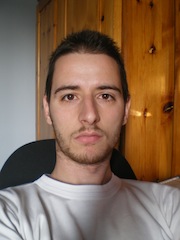
* Zafirios Bitzios of Greece

thermaikos

* Thomas Gahr of Germany

We’ll be shipping their skateboards out this week, directly from LinuxCon and CloudOpen. The Linux Kernel Summit lifted off today, and I’ve already spotted a variety of familiar, friendly faces, as well as some pretty killer custom Linux skateboards. I suspect Skater Tux is around here somewhere.


Enterprises See Growing Open Source Cloud Appeal

The growing maturing of OSS and support from IT vendors make open source cloud deployments an appealing choice, but companies need to assess if they have adequate resources for such a project.

Read more at ZDNet News

Winning T-Shirt Contest Designs On Sale This Week at LinuxCon

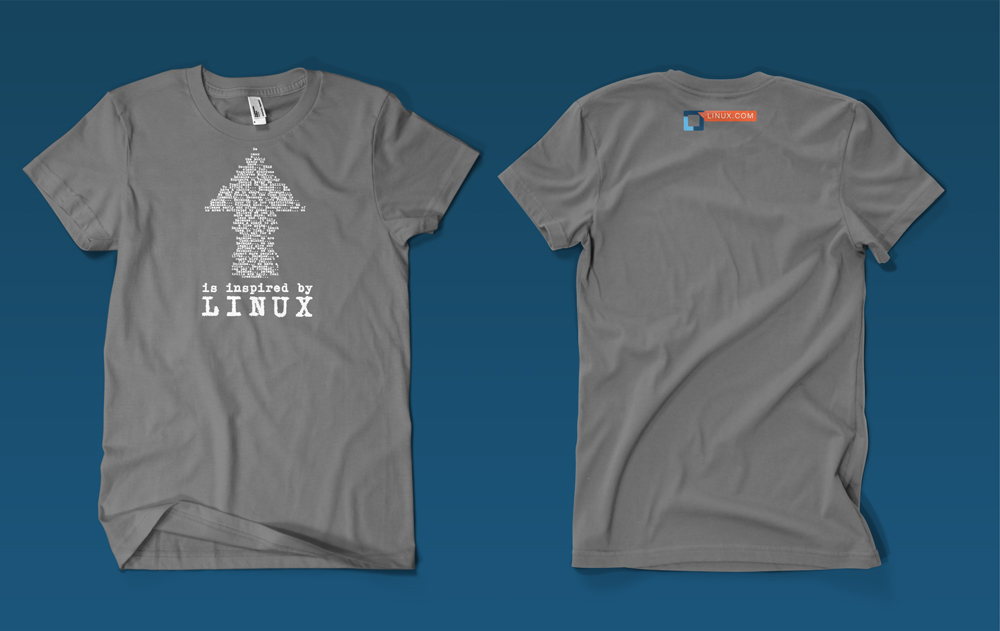
Brian Beck took first place in this year’s “Inspired by Linux” t-shirt design contest. We followed up with him shortly after the contest results were announced to find out more about his involvement with Linux and the open source community and what inspired his design.

Beck will travel to LinuxCon Europe in Barcelona this fall and a limited number of t-shirts sporting his design, along with second-place winner Sabrina Aqil’s design, will be on sale starting this week at LinuxCon North America in San Diego. Both shirts will also be available shortly online in the Linux.com store.

Brian BeckWhat do you do? Who do you work for?

Beck: I am the instructional technology specialist at the Center for Innovation in Teaching and Research at Angelo State University. I provide faculty development and try to interject as many open source software packages, along with the open source mindset, as I can.

The main reasoning is to provide a more creative and flexible workflow for faculty as well as saving taxpayers money. At the same it’s time allowing the students the freedom to take the software, use it and share it with others! I strongly believe that Linux and the open source mindset should be taught in every public school system across the face of the earth! This is why I’m a big advocate for Linux and open source!

Why did you decide to enter the design contest?

Beck: I decided to enter the contest because I have been truly “Inspired by Linux” and all that Linux and the open source mindset stand for. And this was my way to give back, as I am not a programmer or developer.

What are you looking forward to at LinuxCon?

Beck: One of the main things I’m looking forward to at LinuxCon is honestly to thank as many people as I can. Without them — the developers, engineers, programmers and power users — I couldn’t do what I do, and the rest of the world wouldn’t be as far along as we are without them!

Linux Arrow shirt design

How do you use Linux? 

Beck: I use Ubuntu Linux 12.04 mostly in higher education. As far as my hobbies go, I use Darktable for my photography, as well as GIMP, Inkscape for graphic design, print work… and of course designing T-Shirts! 😉 And one of my favorite things to do is create things in Blender 3D. All while using Linux!

I also co-founded and teach for TexOS – The Texas Open Source Project. We take donated computers, install Linux, teach others how do use it, as well as teach them the open source mindset.  And we give it to them to keep and take home. We couldn’t do this without Linux.

Why do you support the Linux Foundation?

Beck: I support the Linux Foundation, because the Linux Foundation supports everyone else! It is because of the training and support at a high end level, and most importantly it is the community that surrounds open source that only fuels my fire to give back more to others!

Samsung’s Android Phone Strategy Can Withstand a Legal Setback

The news of Apple’s legal victory over Samsung is still making its way through the tech world. In case you missed it, a jury has sided with Apple on most of its patent infringement claims against Samsung, and has awarded Apple more than $1 billion in damages. Many of the specific findings surround design decisions in smartphones that Samsung has produced, but a lot of people are also wondering if the victory represents a win over the Android platform that Samsung focuses its smartphone strategy on. According to Google, though, most of the patents at issue in the Apple vs. Samsung skirmish do not extend to the core Android operating system.

As PCMag notes:

The court of appeals will review both infringement and the validity of the patent claims,’ a Google spokesperson said. ‘Most of these don’t relate to the core Android operating system, and several are being re-examined by the US Patent Office. The mobile industry is moving fast and all players — including newcomers — are building upon ideas that have been around for decades. We work with our partners to give consumers innovative and affordable products, and we don’t want anything to limit that.”

It’s also worth keeping in mind that Apple had actually been seeking nearly $3 billion in its lawsuit against Samsung, and don’t forget that Samsung is riding enormous momentum with its Android strategy

Read more at Ostatic

30 Linux Kernel Developers in 30 Weeks: Martin Petersen

This week is the annual migration of Linux kernel developers from all over the world to the Linux Kernel Summit, which is taking place in San Diego and is co-located with LinuxCon and CloudOpen. This group of developers are among the very best in the world, and we’re excited to bring you a profile this week that introduces you to another participant in and contributor to the world’s largest collaborative development project. Martin Petersen is profiled in this week’s 30 Linux Developers in 30 Weeks series.

Martin Petersen 100Name

Martin K. Petersen

What role do you play in the community and/or what subsystem do you work on?

I mainly work on adding support for new storage features so my focus areas are the block and SCSI layers and, occasionally, a bit of ATA.

Where do you get your paycheck?

I work in Oracle’s Linux organization.

What part of the world do you live in? Why there?

I grew up in Denmark, but I currently live in Montreal, Quebec. I originally moved to Canada to join a Linux startup back in the dot-com days.

What are your favorite productivity tools for software development? What do you run on your desktop?

My desktop runs Fedora, but it’s essentially just an X terminal. All the real work is done on a bunch of remote machines. My tools of choice rarely change: xterm, emacs, perl, mc and git. I lost patience with graphical desktop environments long ago and use the i3 window manager because it lets me organize my terminals nicely.

How did you get involved in Linux kernel development?

I was a student in the early 1990’s. Terminals and workstations were scarce at university so being able to run something Unix-like on my machine at home was very compelling. Linux was new and exciting and the obvious choice. I started out tweaking the kernel and X server to work well with the hardware I happened to have in my PC. From there I went on to hack on more exotic platforms like PA-RISC and Itanium.

What keeps you interested in it?

I like making hardware work; that’s really what motivates me. Plus the adrenalin rush of finally finding a bug I’ve been chasing for weeks.

What’s your advice for developers who want to get involved?

Find something that is broken and fix it. Actual bugs, not typos or code formatting. At first it may seem crazy to have to invest hours/days/weeks in fixing something. But it is the process of fully comprehending the problem that’s the important part, not firing up an editor to make the code change. Reading other people’s code can be hard at first but it’s a crucial skill to have when working on any community project. You can’t study to become a kernel developer; the only way to learn this stuff is by getting your hands dirty.

What do you listen to when you code?

Ideally, silence. In reality I listen to a combination of the phone ringing and cats whining for attention.

What mailing list or IRC channel will people find you hanging out at? What conference(s)?

linux-scsi. I don’t hang out on IRC anymore, too many distractions. I tend to attend one or two generic Linux conferences per year outside of the Linux Storage & Filesystem Summit.


Gnome Sudoku: Final Look

One of the games that specially was given importance in GSoC was Gnome Sudoku. Chris Baines has posted a screenshot on his blog about the final look of this game.
Read more at Muktware

What Does “Overqualified” Actually Mean? [Jobs]

Click here to read What Does "Overqualified" Actually Mean?

Of course rejection hurts, but to tell your friends and family (and yourself) that you were turned down because you were too skilled or too experienced is much less bruising on the ego than the alternative. For companies looking to eliminate candidates, using the word “overqualified” may take some of the sting and fear of retribution out of the rejection. But is it true? More »


Read more at Lifehacker

openSUSE 12.2 Release Publicity: Call for Contributions

Agustin, Ismael and Christopher working around a table on openSUSE release PRAs we enter the final straight towards the release of openSUSE 12.2, the openSUSE Team is busy preparing the release publicity. And this is where you, the openSUSE community come in. There are lots of ways you can help us share the workload. If you want to take on one of these jobs, mail the opensuse-project list to announce your contribution.

Screenshots

Look at the feature list, and if there is a feature there that you are familiar with and that looks good, snapshot it (according to the guidelines) and add them to the feature list or upload it to the openSUSE wiki page for general 12.2 screenshots.

Release Parties

This is probably the easiest way to contribute. Throw a release party with your friendly penguins and show them what’s cool about openSUSE 12.2

Social Media

We need a plan for announcing the 12.2 release on social media.  If you’re a social animal, volunteer to lead this for 12.2 on the Project list.

Sneak Peeks

People with detailed knowledge of specific areas of openSUSE are encouraged to help us write in-depth Sneak Peek articles.  The following topics are suggested:

Release Article Translations

Translate any of the above articles, the feature list (if you’re feeling tough), the product highlights into your language and promote them to your local blogs and news sites.

Bug Days

Organising a bug review and triage day for a specific area of openSUSE is one of the most effective ways to build a good team, increase their skills and familiarity with the technical side of our distribution.  Everyone can spot a bug, right? Look at ten bugs and everyone can perceive a pattern close the duplicates, and or spot the simi

Upgrade Instructions

The Support Database article on upgrading between openSUSE versions was last updated for openSUSE 11.4!  This would be easy to update, but keep in mind that for 12.2 the online update repositories have been split between Free and proprietary software, so both need to be added.


Read more at openSUSE News

KDE 4.10 KWin To Properly Support AMD Catalyst

KWin, KDE’s compositing window manager, will better play with the AMD Catalyst binary blob in the KDE 4.10 release by enabling direct rendering and the OpenGL 2.x back-end for those using the latest Catalyst driver…


Read more at Phoronix

A Set of Stable Kernel Updates

The 3.0.42, 3.4.10, and 3.5.3stable updates are out with the usual pile of important fixes. There are some reports of Intel graphics problems with 3.0.42 and 3.4.10, so users may want to proceed carefully with those.

Read more at LWN