All of a sudden, the planet Earth has become one of the world’s most important sources of real-time data. So the business of gathering that data — climate information, travel and commuting data, crime statistics, sporting event attendance, freeway traffic — is growing on behalf of the growing number of academic institutions, research facilities, emergency response teams, humanitarian and relief organizations, and intelligence agencies (yes, they’re growing too).
These use cases require a scale that goes beyond what traditional enterprise infrastructures offer. This means an increasing need for high throughput, no latency and a next-generation degree of orchestration to process weather data, freeway traffic and any other information from infinite nodes that are programmatically capable of capturing and delivering data for analysis.
What’s emerging is the need for platforms that absorb input from these nodes, process the data securely and do so in isolation.
I will assume you are at least familiar with the concept of microservices — loosely coupled services that provide discrete solutions to business use cases that you can combine to solve current needs and demand. The architectural pattern has gained popularity over the past years, and although not everyone is completely sure what “doing it right” looks like, it’s a concept that suits modern needs and is here to stay for the foreseeable future.
I help organize the Write the Docs (a global community for those interested in technical documentation) group in Berlin. Over the past month, multiple people asked me about what tools and practices I recommend for documenting microservices and application architectures that use the pattern.
Some light Googling later, I found others asking the same question, but no concrete recommendations, so thought it was time to set ideas down. I intend this post to set out the problem, pose some solutions and provoke discussion for those in the field. These are merely my musings, but together we can determine what best practice might be, and create ideas for actual tooling to help.
Previously in our discussion of the Understanding OPNFV book, we provided an introduction to network functions virtualization (NFV) and explored the role of OPNFV in network transformation. We continue our series with a look at chapters 4 and 5, which provide a comprehensive description of the various open source NFV projects integrated by OPNFV and the carrier grade features contributed back to these upstream projects by the community. In this article, we cover these two topics briefly and provide some related excerpts from the Understanding OPNFVbook.
For those less familiar with OPNFV, according to the OPNFV website:
Open Platform for NFV (OPNFV) facilitates the development and evolution of NFV components across various open source ecosystems. Through system level integration, deployment and testing, OPNFV creates a reference NFV platform to accelerate the transformation of enterprise and service provider networks.
OPNFV is the only open source project that integrates, deploys, and tests a wide range of open source NFV projects on a continuous basis. If you believe that open source is the future of NFV, then OPNFV is a project you definitely want familiarize yourself with.
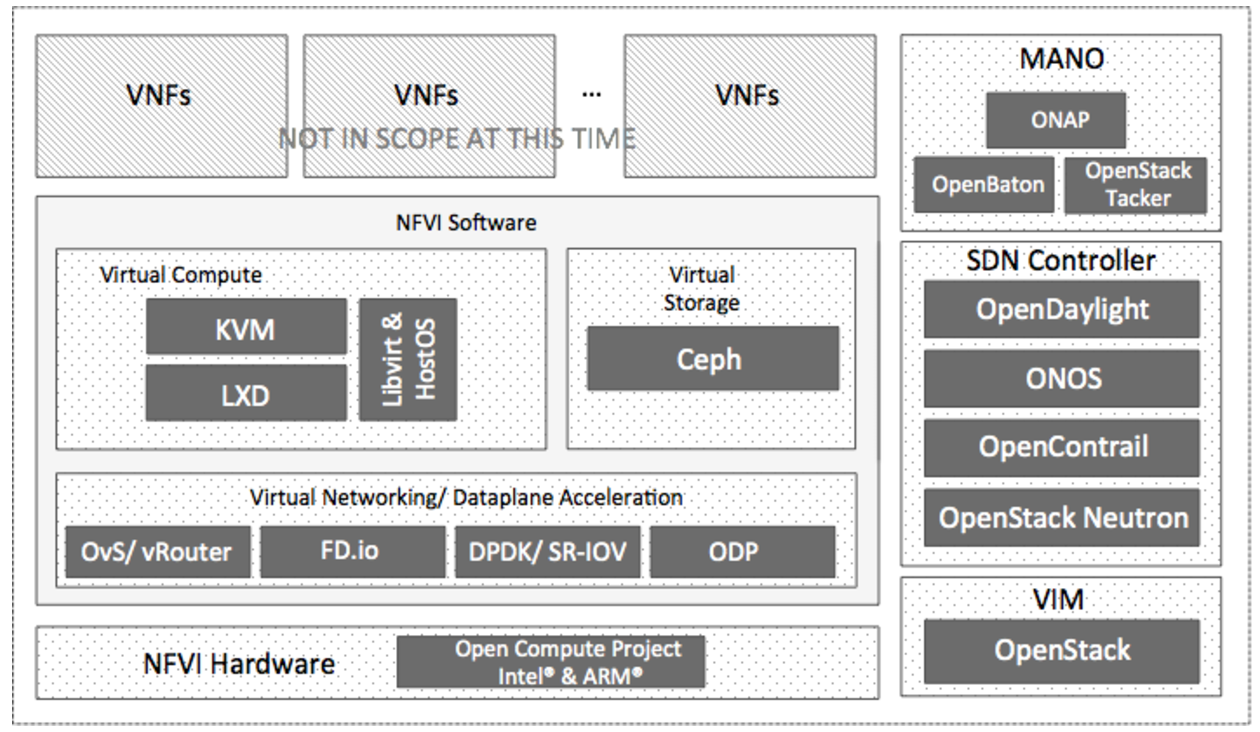
OPNFV integrates a wide range of networking, SDN and NFV open source projects.
The list of projects integrated by OPNFV includes the following categories:
NFV infrastructure (NFVI)
Hardware
Virtual compute
Virtual storage
Virtual networking and dataplane acceleration
Virtualized infrastructure manager (VIM)
SDN Controller
Management and network orchestration (MANO)
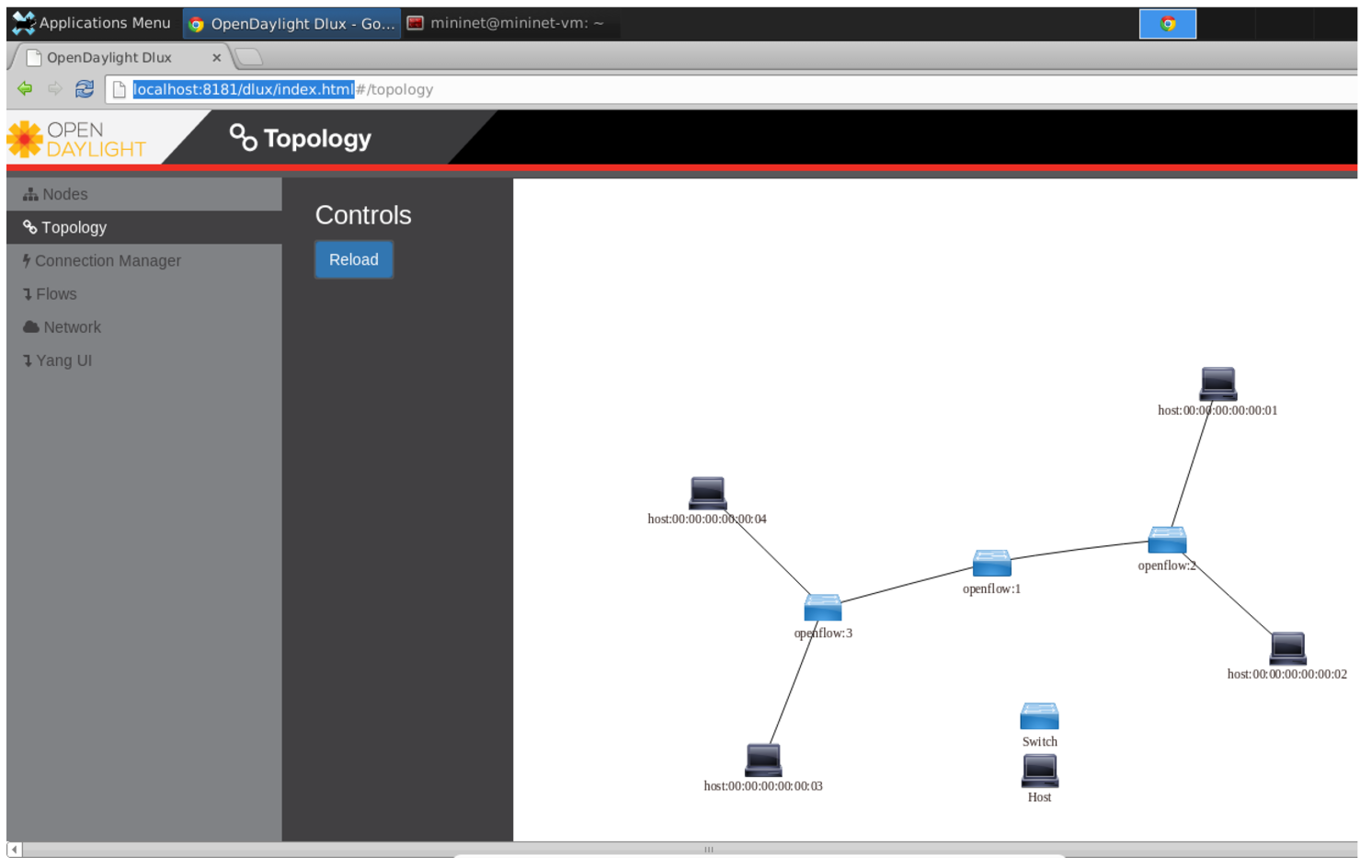
More details on the various projects in each category are outlined in the book. For example, here is an excerpt on the OpenDaylight project:
OpenDaylight
OpenDaylight.
Like OPNFV,OpenDaylight (ODL), is also a Linux Foundation project. It is a full blown modular SDN controller that caters to multiple use cases such as NFV, IoT, and enterprise applications. It supports numerous southbound interfaces to manage virtual and physical switches (OpenFlow, Netconf and other protocols). For the northbound interface to OpenStack or other orchestration layers, ODL uses YANG (a standard modeling language) models to describe the network, various functions, and the final state. The ODL community is large, with Brocade, Cisco, Ericsson, HPE, Intel, and Red Hat being just a few of the companies supporting the initiative.
In addition to integrating upstream projects, the OPNFV community plays a critical role by identifying carrier grade feature gaps, developing code to fill those gaps and contributing the code back to respective upstream projects. The book discusses 24 OPNFV feature development projects and groups them into the following four categories:
Service assurance and availability
Easing integration of upstream projects
Deployment and lifecycle management
Documentation and security
The book describes each of the 24 projects. For example:
NFV-KVM—The NFV-KVM project focuses on the KVM hypervisor in the NFVI and develops requirements and collaborates with the upstream community to achieve this integration. By using real-time KVM, the community hasshown a 10x improvement in small packet performance.
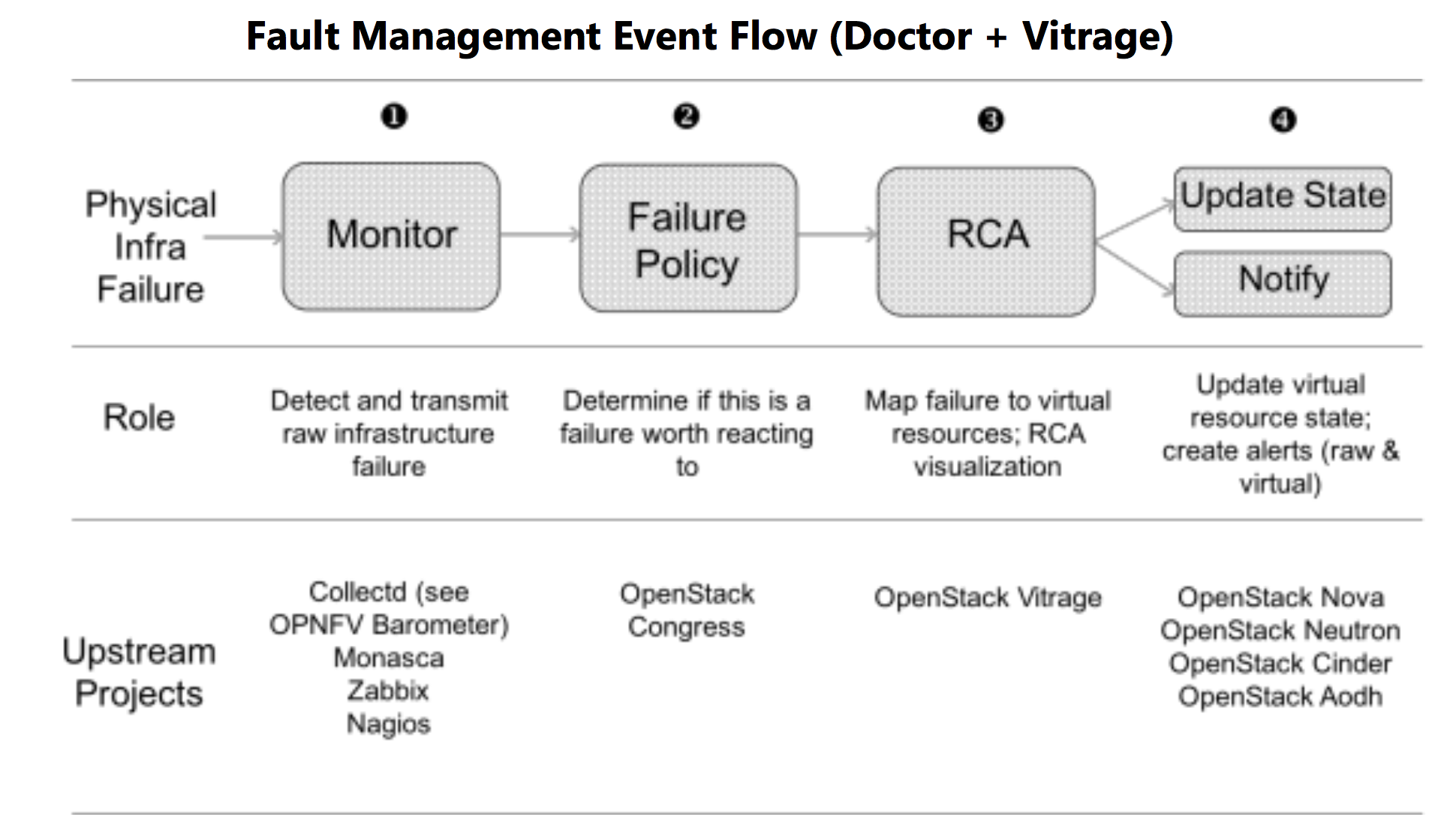
One of the more important feature development projects is OPNFV Doctor that provides an NFV service assurance framework. As with other feature development projects, the OPNFV Doctor project develops and contributes service assurance features directly to the upstream projects, in this case OpenStack Congress, Nova, Neutron, and Cinder.
Fault management event flow with OPNFV Doctor and OpenStack Vitrage.
Want to learn more? You can check out the previous blogpost that discussed the broader NFV transformation complexities and how OPNFV solves an important piece of the puzzle, download the Understanding OPNFV ebook in PDF (in English or Chinese), or order a printed version on Amazon.
SAP has joined the Cloud Native Computing Foundation as the sixth Platinum level member to join so far this fall. This comes on the heels of the company joining The Linux Foundation’s Open API Initiative on September 24.
SAP is one of the largest and most important makers of enterprise software in the world today. And their increasing participation in the open source software (OSS) ecosystem shows their growing commitment to open source and underscores the value that OSS brings to businesses – even businesses with significant proprietary software revenue lines.
Since its inception the CII has considered network time, and implementations of the Network Time Protocol, to be “core infrastructure.” Correctly synchronising clocks is critical both to the smooth functioning of many services and to the effectiveness of numerous security protocols; as a result most computers run some sort of clock synchronization software and most of those computers implement either the Network Time Protocol (NTP, RFC 5905) or the closely related but slimmed down Simple Network Time Protocol (SNTP, RFC 4330).
The CII recently sponsored a security audit of the Chrony code, carried out by the security firm Cure53 (here is the report). In recent years, the CII has also provided financial support to both the ntpd project and the NTPSec project. Cure53 carried out security audits of both ntpd and NTPSec earlier this year and Mozilla Foundation’s Secure Open Source (SOS) project funded those two audits. SOS also assisted the the CII with the execution of the Chrony audit.
Since the CII has offered support to all three projects and since all three were reviewed by the same firm, close together in time, we thought it would be useful to present a direct comparison of their results.
Open source software can be a double-edged sword for startups. It can be a startup’s lifeblood, because it helps you innovate rapidly without starting from scratch. But, as they say, open source software is free like a puppy is free: The true cost of open source software is obeying open source licenses.
Misuse of open source software can delay or derail investment and corporate exit opportunities. But you can easily comply with open source licenses if you follow these simple rules.
Don’t use software without license terms. Some software on the internet doesn’t contain licensing notices, but that doesn’t mean that it can be used freely. The people posting the software may not have complied with upstream licensing terms. Or the author of the software may not yet have applied a license to the software—open source or otherwise. “No license terms” means no license: You should either avoid using the software or ask the author to apply a permissive license.
The open-source OpenDaylight project release its second milestone update for 2017 on Sept. 26, with the debut of the Nitrogen release.
Nitrogen is the seventh major release from OpenDaylight and follows the Carbon release that debutedin June 2017. OpenDaylight first started in April 2013 as a Linux Foundation Collaborative Project, with the goal of building an open SDN platform.
The primary update in the Nitrogen release is a re-factoring to support the Apache Karaf 4.0 container bundle.
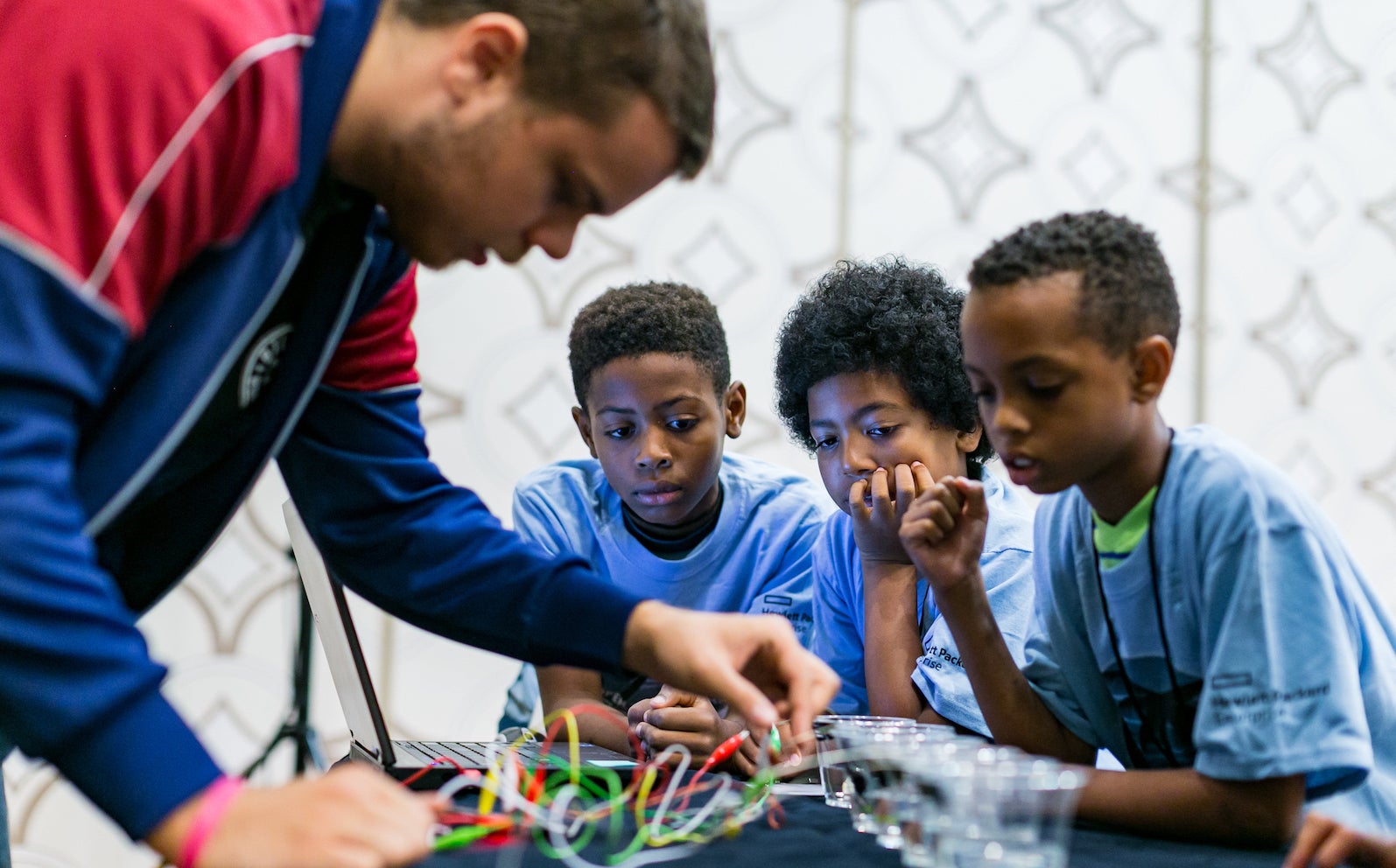
At this year’s Kids Day workshop at Open Source Summit in Los Angeles, The Linux Foundation collaborated with LA MakerSpace.org to provide kids with an introduction to coding ideas and approaches. The LA MakerSpace is heavily influenced by the maker culture, so they have a very hands-on approach when it comes to teaching coding.
Hands On
That hands-on approach was visible at the workshop through the use of a lot of real-life accessories. For example, the space featured a huge ball pit with sensors installed so kids could program the sensors and collect data. A cup of water was used as a switch; when you dipped your finger in the water, it sent a signal to turn a device on or off. And, the kids used an open source Scratch program to learn coding.
The Manjaro Linux developers announced the release of version 17.0.5 last week. My objective today is to use this release to show that Linux can be installed from scratch, configured and used for everyday work without using command line (text console) access, and without having to download, compile, install or otherwise perform any manual tasks to install device drivers or other hardware support.
Best of all, the complete installation and configuration can be done in well under an hour!
First, I want to be absolutely clear about this, if you already have Manjaro Linux installed it is not necessary to reinstall from scratch with this new release. All you need to do is make sure that your system has all the latest patches and updates installed and you will in fact be running this new release.