Home Blog Page 640

11 Benefits to Running Your Containers on OpenStack

Enterprises today must keep up with increasing internal and external customer demand, or die trying.

For IT, this means deploying and updating applications faster, and more often than ever before to meet and ideally exceed this demand. At the same time, IT must focus its people power on strategic endeavors, rather than rote tasks.

Linux container technology is helping some organizations make this transition. As part of a team’s DevOps practices, open source containers offer great  flexibility and agility alongside cloud deployment and consumption. Containerization creates the opportunity for a true hybrid cloud computing approach, by which we can manage any application running anywhere in a consistent and efficient way. And in the enterprise data center, OpenStack has become popular as a robust cloud infrastructure framework. How do Linux and OpenStack work together?

Read more at OpenStack

Researchers Propose Using Software-Defined Networking to Unify Cloud and Edge

A team of researchers have proposed a method to use cloud and fog, or edge, computing structures to complement one another – rather than viewing edge computing as a replacement for the cloud. Using Software-Defined Networking (SDN) to manage the interaction between cloud and edge resources, a network can remain dynamic, agile and efficient while providing a better experience for the end user.

Increased use of mobile devices has created stresses on cloud networks, which will only increase as mobile device use increases worldwide. Creating a system where cloud and edge computing resources are unified is a potential response to the challenges of overtaxed resources and unexpected latency, which can cause a degraded quality of experience for the end user.

Read more at The Stack

12 Days of Two-Factor Authentication: This Xmas, Give Yourself the Gift of Opsec

Enabling two-factor authentication—or 2FA for short—is among the easiest, most powerful steps you can take to protect your online accounts. Often, it’s as simple as a few clicks in your settings. However, different platforms sometimes call 2FA different things, making it hard to find: Facebook calls it “login approvals,” Twitter “login verification,” Bank of America “SafePass,” and Google and others “2-step verification.”

That’s why, this holiday season, EFF’s 12 Days of 2FA is here to help you navigate the world of two-factor authentication. In a series of 12 posts, we’ll show you how to enable 2FA on a range of online platforms and services.

Read more at Electronic Frontier Foundation

Dell EMC joins The Linux Foundation’s OpenSDS Project

Dell EMC is joining the OpenSDS Project, a Linux Foundation Collaborative project. To mark its commitment to the project, Dell EMC is contributing CoprHD SouthBound SDK (SB SDK) to the OpenSDS project. The SB SDK allows developers to build drivers and other tools with the assurance that they will be compatible with a wide variety of enterprise-class storage products.

The formation of the OpenSDS community is an industry response to address software-defined storage integration challenges with the goal of driving enterprise adoption of open standards. It’s supported by storage users and vendors, including Huawei, Fujitsu, HDS, Vodafone and Oregon State University.

Read more at CIO.com

D-Bus Tutorial

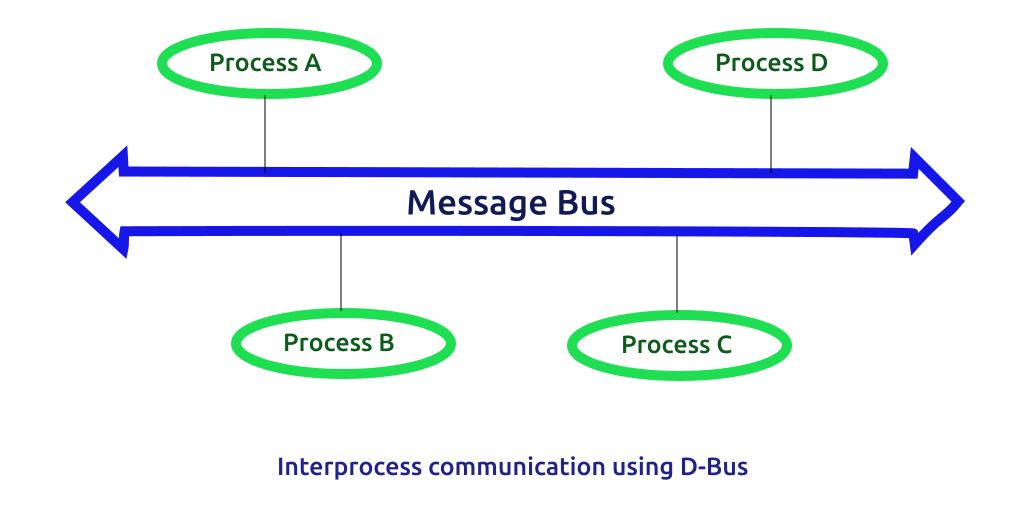
D-Bus is a mechanism for interprocess communication for Linux systems. D-Bus has a layered architecture. At the lowest level is the D-Bus specification, which specifies the D-Bus wire protocol for communication between two processes. The libdbus library is the low level C API library based on the D-Bus specification. Normally, processes communicate via one of the two message bus daemons, the system bus and the sessions bus. 


Interprocess communication using D-Bus

Read more at https://www.softprayog.in/programming/d-bus-tutorial


SDN Vendor PLUMgrid is No More; Some Assets Acquired by VMware

A VMware spokesperson told EnterpriseNetworkingPlanetthat on Friday December 16, VMware acquired certain IP assets from the company and that a number of the PLUMgrid employees have now joined VMware.

PLUMgrid founder Pere Monclus wrote in a blog post that, the company, “will be starting a new journey as we continue revolutionizing and transforming the networking industry to build and expand on software-defined infrastructure for private and public clouds. “

Read more at Enterprise Networking Planet

Essentials of OpenStack Administration Part 3: Existing Cloud Solutions

Start exploring Essentials of OpenStack Administration by downloading the free sample chapter today. DOWNLOAD NOW

Infrastructure providers aim to deliver excellent customer service and provide a flexible and cost-efficient infrastructure, as we learned in part one of this series.

Cloud Computing, then, is driven by a very simple motivation from the infrastructure providers’ perspective: “Do as much work as possible only once and automate it afterwards.”

In cloud environments, the provider will simply provide infrastructure that allows customers to do most of the work on their own through a simple interface. After the initial setup, the provider’s main task is to ensure that the whole setup has enough resources. If the provider runs out of resources, they will simply add more capacity. Thus another advantage of automation is that it can facilitate flexibility.

In this article, we’ll contrast what we learned in part two about conventional, un-automated infrastructure offerings with what happens in the cloud.

The Fundamental Components of Clouds

From afar, clouds are automated virtualization and storage environments. But if you look closer, you’ll start seeing a lot more details. So let’s break the cloud down into its fundamental components.

First and foremost, a cloud must be easy to use. Starting and stopping virtual machines (VMs) and commissioning online storage is easy for professionals, but not for the Average Joe! Users must be able to start VMs by pointing and clicking. So any cloud software must provide a way for users to do just that, but without the learning curve.

Installing a fresh operating system on a newly created virtual machine is a tedious process, once again, hard to achieve for non-professionals. Thus, clouds need pre-made images, so that users do not have to install operating systems on their own.

Conventional data centers are heterogeneous environments which grow to meet the organic needs of an organization. While components may have some automation tools available, there is not a consistent framework to deploy resources. Various teams such as storage, networking, backup, and security, each bring their own infrastructure, which must be integrated by hand. A cloud deployment must integrate and automate all of these components.

Customer organizations typically have their own organizational hierarchy. A cloud environment must provide an authorization scheme that is flexible enough to match that hierarchy. For instance, there may be managers who are allowed to start and stop VMs or to add administrator accounts, while interns might only be allowed to browse them.

When a user starts a new VM, presumably from the aforementioned easy-to-use interface, it must be set up automatically. When the user terminates it, the VM itself must be deleted, also automatically.

A bonus of the work to implement this particular kind of automation is that with a little more effort, usually involving the implementation of a component that knows which VMs are running on which servers, the cloud can provide automatic load-balancing.

Online storage is an important part of the cloud. As such, it must be fully automated and easy to use (like Dropbox or Gdrive).

There are a number of cloud solutions, such as Eucalyptus, OpenQRM, OpenNebula, and of course, OpenStack. Open source implementations typically share some design concepts, which we will discuss in part 4.

Various cloud solutions have been in existence since the mid-1960s. Mainframes provide virtualized resources but tend to be proprietary, expensive, and difficult to manage. Since then there have been midrange and PC architecture solutions. They also tend to be expensive and proprietary. These interim solutions also may not provide all of the resources now available through OpenStack.

The Essentials of OpenStack Administration course teaches you everything you need to know to create and manage private and public clouds with OpenStack. Download a sample chapter today!

Read the other articles in the series:

Essentials of OpenStack Administration Part 1: Cloud Fundamentals

Essentials of OpenStack Administration Part 2: The Problem With Conventional Data Centers

Essentials of OpenStack Administration Part 4: Cloud Design, Software-Defined Networking and Storage

Essentials of OpenStack Administration Part 5: OpenStack Releases and Use Cases

Top 5 Linux Foundation Webinars of 2016

This was an exciting year for webinars at The Linux Foundation! Our topics ranged from network hardware virtualization to Microsoft Azure to container security and open source automotive, and members of the community tuned in from almost every corner of the globe. The following are the top 5 Linux Foundation webinars of 2016:

  1. Getting Started with OpenStack

  2. No More Excuses: Why you Need to Get Certified Now

  3. Getting Started with Raspberry Pi

  4. Hyperledger: Blockchain Technologies for Business

  5. Security Top 5: How to keep hackers from eating your Linux machine

Curious to watch all the past webinars in our library? You can access all of our webinars for free by registering on our on-demand portal. On subsequent visits, click “Already Registered” and use your email address to access all of the on-demand sessions.


Getting Started with OpenStack

Original Air Date: February 25, 2016

Cloud computing software represents a change to the enterprise production environment from a collection of closed, proprietary software to open source software. OpenStack has become the leader in Cloud software supported and used by small and large companies alike. In this session, guest speaker Tim Serewicz addressed the most common OpenStack questions and concerns including:

  • I think I need it but where do I even start?

  • What are the problems that OpenStack solves?

  • History & Growth of OpenStack: Where’s it been and where is it going?

  • What are the hurdles?

  • What are the sore points?

  • Why is it worth the effort?

Watch Replay >>


No More Excuses: Why you Need to Get Certified Now

Original Air Date: June 9, 2016

According to the 2016 Open Source Jobs Report, 76% of open source professionals believe that certifications are useful for their careers. This webinar session focused on tips, tactics, and practical advice to help professionals build the confidence to take the leap to commit to, schedule, and pass their next certification exam. This session, covered:

  • How certifications can help you reach your career goals

  • Which certification is right for you: Linux Foundation Certified SysAdmin or Certified Engineer?

  • Strategies to thoroughly prepare for the exam

  • How to avoid common exam mistakes

  • The ins and outs of the performance certification process to boost your exam confidence

  • And more…

Watch Replay >>


Getting Started with the Raspberry Pi

Original Air Date: December 14, 2016

Maybe you bought a Raspberry Pi a year or two ago and never got around to using it. Or you built something interesting once, but now there’s a new Pi and new add-ons, and you want to know if they could make your project even better? The Raspberry Pi has grown from its original purpose as a teaching tool to become the tiny computer of choice for many makers, allowing those with varied Linux and hardware experience to have a fully functional computer the size of a credit card powering their ideas. Regardless of where you are in Pi experience, this session with guest speaker Ruth Suehle, had some great tricks for getting the most out of the Raspberry Pi and showcased dozens of great projects to get you inspired.

Watch Replay >>


Hyperledger: Blockchain Technologies for Business

Original Air Date: December 1, 2016

Curious about the foundations of distributed ledger technologies, smart contracts, and other components that comprise the modern blockchain technology stack? In this session, guest speaker Dan O’Prey from Digital Asset, provided an overview of the Hyperledger Project at The Linux Foundation, the main use cases and requirements for the technology for commercial applications, as well as an overview on the history and projects in the Hyperledger umbrella and how you can get involved.

Watch Replay >>


Security Top 5: How to keep hackers from eating your Linux machine

Original Air Date: November 15, 2016

There is nothing a hacker likes more than a tasty Linux machine available on the Internet. In this session, a professional pentester talked tactics, tools and methods that hackers use to invade your space. Learn the 5 easiest ways to keep them out, and know if they have made it in. The majority of the session focused on answering audience questions from both advanced security professionals and those just starting in security.

Watch Replay >>

Don’t forget to view our upcoming webinar calendar to participate in our upcoming live webinars with top open source experts.

3 Common Open Source IP Compliance Failures and How to Avoid Them

The following is adapted from Open Source Compliance in the Enterprise by Ibrahim Haddad, PhD.

Companies or organizations that don’t have a strong open source compliance program often suffer from errors and limitations in processes throughout the software development cycle that can lead to open source compliance failures.

In part 3 of this series, we covered some of the risks that a company can face from license failures, including an injunction that prevents a company from shipping a product; support or customer service headaches; significant re-engineering; and more.

This time, we’ll cover three common intellectual property failures, how they’re discovered, and how to avoid them. And in part 5, we’ll discuss the most common open source license compliance failures and how to avoid them.

Download the free e-book, Open Source Compliance in the Enterprise, for a complete guide to creating compliance processes and policies for your organization.

3 Common Intellectual Property Failures

IP problems most commonly involve mixing source code that is licensed under incompatible or conflicting licenses (e.g., proprietary, third-party, and/or open source). Such admixtures may result in companies being forced to release proprietary source code under an open source license, thus losing control of their (presumably) high-value intellectual property and diminishing their capability to differentiate in the marketplace.

Problem #1: Inserting open source code into proprietary or third party code

This occurs during the development process when developers copy/paste open source code (aka “snippets”) into proprietary or 3rd party source code.

How it’s discovered: By scanning the source code for possible matches with open source code.

How to avoid it:

  • Offer training to increase awareness of compliance issues, open source (OS) licenses, implications of including OS code in proprietary or 3rd party code.

  • Conduct regular code scans of all project source code for unexpected licenses or code snippets.

  • Require approval to use OS software before committing it into a product repository.

Problem #2: Linking of open source into proprietary source code (or vice versa – specific to C/ C++ source code)

This occurs as a result of linking software components that have conflicting or incompatible licenses.

How it’s discovered: With a dependency-tracking tool that allows discovery of linkages between different software components and identifies if the type of linkage is allowed per a company’s OS policies.

How to avoid it:

  • Offer training on linkage scenarios based on company compliance policy

  • Regularly run a dependency tracking tool to verify all linkage relationships and flag any issues not in line with compliance policies.

Problem #3: Inclusion of proprietary code in an open source component

This happens when developers copy/paste proprietary source code into OS software.

How it’s discovered: By scanning source code. A tool will ID source code that doesn’t match what’s provided by the OS component, triggering various flags for an audit.

How to avoid it:

  • Train the staff

  • Conduct regular source code inspections

  • Require approval to include proprietary source code in OS components.

Read the other articles in this series:

An Introduction to Open Source Compliance in the Enterprise

Open Compliance in the Enterprise: Why Have an Open Source Compliance Program?

Open Source Compliance in the Enterprise: Benefits and Risks

3 Common Open Source IP Compliance Failures and How to Avoid Them

4 Common Open Source License Compliance Failures and How to Avoid Them

Top Lessons For Open Source Pros From License Compliance Failures

Download the free e-book, Open Source Compliance in the Enterprise, for a complete guide to creating compliance processes and policies for your organization.

How Praekelt.org and Open Source Provide Critical Services to Enable Social Change

In Eastern and Southern Africa, women are still dying unnecessarily during the basic, natural act of giving life. According to Unicef, “In 2010, close to 58,000 women lost their lives during pregnancy and childbirth, accounting for more than one fifth of all such deaths in the world.”

Gustav Praekelt, founder of the South African design and development firm Praekelt.com, was deeply affected by the high maternal mortality rate in his country and realized in 2007 that open source software and mobile phones could help provide critical information and services to combat poverty and maternal mortality rates — among other social issues — across the continent and potentially around the world.

Mobile devices have deep penetration in the South African market, and Praekelt’s idea idea was simple: By combining the ubiquity of these devices with the power of service delivery and information, he could reach out to and help to millions of people.

According to Praelket.org: We use open source technologies to deliver essential information and vital services to more than 10 million people in over 40 countries… we work with governments, NGOs and social enterprises to provide our users with information, inspiration, education and access to financial services.

Praekelt.org now reaches more than 15 million people in 40 countries. Rather than creating technologies for service providers, the organization designs, builds, and iterates tools for end users and often the most disenfranchised people in the world.

Open Source from ground up

Praekelt.org runs exclusively on open source software, and the majority of their services are deployed on Ubuntu Linux servers. Recently, they launched a few services on the latest stable Debian release.

The organization uses Apache Mesos to manage large clusters for their maternal health applications. “All applications on these clusters are distributed in Docker containers and are managed by Mesophere’s Marathon. To provision the machines we use Puppet. Our language of choice for all of our services is Python,” according to Simon de Haan, chief engineer atPraekelt.org and Ambika Samarthya-Howard, head of communications.

What about Client side?

Praekelt decided to remove any dependency on apps for access or delivery of these services, as it would be a massive challenge to support all platforms out there and to get applications installed on the devices of end users.

“Our client-facing applications are generally accessed directly via the phone, either by SMS, IVR or USSD. The benefit is that these services require no installed application on the user’s phone to function. For richer client side applications we are using React Native,” said de Haan and Samarthya-Howard.

They use a messaging platform called Vumi, which is fully open sourced and sends more than 12 million messages per month. Their Junebug server is also open source and helps address diverse technical specifications among mobile operators in different countries.

Which open source projects do they rely on?

These days so much software is written as open source that you can’t always pinpoint which open source component companies are using in their project.

“Today we’re working with projects such as Python; Django for web applications; Twisted for network applications, MNO integrations and asynchronous web services; React Native for our mobile applications; PostgreSQL for our databases; Redis for our caches and key value stores; Mesos and Marathon for our computing clusters and orchestrating; Docker containers; Puppet for provision our virtual machines; and Linux for all our operating systems,” said de Haan and Samarthya-Howard.

Why Open Source?

“Using open source provides guarantees like connectivity, performance and compute capacity,” said de Haan and Samarthya-Howard. “Because data sovereignty regulation mandates that our services be hosted within the geographic borders of the nation states we operate, the costs benefits of cloud hosting do not apply to us. Having infrastructure that gives us redundancy in a local settings really helps us operate in these unreliable hosting environments. It’s a fact that more and more software is written as open source today and thanks to the open source development model, the innovation is happening at a much faster rate than you would expect in the proprietary world. And that could pose some unique challenges for organizations like Praekelt.”

“Building social-purpose applications in the most complex environments on very limited budgets requires that we sometimes utilize stable and proven technologies over the latest ones,” said de Haan and Samarthya-Howard.

They try to strike a balance between understanding the new and also appreciating the proven. “This approach requires that our development talent be among the best in the world. They are participants in the open source community, are knowledgeable about both the proven and latest OSS tools and how to apply them to building apps that anyone can use, anywhere, on just about any platform,” they added.

How is Facebook involved?

“Praekelt.org shares Facebook’s and Mark Zuckerberg’s belief in the transformative power of the Internet and of connecting people to each other. Living and working in developing countries, we have an intimate understanding of how far away this transformation and connection remains for millions of people around the world,”said de Haan and Samarthya-Howard.

This common thread made Praekelt a natural partner for Facebook. They started a former partnership in 2015 with the goal of helping 100 social change organizations build sites for the Free Basics by Facebook platform, which makes the Internet more accessible to more people through the Internet.org Iniative. “We wanted to provide technical support and assistance to help social change organizations share their offerings to first-time Internet users with no data costs attached,”they said.

Recently, the two organizations launched a Facebook Messenger ChatBot for the South African Department of Health’s MomConnect maternal health platform.

It’s incredible to see how open source enables organizations like Praekelt help people across the globe. We often get so absorbed in the technical discussions around Linux and open source that we forget about the real impact it’s having on real people. It’s changing the world around us, and making it better without any fanfare and hype.