Home Blog Page 674

Let’s Automate Let’s Encrypt

HTTPS is a small island of security in this insecure world, and in this day and age, there is absolutely no reason not to have it on every Web site you host. Up until last year, there was just a single last excuse: purchasing certificates was kind of pricey. That probably was not a big deal for enterprises; however, if you routinely host a dozen Web sites, each with multiple subdomains, and have to pay for each certificate out of your own dear pocket—well, that quickly could become a burden.

Now you have no more excuses. Enter Let’s Encrypt — a free Certificate Authority that officially left Beta status in April 2016. 

Read more at Linux Journal

‘Thanks for Using Containers!’ … Said No CEO Ever

“We think we’re going to get magical powers when we use other people’s servers,” said Casey West, Principal Technologist for Pivotals Cloud Foundry platform, during his OSCON Europe talk, in which he provided a humorous, and insightful look  at how the CEO sees, or doesn’t see or honestly doesn’t care about  the vast majority of the work that IT professional do in cloud.

IT pros work across pretty much every industry these days. But the expectations are largely the same across all of them, no matter if the projects they work on are “greenfield projects” designed to break into new areas of business, or “brownfield projects,” which is a nice way of saying you are updating legacy systems.

With greenfield systems, all you have to do is create something from thin air and compete with billion dollar companies. No big deal.” The requirements are basically twofold: All you have to do is…

  • Deliver faster than everyone else.
  • Never make a mistake.

With brownfield systems, All you have to do is modernize an existing application that makes all our revenue in order to compete with companies theoretically valued at a billion dollars.” No big deal. Oh and…

  • Deliver faster than everyone else.
  • Never make a mistake.

Read more at The New Stack

Hyperledger Eyes Mobile Blockchain Apps With ‘Iroha’ Project

A blockchain project developed by several Japanese firms including by startup Soramitsu and IT giant Hitachi has been accepted into the Hyperledger blockchain initiative.

Developed by Hyperledger member and blockchain startup Soramitsu, Iroha was first unveiled during a meeting of the project’s Technical Steering Committee last month. Iroha is being pitched as both a supplement to other Hyperledger-tied infrastructure projects like IBM’s Fabric (on which it is based) and Intel’s Sawtooth Lake.

Read more CoinDesk

How DNS Works: A Primer

The Domain Name System is critical to fundamental IP networking. Learn DNS basics in this primer.

DNS has been in the news a great deal as of late. First, there was the controversy over the United States government essentially handing over control of the Internet’s root domain naming system. Then DNS made headlines when cybercriminals performed three separate distributed denial of service (DDoS) attacks on a major DNS service provider by leveraging a botnet army of millions of compromised IoT devices. Yet with all the hoopla surrounding DNS, it surprises me how many IT pros don’t fully understand DNS and how it actually works.

DNS stands for Domain Name System. Its purpose is to resolve and translate human-readable website names to IPv4 or IPv6 addresses. 

Read more at Network Computing

Deployment Automation: The Linchpin of DevOps Success

Deployment Automation is the linchpin of DevOps transformation. I cannot put it more simply:
To accelerate your DevOps adoption, and get the biggest bang for your buck: FOCUS ON DEPLOYMENTS.

2015-2016-state-of-the-devops-reportsThe previous State of the DevOps reports have shown a pretty straightforward equation:

Deployment frequency is THE indicator for success
and deployment pain is a predictor of failure.

More Deploys

We all remember the impressive hockey-stick graph from the 2015 report, comparing the number of deploys/day/developer between high-performing IT organizations (in Orange) and low-performing ones.

That difference became even more staggering in the 2016 research.

The 2016 State of the DevOps report showed that high-performing IT organizations deploy 200 times more frequently than low performers, with 2,555 times faster lead times.
 

Less Pain

The 2016 State of the DevOps report showed that high-performing IT organizations deploy 200 times more frequently than low performers, with 2,555 times faster lead times.

The 2015 report found that deployment automation (along with CI, testing and version control practices) predicted lower levels of deployment pain, higher IT performance, and lower change failure rates.

banging-head-against-a-wallThe reports show that those high performing IT organizations also have higher employee loyalty and engagement.

On the other end of the spectrum: deployment pain is correlated with employee churn.

This makes Deployment automation one of the clearest examples of the convergence of the 2 axes of DevOps: the technology/process axis, and the culture/people one.

If your talent is running for the hills, and your developers are tired of banging their heads against the wall trying to get stuff to work — you should look at how you deploy.

ARA

Not only the State of the DevOps reports, but ALL analyst research confirms how critical deployments are. For example, in the recent Gartner Magic Quadrant for Application Release Automation, Gartner mentions that ARA – which Deployment Automation and release coordination are key tenants of – is the most important technology to an organization’s adoption of DevOps.

Bottom Line

Electric Cloud focuses primarily on Application Release Automation and on the Ops-side of large-scale deployment automation because we understand the bottom line is pretty simple:
To accelerate your DevOps transformation, and keep employee satisfaction high – focus on deployments.

Read the full article here. 

Best Practices for Process as Code

We recently hosted another episode of our Continuous Discussion (#c9d9) video podcast, featuring expert panelists discussing process as code.

Our expert panel included: David-Blank Edelman, technical evangelist for Apcera; Juni Mukherjee, Author of “Continuous Delivery Pipeline – Where Does It Choke?”; J. Paul Reed, managing partner of Release Engineering Approaches; Mark Chassy, product director at Orson Software; Michael Wittig, Author of “Amazon Web Services in Action”; and, our very own Anders Wallgren and Sam Fell.

During the episode, panelists discussed their definitions of process-as-code as well as use cases and best practices for defining your automation processes as code, and ensuring your automation is versionable, testable, and repeatable.

To read the full list of best practices, go here. 

How to Run Commands at Shutdown on Linux

Linux and Unix systems have long made it pretty easy to run a command on boot. Just add your command to /etc/rc.local and away you go. But as it turns out, running a command on shutdown is a little more complicated.

Why would you want to run a command as the computer shuts down? Perhaps you want to de-register a machine or service from a database. Maybe you want to copy data from a volatile storage system to a permanent location. Want your computer to post “#RIP me!” on its Twitter account before it shuts down?

Read more at OpenSource.com

Microservices and Smart Networks Will Save the Internet

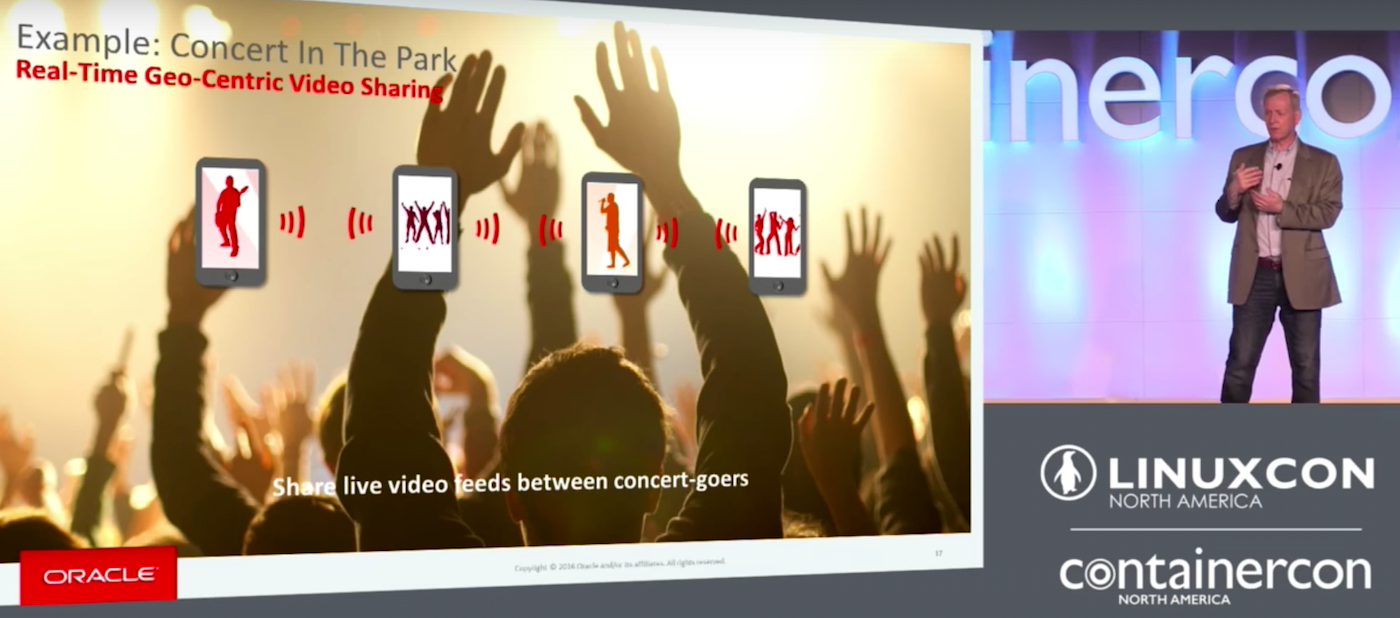
Imagine smart cars talking directly to each other so they don’t crash. Imagine hooking your smart phone into a giant mesh of phone video streams at a stadium event, so you can watch your event from multiple perspectives. Imagine smart factory devices that manage themselves for better safety and efficiency. Imagine intelligent phones, and other intelligent devices, communicating directly at close range so they don’t bog down the Internet or cell phone networks. It doesn’t take much imagination to see how this benefits disaster management, to give one example, which traditionally is hampered by overloaded phone networks.

What makes all of this possible? Robert Shimp of Oracle paints a picture at LinuxCon North America of a fascinating future full of specialized distributed services and devices. We grew up with smart, powerful server-client computing over dumb networks. Now the networks are getting smart, and the endpoints are getting smaller, smarter, and more distributed.

It’s a huge disruptive shift that is going to leave IT professionals scrambling to figure out what to do. Shimp opens his presentation with some interesting or scary, depending on your perspective, numbers. He says, “It’s a fact that over the next few years, about 50% of all the corporate data centers, the privately held corporate data centers in large companies are going to go away. For small or mid-sized businesses, the percentage is going to be dramatically higher. That leaves the IT ops person with a couple of choices: either you’re going to go to work for some intergalactic infrastructure provider or you’re going to find something else interesting for your company to do. I think the answer is that there are a lot of very interesting things to do.”

Really, Really Interesting Things

“In fact, I will make the forecast that no more than one-third of the business applications out there are going to run in some giant hyperscale data center in Chicago or wherever. Two-thirds of all the business applications are, going to be distributed computing types of applications…there are, roughly speaking, 20 some odd billion devices out there on the edge of the network and intelligent devices. That’s going to 80 billion by 2025. It’s a very dramatic shift. There is a lot more intelligence in smartphones today that’s only going to increase more and more over the coming years. That’s going to create a lot of computing capacity at the edge of the network to do really, really interesting things.”

We’ve seen predictions for many years that all of these billions of devices coming online will create massive Internet congestion. Which is true, so the solution is to distribute everything. “Most of these types of devices are incredibly chatty, and if you allow them to simply connect up to the hyperscale clouds and do whatever they’re doing, it’s going to bring the Internet to its knees over time. Rather than go with that approach, which is going to be incredibly expensive, the idea is to move to distributed applications in which we push the computing capacity, all the data and the applications as close to the edge of the network as we can.”

So just how, exactly, do we do this? How do we implement security and updates? How do we manage increased complexity? Watch Shimp’s talk (below) to learn what is happening out on the bleeding edge of computing, some of the tools and architecture already being developed, and a lot of fascinating details on what the future looks like.

Watch 25+ keynotes and technical sessions from open source leaders at LinuxCon + ContainerCon Europe. Sign up now to access all videos!

Research from OpenStack Summit Shows Deployments Ramping Up

If you already have OpenStack administration skills, or are considering pursuing them, you’ll want to take note of some surprising research reported in conjunction with OpenStack Summit in Barcelona last week. Specifically, a study commissioned by The OpenStack Foundation found that enterprises have moved squarely away from the OpenStack evaluation stage that was prevalent last year, and are managing deployments and serious workloads. Directly on the heels of that study, a Red Hat survey produced similar results, and showed that as containerized applications emerge as a new workload type, OpenStack is a prime deployment environment.

The OpenStack Foundation commissioned analysts at 451 Research to do a study of enterprise private cloud users. You can find many related user stories spanning workloads, organization sizes and geography at the OpenStack User Stories page. The 451 analysts found that about 72 percent of OpenStack-based clouds are between 1,000 and 10,000 cores and three fourths choose OpenStack to increase operational efficiency and app deployment speed. Increasingly, enterprises are running OpenStack at scale, and that is going to create enormous opportunities for OpenStack administrators, developers, and container technologists.

At the same time, OpenStack is arriving not just at huge enterprises but also at smaller businesses. Some of the findings from the 451 Research include:

  • Mid-market adoption shows that OpenStack use is not limited to large enterprises. Two-thirds of respondents (65 percent) are in organizations of between 1,000 and 10,000 employees.

  • OpenStack-powered clouds have moved beyond small-scale deployments. Approximately 72 percent of OpenStack enterprise deployments are between 1,000 to 10,000 cores in size. Additionally, five percent of OpenStack clouds among enterprises top the 100,000 core mark.

  • OpenStack users are adopting containers at a faster rate than the rest of the enterprise market with 55 percent of OpenStack users also using containers, compared to 17 percent across all respondents.

  • OpenStack supports workloads that matter to enterprises, not just test and dev. These include infrastructure services (66 percent), business applications and big data (60 percent and 59 percent, respectively), and web services and ecommerce (57 percent).

  • OpenStack users can be found in a diverse cross section of industries. While 20 percent cited the technology industry, the majority come from manufacturing (15 percent), retail/hospitality (11 percent), professional services (10 percent), healthcare (7 percent), insurance (6 percent), transportation (5 percent), communications/media (5 percent), wholesale trade (5 percent), energy & utilities (4 percent), education (3 percent), financial services (3 percent), and government (3 percent).

  • Increasing operational efficiency and accelerating innovation/deployment speed are top business drivers for enterprise adoption of OpenStack, at 76 and 75 percent, respectively. Supporting DevOps is a close second, at 69 percent. Reducing cost and standardizing on OpenStack APIs were close behind, at 50 and 45 percent, respectively.

“Our research in aggregate indicates enterprises globally are moving beyond using OpenStack for science projects and basic test and development to workloads that impact the bottom line,” said Al Sadowski, research vice president with 451 Research. “This is supported by our OpenStack Market Monitor which projects an overall market size of over $5 billion in 2020 with APAC, namely China, leading the way in terms of growth.”

Red Hat Bolsters the Case

Also in conjunction with OpenStack Summit in Barcelona, Red Hat is out with notable results from its polling of its OpenStack user base. It found that production OpenStack deployments increased hugely in the last year, according to a survey of 150 information technology decision makers and professionals.

The results stand in sharp contrast to Red Hat’s results from last year, which showed that many enterprises were still in the evaluation stage. According to the company:

[Beyond indications] of a doubling of OpenStack production deployments from a year ago, trendlines indicate that:

  • OpenStack is critical infrastructure for application development, especially with containers

  • Built-in management tools aren’t doing the job by themselves

  • Customers want workload portability across OpenStack and other infrastructures

  • Organizations are looking for strong technical support

In short, there is pronounced need for OpenStack expertise at many organizations.

Not only have production deployments increased, Red Hat reported, but the use cases are growing as well. The bulk of respondents (66 percent) are now using, or planning to use, Platform-as-a-Service (PaaS) with their OpenStack deployments. This is a jump over last year’s survey, when just 54 percent of respondents were considering PaaS and OpenStack together, and the findings show the combined growth in interest of these complementary technologies.

In other Red Hat news, the company said that Swisscom has selected Red Hat as its technology partner to help the company deliver a modern, agile, and highly scalable OpenStack cloud platform.

If you have been considering picking up OpenStack administration skills or certification, now is clearly the time.  How can you get trained and certified?This article lists some great choices, including some free options.

Additionally, The Linux Foundation offers an OpenStack Administration Fundamentals course, which serves as preparation for certification. The course is available bundled with the COA exam, enabling students to learn the skills they need to work as an OpenStack administrator and get the certification to prove it. The most unique feature of the course is that it provides each learner with a live OpenStack lab environment that can be rebooted at any time (to reduce the pain of troubleshooting what went wrong). Customers have access to the course and the lab environment for a full 12 months after purchase.

Learn everything you need to know to create and manage private and public clouds with The Linux Foundation Training’s online, self-paced OpenStack Administration Fundamentals course.

Linux Administration in Distributed Cloud Computing Environments by Robert Shimp, Oracle

Watch Robert Shimp’s talk to learn what is happening on the bleeding edge of computing, some of the tools and architecture already being developed, and a lot of fascinating details on what the future looks like.