Home Blog Page 75

LF Energy: Solving the Problems of the Modern Electric Grid Through Shared Investment

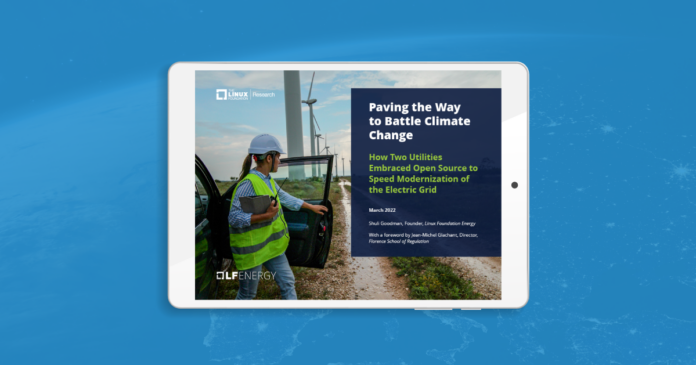
lf energy paving the way to battle climate. woman checking wind turbines.

Arresting climate change is no longer an option but a must to save the planet for future generations. The key to doing so is to transition off fossil fuels to renewable energy sources and to do so without tanking economies and our very way of life. 

The energy industry sits at the epicenter of change because energy makes everything else run. And inside the energy industry is the need for a rapid transition to electrification and our vast power grids. Like it or not, utilities face existential decisions on transforming themselves while delivering ever more power to more people without making energy unaffordable or unavailable.

The challenges are daunting:

How to move away from fossil fuels without crashing the global economy that is fueled by energy?Is it possible to speed up the modernization of the electric grid without spending trillions of dollars?Can this be done while ensuring that power is safe, reliable, and affordable for all?

These are all significant problems to solve and represent 75% of the problem in combating climate change through decarbonization. In the Linux Foundation’s latest case study, Paving the Way to Battle Climate Change: How Two Utilities Embraced Open Source to Speed Modernization of the Electric Grid, LF Energy explores the opportunities for digital transformation within electric utility providers and the role of open source technologies in accelerating the transition.

Open Source meets climate change challenges with LF Energy

The growth of renewable energy sources is making the challenges of modernizing the modern grid more complicated. In the past, energy flowed from coal and gas generating plants onto the big Transmission System Operator (TSO) lines and then to the smaller Distribution System Operator (DSO) lines to be transformed into a lower voltage suitable for homes and businesses. 

But now, with solar panels and wind turbines increasingly feeding electricity back into the grid, the flow of power is two-way.

This seismic shift requires a new way of thinking about generating, distributing, and consuming energy. And it’s one that open source can help us navigate.

Today, energy travels in all directions, from homes and businesses, and from wind and solar farms, through the DSOs to the TSOs, and back again. This fundamental change in how power is generated and consumed has resulted in a much more complicated system that utilities must administer. They’ll require new tools to guarantee grid stability and manage the greater interaction between TSOs and DSOs as renewables grow.

Open source software allows utilities to keep up with the times while lowering expenses. It also gives utilities a chance to collaborate on common difficulties rather than operating in isolation. 

The communities developing LF Energy’s various software projects provide those tools. It’s helping utilities to speed up the modernization of the grid while reducing costs. And it’s giving them the ability to collaborate on shared challenges rather than operate in silos.

Two European utility providers, the Netherlands’ Alliander and France’s RTE are leading the change by upgrading their systems – markets, controls, infrastructure, and analytics – with open source technology.

RTE (a TSO) and Alliander (a TSO) joined forces initially (as members of the Linux Foundation’s LF Energy projects) because they faced the same problem: accommodating more renewable energy sources in infrastructures not originally designed for them and doing it at the speed and scale required. And while they are not connected due to geography, the problems they are tackling apply to all TSOs and DSOs worldwide.

Two electric utility providers collaborate on shared technology investments, together

The way that Alliander and RTE collaborated via LF Energy on a project known as Short Term Forecasting, or OpenSTEF, illustrates the benefits of open source collaboration to tackle common problems. 

“Short-term forecasting, for us, is the core of our existence,” According to Alliander’s Director of System Operations, Arjan Stam. “We need to know what will be happening on the grid. That’s the only way to manage the power flows,” and to configure the grid to meet customer needs.“The same is true for RTE and “every grid operator across the world,” says Lucian Balea, RTE’s Director of Open Source. 

Alliander has five people devoted to OpenSTEF, and RTE has two.

Balea says that without joining forces, OpenSTEF would develop far less quickly, and RTE may not have been able to work on such a solution in the near term.

Since their original collaboration on OpenSTEF, they have collaborated on additional LF Energy Projects, CoMPAS, and SEAPATH. 

CoMPAS is Configuration Modules for Power industry Automation Systems, which addresses a core need to develop open source software components for profile management and configuration of a power industry protection, automation, and control system. ComPAS is critical for the digital transformation of the power industry and its ability to move quickly to new technologies. It will enable a wide variety of utilities and technology providers to work together on developing innovative new solutions.

SEAPATH, Software Enabled Automation Platform and Artifacts (THerein): aims to develop a platform and reference design for an open source platform built using a virtualized architecture to automate the management and protection of electricity substations. The project is led by Alliander, with RTE and other consortium members contributing.

As we move to a decarbonized future, open source will play an increasingly important role in helping utilities meet their goals. It’s already helping them speed up the grid’s modernization, reduce costs, and collaborate on shared challenges. And it’s only going to become essential as we move toward a cleaner, more sustainable energy system.

Read Paving the Way to Battle Climate Change: How Two Utilities Embraced Open Source to Speed Modernization of the Electric Grid to see how it works and how you and your organization may leverage Open Source. Together, we can develop solutions. 

The post LF Energy: Solving the Problems of the Modern Electric Grid Through Shared Investment appeared first on Linux Foundation.

Looking to Hire or be Hired? Participate in the 10th Annual Open Source Jobs Report and Tell Us What Matters Most 

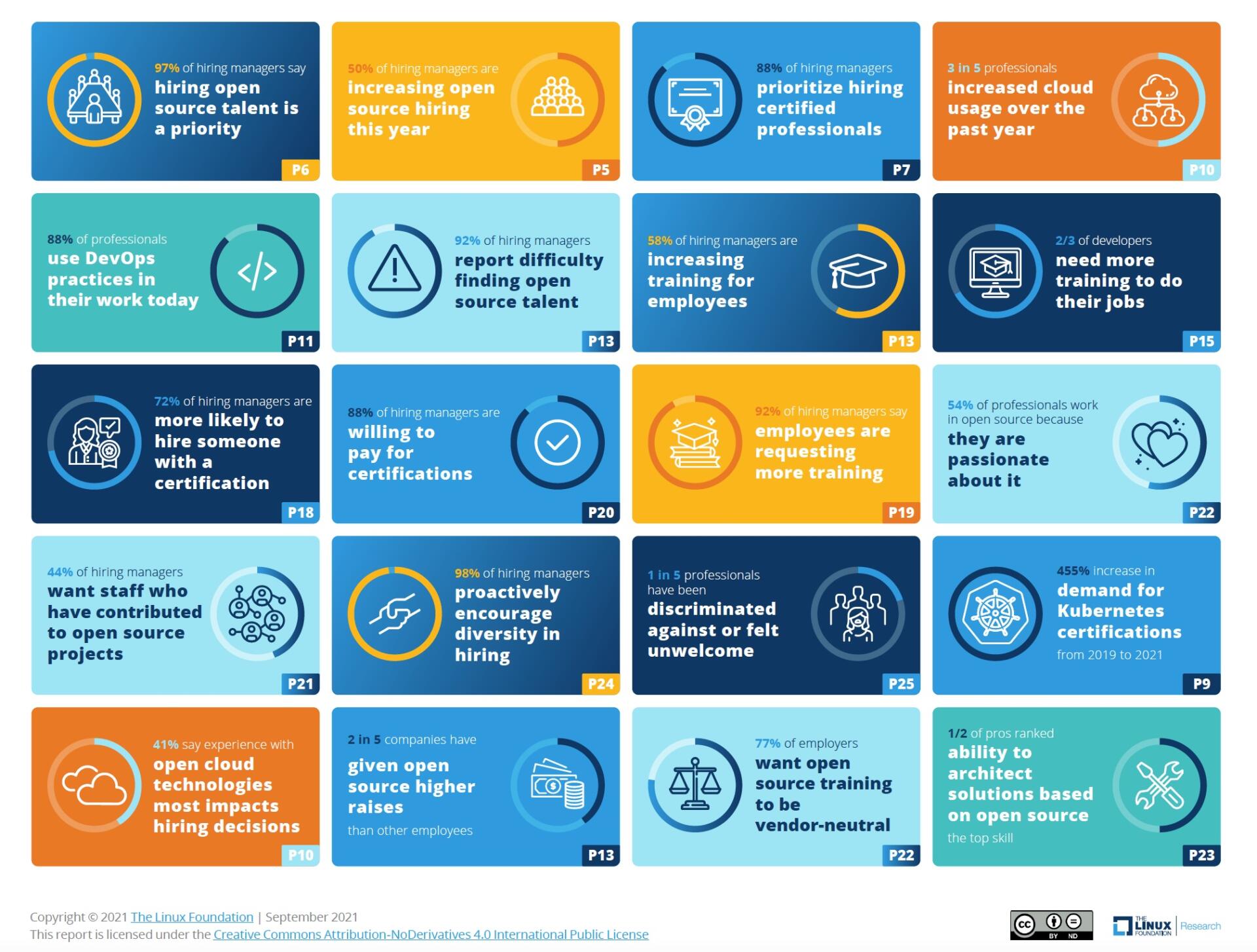
Last year’s Jobs Report generated interesting insights into the nature of the open source jobs market – and informed priorities for developers and hiring managers alike. The big takeaway was that hiring open source talent is a priority, and that cloud computing skills are among the top requested by hiring managers, beating out Linux for the first time ever in the report’s 9-year history at the Linux Foundation. Here are a few highlights:


Now in its 10th year, the jobs survey and report will uncover current market data in a post-COVID (or what could soon feel like it) world. 

This year, in addition to determining which skills job seekers should develop to improve their overall employability prospects, we also seek to understand the nature and impact of the “Great Resignation.” Did such a staffing exodus occur in the IT industry in 2021, and do we expect to feel additional effects of it in 2022? And what can employers do to retain their employees under such conditions? Can we hire to meet our staffing needs, or do we have to increase the skill sets of our existing team members?

The jobs market has changed, and in open source it feels hotter than ever! We’re seeing the formation of new OSPOs and the acceleration of open source projects and standards across the globe. In this environment, we’re especially excited to uncover what the data will tell us this year, to confirm or dispel our hypothesis that open source talent is much in demand, and that certain skills are more sought after than others. But which ones? And what is it going to take to keep skilled people on the job? 

Only YOU can help us to answer these questions. By taking the survey (and sharing it so that others can take it, too!) you’ll contribute to a valuable dataset to better understand the current state of the open source jobs market in 2022. The survey will only take a few minutes to complete, with your privacy and confidentiality protected. 

Thank you for participating!

Take 10th Annual Survey (Click)

Who We Are Looking To Participate

  • Employers
  • Hiring Managers
  • Human Resources Staff
  • Job Seekers
  • IT Directors and IT Management
  • IT Training Developers and Training Providers

Project Leadership

The project will be led by Clyde Seepersad, SVP & General Manager of Linux Foundation Training & Certification, and Hilary Carter, VP Research at the Linux Foundation.

The post Looking to Hire or be Hired? Participate in the 10th Annual Open Source Jobs Report and Tell Us What Matters Most  appeared first on Linux Foundation.

The Linux Foundation Welcomes New Board Members from Ericsson, Fujitsu, Meta, Panasonic, Sony, and VMWare

The Linux Foundation’s Board of Directors represents a cross-section of our membership–from different industries with different backgrounds and expertises. This broad, diverse group works hard to ensure the Linux Foundation is achieving its mission to unlock the power of open technology to drive shared innovation for the collective benefit. Their expertise, passion, and work is essential to our joint successes. 

Some of the Board is elected by the other members and their terms are limited. The Board also has turnover as executives in our members’ companies change roles. This year we welcome five new members to the Board. We are excited for the breadth of experience that will make the work we all do more impactful. Read more about each one: 

Suzanne Ambiel is an 11-year veteran of VMware and “experienced traveler” in the technology space, Suzanne caught the open source bug late in life, but now considers herself “all in” thanks to a few inspiring, influential, and patient leaders. During work hours, you’ll find Suzanne playing dual roles — behind the scenes of VMware’s Open Source Program Office and in VMware’s Brand & Creative team. But when the whistle blows, she’s likely out riding the trails, walking her two dachshunds, or pondering why her sourdough didn’t rise (again).

Tim Bird is a longtime Linux kernel developer, with over 25 years experience with the Linux kernel and open source community. He is a principal software engineer and general Open Source technologist at Sony Corporation. Over the last 2 decades he has been involved with many projects in the Linux Foundation and other trade associations to enhance Linux for use in embedded and consumer electronics products. Tim is the founder of the Embedded Linux Conference and the elinux wiki. He recently served on the Linux Foundation Technical Advisory Board, and was previously the CTO of Lineo, an early embedded Linux company.

Ben Maurer is a software engineer at Meta focusing on privacy and security. He joined Meta in 2010 as a member of the infrastructure team where he played a key role in driving the performance and reliability of Meta’s products. Over the course of his time at the company, Ben has worked on several technologies that Meta has open sourced, including jemalloc, Folly, Thrift, and HHVM. He has also built deep partnerships with the open source community such as bringing Restartable Sequences to the Linux kernel and building a team within Meta dedicated to contributing to open source web browsers. Ben is one of the co-creators of the Diem blockchain and led Meta’s technical contributions to the project.

Ben also worked at the White House in 2014 as part of the U.S. Digital Service where he improved the communication tools used by the President and his staff.

Before joining Meta, Ben was an engineer at Google after the company acquired the startup he co-founded, reCAPTCHA, a system that determines if a user is human while simultaneously digitizing books. Ben has also contributed to the Mono and GNOME open source projects.

Shojiro Nakao is a general manager of the R & D Division of the Automotive Company of Panasonic. He is responsible for the development and management of automotive software platforms. He has been working with Linux for over 15 years, in a variety of product development, including mobile, IoT, and automotive devices. Responsible for software platform development, he has been promoting Panasonic’s collaboration with various open source communities. In addition, he is a steering committee member of Automotive Grade Linux.

Phil Robb is the Acting Head of Ericsson Software Technology (EST), where he leads a passionate group of engineers developing open source software across a wide range of projects including Linux, OpenStack, Kubernetes, and ONAP among many others.

Prior to Ericsson, Phil was the V.P. of Operations for the Networking Projects at the Linux Foundation including ORAN, ONAP, OpenDaylight, and Anuket.  In that role, Phil led a team of technical staff who oversaw community software development based on DevOps and open source best practices.  Prior to the Linux Foundation, Phil spent 12 years with Hewlett Packard working on Linux and Open Source starting in 2001.  There, Phil formed and led HP’s Open Source Program Office responsible for open source strategy, tools, processes, and investments as HP transitioned from Unix to Linux in the Enterprise Server market.

The post The Linux Foundation Welcomes New Board Members from Ericsson, Fujitsu, Meta, Panasonic, Sony, and VMWare appeared first on Linux Foundation.

Made by Technology

Every historical moment is associated with its technology. The social, political, and economic practice of human beings depends mainly on the tools at their disposal. Their relationship with the environment around them, their knowledge of the world, and their worldview depend on technological prostheses that enable them to improve their perception, to understand the past, and above all, to foresee a plan for the future.

Moreover, technological development is the backbone of our understanding of the 21st century. The new technologies define our era and make it possible to understand the creations of contemporary human beings: their science, their way of living, their cultural habits, so on.

Contemporary humankind is impossible to be understood without the constant company of technology that allows them to improve and expand their senses. Today, technology has become an extension of the human body.

The human being today is a subject made by technology. Men and women have thus shown themselves to be irremediably permeable to technology, a technology that goes beyond them. The main question is: who is in charge of this factory? With what interests? Who is making us? Who is designing us?

Utopia and dystopia

Since August 1991, when the World Wide Web was made public as a service, the Internet has spread all over the planet and become famous. The first heroic times led to the birth of an autonomous, free zone outside the control of the power of governments and large companies. A place in which to create and communicate without restrictions. A vast blank page on which to start building.

However, the idea of collective intelligence was gradually eroded by the advance of simplifying globalization, ultimately capable of fostering unidirectional and unidimensional currents of communication contrary to the illusionary possibilities from which it started. At the same time, we assist in the triumphal beginning of “democracy,” a new kind of power based on the control (monopoly) of specific tools.

In the end, the medium prevailed over the messages, and the “wall” of the social networks ended up being a torrent of disinformation and banalities. The Internet thus became a way of looking at oneself in a mirror, of forming a continuous selfie based on not seeing beyond prejudice and the saturation of information and images—a tool of individualism and separation from reality. And, what is even worse, an infinite source of personal data to be traded.

Collaboration against individualism

Against the main currents determined by tech giants, there are still many possibilities of using the ways in alternative ways, understanding the vast opportunities open by technologies, some usually forgotten by people.

Facing the idea of an Internet of massive and monolithic movements, there is another open possibility: the return to the collective, to the community, and its needs. Open source thus becomes the counterweight to the dangers of indiscriminate use and the generation of information noise on the Internet.

Open-source projects refer to software development with a license that gives access to the source code so that programmers can freely use, write, modify, and redistribute the code. Open source is developed collaboratively and distributed over the Internet. It allows generating a product with a continuous improvement from the hand of a dedicated community.

AsyncAPI is a project that considers that human beings have naturalized the tools that enhance their capacities. Technology can guide us and define our steps. It’s not merely daily practice. We should be more aware that we humans make technology and that we are the ones who create and determine the future it holds for us. We are the ones who build the future.

The light between the walls

Transparency and horizontality are the axes on which this movement is settled. The absolute exposure of a project or company’s work, economy, and politics in a society with such opaque foundations represent a return to the initial roots of the Internet. In this autonomous zone, projects are built from the ground up.

Doing things following the open-source philosophy promotes a working system based on the open exchange of ideas, teamwork-based on flexibility, and constant innovation.

This working model clashes head-on with a system based mainly on competitiveness and concealment. It appears a stepping stone to repeal opaque and oppressive government models and a step towards a freer, more transparent, and equitable society.

Collaborating in an open-source project offers you the opportunity of a community of people involved and enthusiastic about the same goal. At AsyncAPI, everyone is welcome, regardless of their sector, their experience… all you need is enthusiasm. This enthusiasm is based on the idea that another world is possible, even more so in times of climate emergency and global crisis. Technology is the only tool in our hands to shape it. It is the key element of cultural, social, and political struggle. It cannot be left in other hands. It must be built collectively, with the community’s needs and users in mind.

You don’t take technology; you make it.

The author, Barbaño González, is Education Program Manager at AsyncAPI.

Academy Software Foundation: Digital Transformation of the Entertainment Industry is Driven by Open Technology and a Visionary, Inclusive Community

In a new case study released by Linux Foundation Research, in collaboration with the Academy Software Foundation, entitled Open Source in Entertainment: How the Academy Software Foundation Creates Shared Value, we learn a compelling story of how open technology and the people who create visual effects (VFX) for motion pictures transformed a highly competitive industry.

The Academy Software Foundation (ASWF) was formed as an entertainment industry collaboration with the Academy of Motion Picture Arts & Sciences, the organization behind the Academy Awards (aka the Oscars). ASWF has been steadily releasing software projects contributed since its inception in 2018. Four projects are fully adopted, and six are in incubation. 

Adopted Projects

OpenVDB is an industry-standard library for manipulating sparse dynamic volumes used by visual effects studios to create realistic volumetric images such as water/liquid simulations and environmental effects like clouds and ice. 

OpenColorIO is an industry standard for consistent color management across VFX and animation pipelines used on hundreds of feature film productions. It touches nearly every pixel of every visual effects frame in most major motion pictures. 

OpenEXR is a standard HDR image file format for high-quality image processing and storage, one of the foundational technologies in computer imaging. 

OpenCue is an open source render management system used to break down complex jobs into individual tasks. 

Incubating Projects

OpenTimelineIO is an Open Source application programming interface and interchange format for editorial timeline information.

Open Shading Language (OSL) is the de facto standard shading language for VFX and animation. 

MaterialX is an open standard for exchanging rich material and look-development content across applications and renderers. 

Rez is an open source, cross-platform package manager that creates standalone configured environments for third-party and proprietary digital content creation software. 

DPEL is the Digital Production Example Library, which are digital sample assets that content creators can use for instructional purposes 

RawtoACES  is a software package that converts digital camera RAW files to ACES container files containing image data encoded according to the Academy Color Encoding Specification (ACES) 

The entertainment industry now has a home, process, and governance structure to manage open source projects essential to movie, television, and gaming production. Any new project can be proposed, and projects are managed according to a project lifecycle policy that provides various requirements and project benefits. Many ASWF projects have been foundational to creating visual effects and major motion pictures in their entirety. These elements continue to thrill audiences around the world.

The ASWF has been steadily releasing new software projects since its inception in 2018.

In addition to hosting technologies for the entertainment industry, the ASWF provides a neutral forum to coordinate open source project efforts, a common build and test infrastructure, open governance, more consistent open source licensing, and a clear path to participation for individuals and organizations wanting to advance the open source ecosystem for the motion picture industry. 

In doing so, the ASWF has brought together leading studios such as DreamWorks Animation, Sony Pictures Imageworks, Walt Disney Studios (including Pixar, LucasFilm, Industrial Light & Magic, Blue Sky Studios), Warner Bros., DNEG, Netflix, and technology vendors that support the film and gaming industries. 

Open Source collaboration in the entertainment industry was not always such a pretty picture

Circa 2014, the motion picture industry faced fragmented software infrastructure issues, with proprietary solutions not based on open source software or running on open source operating systems. These platforms were also not providing the innovation needed to create the landmark films and television programs we enjoy today. So it necessitated that each VFX and film studio build their own tools.

The studios had a core desire to move from their closed systems to more open ones like Linux. However, the motion picture industry’s challenges were not about accepting open source software but about getting the industry ecosystem to participate and collaborate in open environments. 

As we learn in the case study, at visual effects studios such as SONY Pictures and ILM, there were no common build systems outside any company’s networks, so it became increasingly difficult to figure out the proper instructions to build the open source software that any industry contributor had released. 

It was challenging to align dependencies and versions, leading to “versionitis” as projects required different versions of dependencies. Additionally, when maintainers left a company that “owned the project,” the codebase languished – such was the case with SONY DreamWorks’ OpenColorIO and ILM’s OpenEXR software, as detailed in the report.

As a result, studios were reluctant to take dependence on other companies’ projects and even more unwilling to contribute their intellectual property back to another company’s project. Add in a layer of one-sided contribution agreements, modifications to standard open source licenses, and other legal impediments. It was clear the status quo could not scale to meet the industry’s growing needs. 

The entertainment industry’s open source ecosystem depends on its people

As detailed in the report, the Academy and Linux Foundation spent nearly two years working with industry stakeholders to build a better, collaborative solution, resulting in the ASWF and its associated projects. None of the success that ASWF now enjoys would have been possible without the engineers, the software developers, and the filmmakers that support the underlying ecosystem. And participating in this ecosystem has tangible benefits for the contributors.

ASWF has also become a focal point for driving new interest in software development in the motion picture industry and recognizing the contributions of its community members thanks to the “Behind the Screens” interview series featuring over two dozen software developers in the industry, along with the launch of a Diversity and Inclusion working group to raise the profile of underrepresented people in these roles.

While the ASWF has made great strides since its inception in 2018, it is still a young organization but has found its place in the industry. Diversity and Inclusion initiatives are leading the way towards educating the entertainment industry to help them attract more diversity within its ranks. New efforts underway, such as DPEL (formerly Open Asset Repository), will provide sample content to breed and help new aspiring content creators learn the trade.

Why is this research so valuable? We’ve seen related examples in telecommunications, energy, automotive, and public health, where many of these projects started as individual efforts looking for a neutral home at the Linux Foundation. Over time, these communities of competitive contributors found it beneficial to collaborate. 

Although the entertainment industry has unique requirements for its vertical applications, the story behind the creation of the ASWF can serve as a “roadmap” for leaders in other industries to get a win-win by shared investment and collaboration in open technologies. Open source in entertainment is another example of open source value creation. Read the full report HERE.

The post Academy Software Foundation: Digital Transformation of the Entertainment Industry is Driven by Open Technology and a Visionary, Inclusive Community appeared first on Linux Foundation.


Check your disk space use with the Linux df command

Learn how to use df and its various options to monitor disk usage on critical mount points.

Read More at Enable Sysadmin

How to specify the CPU architecture when pulling images with Podman

If you’re building multi-architecture solutions, you need to know how container image architectures work, how to pull them, and how to run containers on different systems using Podman.

Read More at Enable Sysadmin

How to run pods as systemd services with Podman

Extending traditional Linux system administration practices with the modern world of containers is a natural evolution.

Read More at Enable Sysadmin

Block Joins the Linux Foundation

You know Block – but you may not know that you know the company. After changing their name in December from Square, Inc. to Block, the company is made up of Square, Cash App, TIDAL, Spiral, and TBD54566975. We are excited to announce that Block joined the Linux Foundation as a Silver Member.    

At their core, Block is a global technology company with a focus on financial services. They work to help diverse audiences—sellers, individuals, artists, fans, developers, and all the people in between—overcome barriers to access the economy. From enabling sellers to adapt to a new, contactless and omnichannel economy, to finding new ways for musicians to get paid and pursuing many crypto initiatives aimed at improving the Bitcoin ecosystem, they are innovating every day to help shape a more inclusive economy of the future. 

Collaboration is a priority for them—they understand the value it brings to innovation as they pursue their purpose of economic empowerment. Consequently, they want to build and collaborate in the open, making their partnership with the Linux Foundation a natural fit. The Linux Foundation helps communities and corporate participants collaborate at scale on open source projects that are critical to organizations like Block.

Max Sills, a leader in open source partnerships and legal issues, and Counsel at Block, explains, “At Block, we believe everyone deserves to participate in the economy, and a critical portion of that work is pursuing a decentralized and permissionless future for financial services. The open source model is directly aligned with this mission. As we continue building our blockchain initiatives, we’re proud to join the Linux Foundation to drive access and empower people around the world.”

It may seem counterintuitive for a financial services company to want to develop in the open, but Block recognizes open and secure go together. They know that community is strength, and they understand strength comes from working together. 

Jim Higgins is Block’s Chief Information Security Officer, “The open source model is a critical part of Block’s infrastructure, and building and operating in the open is a priority for us. The open source community is at a turning point, and we need to band together to iron out some of the snags to make software safe and accessible for everyone.” 

The Linux Foundation empowers open source innovators. Jim Zemlin, Executive Director at the Linux Foundation said, “We know that innovation comes from everywhere and that the Open Source Community is addressing the challenges of industry and technology for the benefit of society. We are excited to have Block as a partner on this path.” 

The post Block Joins the Linux Foundation appeared first on Linux Foundation.
FINOS and The Linux Foundation Partner with Fintech Week London, Strengthening European Presence

Registration opens for FINOS’ Open Source in Finance Forum (OSFF) London, taking place alongside partner event Fintech Week London 

London, UK – March 8, 2022 – FINOS, the Fintech Open Source Foundation and financial sector arm of the Linux Foundation, and The Linux Foundation, the nonprofit organization enabling mass innovation through open source, today announced its partnership with Fintech Week London. Their annual event, Open Source in Finance Forum (OSFF), will take place in London on 13 July, during Fintech Week London, which will run from 11 – 14 July.

This partnership highlights the elevated presence of open source software and open collaboration in the financial services industry, and will allow attendees of both conferences an opportunity to learn more about integrating open source software into their technology strategies. Through partnering with Fintech Week London, FINOS bolsters its European footprint – one it is focused on expanding over the course of 2022.

“Partnering with Fintech Week London signifies the growing recognition and appetite for financial services and fintechs to adopt and contribute to open source,” said Gabriele Columbro, Executive Director of FINOS. “Each year, our goal with OSFF is to not only inspire attendees to foster the open source community within financial services, but also bring industry leaders from financial institutions, fintechs and the regulatory space together to discuss how open source can drive innovation across the industry. This partnership is a natural way to bridge the efforts of Fintech Week London and FINOS in fostering technological innovation in the financial services industry.”

The Open Source in Finance Forum is dedicated to driving collaboration and innovation in financial services through open source software and standards. The first iteration of this conference, previously known as the Open Source Strategy Forum, took place in 2017, and it has since then grown to become the flagship event for the fast growing open source movement in financial services and its unique challenges. OSFF will also be held in New York City, USA on 8 December. The call for proposals is open for both events – view suggested topics and submit talks for each event at the links provided here: 

Submit to speak at OSFF London (deadline is 10 April)Submit to speak at OSFF New York City (deadline is 12 September)

“The momentum of financial institutions looking to and relying on open source technology to scale and grow their businesses is growing at a rapid rate.” said Jim Zemlin, Executive Director, The Linux Foundation. “Holding Open Source in Finance Forum London as part of Fintech Week London will allow us to make even more financial institutions – especially in the UK – open source ready.”

Fintech Week London shines a light on the most interesting topics in financial

technology. Traditional financial institutions come together with fintechs and other financial services companies, in one of the world’s oldest leading financial districts. The event brings together high-street banks, challengers, technology giants, and disruptors, to discuss and showcase fintech’s global presence and the forces driving innovation in the industry. 

“I’m very excited that we have the Open Source in Finance Forum as part of the official programme this year,” said Raf De Kimpe, CEO of Fintech Week London. The overall theme for #FTWLondon 2022 is ‘The Coming of Age of the Fintech Industry’; the industry is moving past its infancy to be a full-blown player in finance services. With so many mergers, acquisitions and partnerships taking place, collaboration and innovation are cornerstones of our programme. A day dedicated to open source software and standards is essential to have a well rounded view on evolutions in the Fintech Industry for all our attendees. On the third day of Fintech Week London, etc. Venues 133 Houndsditch will be transformed into the place to be for our attendees to learn how to best and safely leverage open source software to solve industry challenges”

FINOS’ commitment to fostering the adoption of open source reaches beyond US institutions, with an even distribution of contributors in both the United States and Europe. In recognition of its strong European grassroots, FINOS actively invests in nurturing its relationships across seas. Partnerships such as this bring an increased awareness to the collaborative work of developers, contributors and financial institutions driving adoption around the world.    

“Collaborative efforts through open source adoption go far beyond US financial institutions,” said James McLeod, Director of Community for FINOS. “FINOS recognizes the potential power that world-wide collaboration possesses to drive innovation on a grand scale, and that’s why we continue to nurture relationships with our established European developers, financial organizations and fintechs. To continue this progression, we invest in forming new connections to support and expand the work being done by our community.”

Click here to learn more about and register for Open Source in Finance Forum London. To learn more about and register for Fintech Week London, please click here.

About FINOS

FINOS (The Fintech Open Source Foundation) is a nonprofit whose mission is to foster adoption of open source, open standards and collaborative software development practices in financial services. It is the center for open source developers and the financial services industry to build new technology projects that have a lasting impact on business operations. As a regulatory compliant platform, the foundation enables developers from these competing organizations to collaborate on projects with a strong propensity for mutualization. It has enabled codebase contributions from both the buy- and sell-side firms and counts over 50 major financial institutions, fintechs and technology consultancies as part of its membership. FINOS is also part of the Linux Foundation, the largest shared technology organization in the world. Get involved and join FINOS as a Member.

About the Linux Foundation

Founded in 2000, the Linux Foundation is supported by more than 2,000 members and is the world’s leading home for collaboration on open source software, open standards, open data, and open hardware. Linux Foundation’s projects are critical to the world’s infrastructure including Linux, Kubernetes, Node.js, and more. The Linux Foundation’s methodology focuses on leveraging best practices and addressing the needs of contributors, users and solution providers to create sustainable models for open collaboration. For more information, please visit linuxfoundation.org.

Linux Foundation Events are where the world’s leading technologists meet, collaborate, learn and network in order to advance innovations that support the world’s largest shared technologies.

Visit our website and follow us on Twitter, Linkedin, and Facebook for all the latest event updates and announcements.

The Linux Foundation has registered trademarks and uses trademarks. For a list of trademarks of The Linux Foundation, please see its trademark usage page: www.linuxfoundation.org/trademark-usage. Linux is a registered trademark of Linus Torvalds. 

About Fintech Week London

The Coming of Age of The Fintech Industry

Fintech Week London shines a light on the most interesting topics in financial

technology, with a 2-day conference at its core. Traditional financial institutions come together with fintechs and other financial services companies, in one of the world’s oldest leading financial districts: London. From high-street banks to challengers, technology giants to disruptors, this five-day event showcases some of the best that London and global fintech has to offer. 

Mark your calendars for the second edition on July 11-15, 2022. 

To learn more about Fintech Week London please visit our website : www.fintechweek.london

FINOS Media Contact:
Ross Stevens
Caliber Corporate Advisers for FINOS
ross@calibercorporate.com

Fintech Week London Media Contact:
Raf De Kimpe
Fintech Week London 
raf@fintechweek.london

The post FINOS and The Linux Foundation Partner with Fintech Week London, Strengthening European Presence appeared first on Linux Foundation.