Home Blog Page 802

Enterprises Bullish On 100 GbE, Cloud, And SDN

Study provides a view into how enterprise networks are changing. 

Companies are tackling surging bandwidth requirements by adding bigger network pipes and adopting newer technologies such as cloud and software-defined networking, according to a new study released today.

The ninth annual State of the Network report by Viavi Solutions (formerly Network Instruments) polled 740 CIOs, IT directors, and network engineers around the world. It found that 48% of respondents expect their company’s bandwidth requirements to double by the end of next year. To meet the demand, enterprises are ramping up their shift to 100 Gigabit Ethernet, with one in four already implementing it and two out of three planning to adopt it by 2017.

Read more at Network Computing

How To Install Netbeast On Linux For Developing IoT Applications With Great Ease

Netbeast is the first open source platform to connect smart devices together regardless of their brand or technology for developing Internet of Things (IoT) applications for appliances. It’s an environment-agnostic platform that allows users to ignore details like wireless protocols, brand-specific public APIs, or device detection. One of Netbeast’s main goals is to help foster and develop an open source community in IoT. Netbeast is an environment agnostic platform that can run in most devices. Whether you choose a Linux embedded system or a Windows laptop, it will get your app connected to any and all devices, enabling you to build your own Internet of Things.

Read more at Linuxpitstop.com

ONUG Hopes to Nudge Networks Toward Real Interoperability

For all the complexity underlying software-defined networking (SDN) — the shift to a DevOps culture, the ending of siloed organizational habits — one recurring gripe is that all these “open” and “standards-based” networking products don’t operate cleanly with one another.

It’s an old complaint in networking, but it’s still on users’ minds, as you could hear during last week’s meeting of theOpen Networking User Group (ONUG).

Read more at SDx Central

DevOps and Sharing

Right now I hold the hilarious title of “DevOps Heroine” at Acrolinx. For non-native English speakers: a heroine is a female hero. I started working at Acrolinx in the beginning of this year. Earlier I was a junior software engineer at a small Polish company called Three of Coins. Three of Coins is a consulting company, focused on security and infrastructure. Acrolinx sells software for professional, advanced text editing. There’s a lot of natural language processing and computational linguistics involved. It’s pretty fascinating. Technologies we use include Java, Python, Clojure, Node.js, Ember, Ant, Maven, Gradle, Jenkins, Docker, lambdacd… and many more. We test and build or software on Linux, RedHat, Windows and MacOS. We have a team of around 20 developers (but I can never remember how much exactly) – most of them on site – and some of them are computational linguists. I won’t go into more detail, since this is not a company pitch.

Read more at That Marta

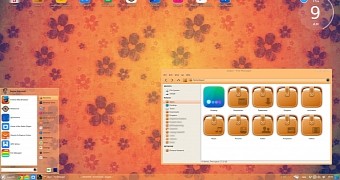
ChaletOS 16.04 Linux Arrives for Windows Refugees, Based on Ubuntu 16.04 LTS

Dejan Petrovic has had the great pleasure of announcing the release and immediate availability for download of his newest ChaletOS operating system.

ChaletOS 16.04 arrived based on Ubuntu 16.04 LTS (Xenial Xerus), offering users the same level of support as Canonical offers their users, of course, based on the upstream software repositories. Therefore, ChaletOS 16.04 is based on the same long-term supported Linux 4.4 kernel as Ubuntu 16.04 LTS.

… ChaletOS’ main design goal is to help ex-Windows users with their migration to an open-source, desktop-oriented computer operating system powered by Linux kernel.

“Also, now they are more complete, and include details for many applications,” reads today’s announcement. “

Read more at Softpedia

How to Install Rundeck on a Debian 8 (Jessie) Server

Rundeck allows you to run commands/scripts on a remote computer. In this tutorial, I will deal with Linux servers : Debian for rundeck server and Debian/ubuntu for the remote computers. This tutorial shows the steps to install and configure a rundeck server.

Linux Server Provisioning Using Stacki

Server provisioning is a set of actions to prepare a server, taking it from bare metal to a functioning system complete with an operating system, data and software. There are a number of sophisticated tools available for Linux that are adopted in provisioning servers, offering the ability to simultaneously set up thousands of machine unattended. Automation and consistency across Linux infrastructure is hard but in our today’s article we will be setting up Linux installations of heterogeneous hardware across 10’s to 1000’s of machines fast, flexible, and absolutely consistent using Stacki.

Read more at Linuxpitstop.com

Know Your Virtual Workloads: Block Size & Workload Shift

To properly design and optimize your data center, it’s important to understand various workload characteristics, how they change over time, and how they impact application performance. I’ve identified the top six things you should know about your virtualized workloads.

In my last post, I looked at two characteristics of your VMs that are traditionally overlooked in the data center: the different effects that reads and writes have on VMs, and how different access patterns impact performance. Failure to recognize and appropriately measure these things can adversely impact application performance and lead to high IT costs.

In this post, I’ll address two other characteristics that are equally important: block sizes and workloads.

Read more at Network Computing

The Mega Guide To Harden and Secure CentOS 7 – Part 1

This tutorial only covers general security tips for CentOS 7 which can be used to harden the system. The checklist tips are intended to be used mostly on various types of bare-metal servers or…

[[ This is a content summary only. Visit my website for full links, other content, and more! ]]

Multiple Virtual Hosts on CentOS 7 or RHEL 7

This article tends to help you to set up multiple websites (virtual hosts) on single web server running on Linux CentOS 7 or Red Hat 7.

It’s particularly useful if you don’t want to spend money on multiple Virtual Private Servers (VPS), but you’d like to have ability to run and build multiple websites with minimum cost on the same server. In real world scenario, most of those sites would be based on common content management systems such as WordPress, Drupal, Joomla, etc.

The idea lies in the fact that instead of having single root directory for your website (which is /var/www/html/ in our example), you can have multiple folders located in /var/www/ where each folder will contain separate website.

For Ubuntu version follow this link: https://www.linux.com/blog/shared-hosting-your-web-server-multiple-virtual-hosts. Note, this is basic setup tutorial and shouldn’t be used as a guide how to set up proper environment for big commercial projects.

What would you need to have to make it work:

  • web server which already has full LAMP stack on it. As example in this article, we use RHEL 7.2 and Apache (httpd) as web server.
  • root access to this web server

What we actually would do? When you want to add new website into your server, there are following three steps to consider:

  • pointing your domain into that folder
  • creating root folder for the website and setting up web server to recognize that folder

Note, it doesn’t matter in what sequence you are following these steps, as long as they all completed. And once all these steps completed, you are good to go with installation of your CMS as per its documentation.

All actions shown as performed under root account. Remember, it’s best practice to use regular account with sudo rather than root to perform any changes in your system.

Step 1: Point the domain

Point your web traffic of your  domain on to your server as per requirements of  your domain provider. Essentially it means you would need to create A record which resolves into your web server’s IP.

Step 2: Adding virtual host into web server’s configuration.

Let’s assume we want to build  website called cutepuppies.com  and related configuration files and folders in our server will be named accordingly as cutepuppies

Make separate root directory for your new website:

mkdir  /var/www/cutepuppies

Give ownership of the directory to the Apache web user (which is apache)

chown apache:apache -R /var/www/cutepuppies

Also, if you action not under root account, add your username to the web group:

usermod -aG apache YOUR_USER_NAME
Assuming you have fresh Apache installation, it most likely doesn't know that there will be more than one website yet. 
We need to make your webserver to look for configuration files for each website created in the future. Go to /etc/httpd/conf/httpd.conf and add this line into the file:
IncludeOptional sites-enabled/*.conf

Check Apache configuration folder /etc/httpd. You need to craete two folders if they don’t exist: /etc/httpd/sites-available and /etc/httpd/sites-enabled. Go to /etc/httpd/sites-available and create configuration file cutepuppies.conf in there. In order to make your website working, this file should contain at least following data:

<VirtualHost *:80>
        ServerName www.cutepuppies..com
        ServerAlias cutepuppies.com
        DocumentRoot    /var/www/cutepuppies/
</VirtualHost>

Once your configuration file is ready, you need to enable it. Create sympolic link to your configuration file in sites-enabled folder for that:

ln -s /etc/httpd/sites-available/cutepuppies.conf /etc/httpd/sites-enabled/cutepuppies.conf

Now to make it work after changes, you need to reload configuration of your web server:

systemctl restart httpd

Now you are ready to unpack your website into root directory /var/www/cutepuppies/, the website should be accessible by your domain.

If you have anything to add or clarify, please feel free to comment and contibute.