Home Blog Page 844

Enterprise Revenues Power Red Hat Past $2bn Barrier

Red Hat is in the enviable position of having become the first open-source firm to break the $2bn revenue barrier. The Linux spinner has reported full-year revenue $2.05bn, an increase of 14 percent from subscriptions, training and services. Net income was up 10 percent to $199m.

For its fourth quarter Red Hat reported $543m in revenue – growing 17 percent year on year – with net income of $53m, up 11 percent on 2015.

Read more at The Register

A Guide for Running Multiple Controllers in Software-Defined Networks

In this article, we will take a bird’s eye view on multiple controller scenarios for software-defined networks (SDNs).  In this article, when we discuss the multi-controller scenarios, we will not restrict to those controllers that use standard protocols such as OpenFlow. Instead, we’ll use the broader meaning of the term “controllers.â€

I would like to highlight that, with the growth of NFV, the multiple-SDN-controllers’ use-cases/scenarios are taking a lot of importance, mainly due to the inherent nature of the NFV-based services. NFV-based service realization may require orchestration of management of heterogeneous resources and at multiple geographical locations and involve multiple administrative domains.

The SDN Controller cluster can be seen as a system that manages a large-scale network, handling control plane communications, consisting of a large number of network elements.  Typically, such systems consist of multiple controllers and expose themselves as a single logical entity.

Read more at The New Stack

Co-Design Architecture: Emergence of New Co-Processors

“High performance computing has begun scaling beyond Petaflop performance towards the Exaflop mark. One of the major concerns throughout the development toward such performance capability is scalability – at the component level, system level, middleware and the application level. A Co-Design approach between the development of the software libraries and the underlying hardware can help to overcome those scalability issues and to enable a more efficient design approach towards the Exascale goal.”

In this video from the 2016 HPC Advisory Council Switzerland Conference, Dror Goldenberg from Mellanox presents: Co-design Architecture – Emergence of New Co-Processors.


Read more at insideHPC

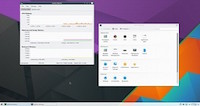
KDE Plasma 5.6 Desktop Environment Officially Released, Here’s What’s New

kde-plasma-5-6The KDE Project has had the great pleasure of announcing the release and general availability of the major KDE Plasma 5.6 desktop environment for GNU/Linux operating systems.

Early adopters have been able to test the Beta of KDE Plasma 5.6 since the beginning of the month, but now the acclaimed and highly anticipated desktop environment has been promoted to the stable channel and declared ready for deployment in production environments.

“Today KDE releases a feature-packed new version of its desktop user interface, Plasma 5.6,” reads the announcement. “This release of Plasma brings many improvements to the task manager, KRunner, activities, and Wayland support as well as a much more refined look and feel.”

Google Builds List of Untrusted Digital Certificate Suppliers

Hoping to improve trust on the web, Google has a new tool to keep track of untrusted Certificate Authorities. Google’s has bolstered its toolset for keeping tabs on digital certificate suppliers that go rogue.

That toolset, a Google-designed digital certificate logging system known as Certificate Transparency (CT), can help protect Chrome users from the kind of mis-issued Secure Sockets Layer (SSL) certificates that Symantec generated last year for some Google domains.

Until now Google has had logs for CAs that are currently trusted by browsers, however it hasn’t had a log for untrusted root CAs. These include CAs whose trust has been revoked from root programs, and new CAs in the process of being granted trust.

Read more at ZDNet News

Pear OS Linux Clone Gets a Brand-New Look, More Similar to the Mac OS X One – Screenshot Tour

pear-os-linux-clonePearOS 9.3 is now available for download. Remember Pear OS? Of course you do, is the popular GNU/Linux distribution that looked very much like a Mac OS X operating system, but unfortunately, it was acquired by a big company whose name we don’t know even to this day.

Last year we reported on the fact that Portuguese developer Rodrigo Marques has created a clone of the Pear OS Linux operating system and publish it on the well-known SourceForge project hosting website under the name PearOS.

Read more at Softpedia Linux News

Annoyed Developer Brings Down Thousands of JavaScript & Node.js Projects

Copyright dispute goes sour, disaster follows for JS devs. For the past day, JavaScript developers have been scrambling left and right to fix an issue that was crashing builds and affecting thousands of projects, if not even more.

Yesterday’s issue that had JavaScript developers up in arms was related to a small npm module called left-pad. This tiny JavaScript library has only 17 lines of code, which are responsible for padding strings to their left with zeros or spaces. For an unknown reason, this module was unpublished yesterday, blocking automatic builds of thousands of projects and sending developers in fervorous debug sessions.

Read more at Softpedia

Take the 2016 Open Source Jobs Survey

The Linux Foundation and Dice.com have partnered again on our annual jobs survey and invite all open source professionals and their employers to participate. By taking the survey, you will help the entire industry better understand the state of open source jobs and the nature of recruiting and retaining the best open source talent.

Jobs-Report-2015

Please take 5-10 minutes to complete this survey, by clicking on the relevant link below, and share it with your friends and colleagues.

Employers and/or Hiring Managers

Share with your colleagues – Click to Tweet

Linux and Open Source Professionals and/or Job Candidates

Share with your colleagues – Click to Tweet

In previous years, we have surveyed hiring managers and Linux professionals to provide an overview of the state of the market for Linux careers. This year, the survey has expanded to include all open source professionals — sysadmins, developers, DevOps practitioners, and others who are paid to work on open source projects or who use open source tooling or software in their work.

Over the last four years, The Linux Foundation has seen demand for Linux professionals skyrocket. In 2015, nearly all hiring managers surveyed said they were looking to recruit Linux professionals in the next six months. And 97 percent of hiring managers reported they would be bringing on Linux talent relative to other skills areas in the next six months.

By broadening our reach to survey all open source professionals, we can measure how companies’ growing open source use and participation, beyond Linux, affects employment opportunities and benefits for an emerging field of open source professionals.

As a thank you for your time and participation in the survey, you will get a chance to win one of ten $100 gift cards to a leading online retailer. Prizes will be awarded on a random basis. The survey closes at Noon Pacific Time on Sunday, March 27, 2016.

Be assured that we will treat any information you provide as strictly confidential. The data collected may be used in aggregate as part of an upcoming report on open source jobs from The Linux Foundation and Dice.com.

5 Next-Gen Cloud Technologies You Should Know

The cloud computing ecosystem is vast. A multitude of technologies comprise the cloud infrastructure that companies now rely on to deliver their products and services efficiently and at a massive scale.

These include platforms such as OpenStack and Cloud Foundry; container technologies such as Docker, CoreOS, and Kubernetes; software-defined storage and networking technologies; DevOps tools such as Ansible and Jenkins; and more. In each case, companies are using open source software to maximize development and operations and stay competitive in a rapidly changing market.

With so many technologies, tools, and techniques to keep track of, it can be hard to know where to start learning new skills. In this article, we take a brief look at five next-generation cloud technologies and some of the key open source projects in each space to help you get up to speed.  

Unikernels

Unikernels are minimal, specialized operating systems that offer improved security, a smaller footprint, and fine-grained optimization, which can be particularly relevant to microservices.  They are built on library operating system technology, and can be customized for different applications and hardware platforms, according to Unikernel.org.

MirageOS is an example of such a library operating system that builds unikernels for network applications across a variety of cloud computing and mobile platforms.

The Rumprun unikernel is another example. It consists of just a few thousand lines of code and supports POSIX software directly on raw hardware as well as cloud hypervisors, such as KVM and Xen, according to the project website.

Container Orchestration

As the use of containers increases and organizations deploy them more widely, the need for container orchestration tools also increases. Though the definition is hard to pin down, they are — broadly — the tools that organizations adopting containers for enterprise production use to help them integrate and manage those containers at scale.

Such tools aim to simplify management and provide a framework not only for defining initial container deployment but also for managing multiple containers as one entity — for purposes of availability, scaling, and networking, for example.

Some of the tools you should know about include: 

CaaS

Containers as a service (CaaS) is a paid offering from cloud providers that includes compute resources, a container engine, and container orchestration tools. Developers can use the framework, via API or a web interface, to facilitate and manage container and application deployment. It can be considered a new layer for cloud platforms that lies somewhere between Infrastructure-as-a-Service and Platform-as-a-Service offerings for application development.

According to a recent Docker blog, this means the tools in the CaaS space are aimed at easing tension between development teams and operations staff when it comes to pushing application content and monitoring and managing applications and infrastructure.

Some of the projects here overlap with the container orchestration, so in addition to Amazon ECS and Google Container Engine, mentioned above, you should know about: 

Software-Defined Networking

Software-defined networking (SDN) is a new approach to designing and managing networks that abstracts applications away from the underlying networking infrastructure. In the new architecture the control plane is separated from the data and forwarding plane of the of networking devices, such as routers and switches. A centralized software-based controller can then be used to communicate between the application and devices in the infrastructure layer, which simply act on the instructions.

This technology is expanding rapidly partly because of the increased networking demands from other growing areas, such as the Internet of Things (IoT) and 5G connectivity.

Open source tools and projects to know include: 

Software-Defined Storage

Software-defined storage (SDS) — which is another term that means different things to different users and providers — basically abstracts logical storage services and capabilities away from the underlying hardware system for the purposes of scalability, agility, and performance. The goal is to provide administrators with more flexible storage capabilities through programming. And, abstracting services away from the hardware opens up new possibilities in this rapidly growing space for open source innovation.

Some of the open source tools in this space include:

  • Ceph — Ceph is a distributed object store and file system designed to separate the object namespace from the underlying storage hardware, simplifying data migration.

  • Gluster — GlusterFS is a free and open source scalable network file system for creating large, distributed storage solutions.

  • NexentaStor — NexentaStor is the open source SDS platform from Nexenta which, the company says, delivers unified file and block storage services, scalability, and data management functionality.

  • OpenStack Cinder — Cinder is a block storage service for OpenStack that virtualizes pools of block storage devices.

These topics and more are covered in detail in The Linux Foundation’s new free “Cloud Infrastructure Technologies” course — a massively open online course offered through edX. Registration for this course is open now, and course content will be available in June.

Watch Recorded Sessions from DevOps Networking Forum

DevOps Networking Forum 2016 was a day-long exploration on the intersection between Devops and Networking, featuring an impressive lineup of guest speakers from companies like Arista Networks, Brocade, Cumulus Networks, Docker, Google and VMware.

https://www.youtube.com/watch?v=DZ5gwC1M0Tg

Couldn’t make it to the event live? Check out John Willis and Brent Salisbury’s kickoff for DevOps Networking Forum, and fill out the form below to access all 13 videos (over six hours of recorded content).

Featured Talks

  • DevOps Networking Forum Kickoff – John Willis & Brent Salisbury, Docker
  • Is it a Switch, or is it a Server? – Ken Duda, Arista Networks
  • Test-Driven Network Automation – Matt Oswalt
  • Automation on a Budget – Chris Young, HPE
  • Recent Advances in Machine Learning and Their Application to Networking – Dave Meyer, Brocade
  • I’m Going to Write Me a New Mini-van – Dinesh Dutt, Cumulus Networks
  • Close Your Laptop and GO TO SLEEP! – Colin McNamara, Dimension Data Americas
  •  
  • What is NetDevOps? Why? – Leslie Carr
  • Move Fast, Unbreak Things! – Petr Lapukhov, Facebook
  • Networking Options in Linux – Scott Lowe, VMware
  • Model-based Network Automation – Anees Shaikh, Google
  • There is No Such Thing as Container Networking – Kelsey Hightower, Google
  • DevOps and Security: Finding a Meaningful Balance – Doug Gourlay, Skyport Systems

About DevOps Networking Forum

DevOps Networking Forum — previously known as DevOps4Networks — is an event started in 2014 by John Willis and Dave Nielsen to discuss what DevOps and Networking would look like over the next five years. The goal is to create a conversation for change similar to what CloudCamp did for Cloud adoption and DevOpsDays for DevOps.