
Home Blog Page 847

As Docker Turns 3, CEO Predicts Unabated Growth

Not even VMware invaded the data center as quickly as open source container supplier Docker has in its first three years. In an interview with InformationWeek, CEO Ben Golub offers his vision for the future.

That open source project was launched on March 13, 2013, and neither Solomon Hykes, the project’s lead, nor Ben Golub, CEO of the San Francisco firm, have spent much time looking back. Golub had previously been CEO at Gluster and Plaxo — acquired by Red Hat and Comcast, respectively.

Read more at Information Week
A Bunch of New ARM Hardware Will Be Supported With Linux 4.6

The ARM SoC updates were mailed out on Sunday afternoon for the Linux 4.6 kernel and it provides mainline support for thirteen new SoCs! 

Over a dozen new ARM System-on-a-Chips are new to the mainline Linux 4.6 kernel code. The newly-supported platforms include Axis Artpec-6 SoC (artpec6), TI keystone-k2g, Mediatek MT7623 (mt7623), Allwinner A83T SoC (a83t), NXP i.MX6QP SoC (imx6qp), ST Microelectronics stm32f469, Annapurna Labs Alpine (alpine-v2), Marvell Armada 3700 SoCs (armada-37xx), Marvell Armada 7000/8000 SoCs (armada-7xxx/8xxx), Amlogic S905 (meson-gxbb), Qualcomm Snapdragon 820 (msm8996), …

Read more at Phoronix

Meet ubuntuBSD, UNIX for Human Beings

meet-ubuntubsd-unixToday we have the great pleasure of introducing you to a new project that saw the light of the Internet for the first time this past weekend, on March 12, 2016. Meet ubuntuBSD!
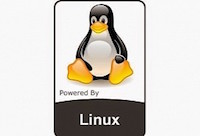
What’s ubuntuBSD? Well, we’ve asked that ourselves when we first spotted the project created by Jon Boden, and it’s not that hard to figure out yourself, but just in case you’re not sure, we can tell you that ubuntuBSD promises to bring the power of the FreeBSD kernel to Ubuntu Linux. It is inspired by Debian GNU/kFreeBSD. ubuntuBSD looks like something that has never been done before, and as usual, we were very curious to see how it works, so we took it for a quick test drive. Please note that at the moment of writing this article, the ubuntuBSD project was in Beta stages of development, based on the FreeBSD 10.1 and Ubuntu 15.10 (Wily Werewolf).

Read more at Softpedia Linux News

Raspberry Pi 3: Raspbian Linux and NOOBS Distributions Updated

New releases of Raspbian GNU/Linux and the NOOBS installer package appeared on the Raspberry Pi Downloads page last week. These have come very soon after the initial Pi 3 support releases, so they appear to be primarily aimed at bug fixes and enhancements for the new hardware.

The Raspbian release notes mention that there are firmware and kernel updates. I couldn’t find any release notes or other information about the NOOBS release; hopefully that will come along soon. I have loaded and briefly tested both Raspbian and NOOBS on all of my various Raspberry Pi systems. The best news of this release is that the NOOBS installer now recognizes the Raspberry Pi 3 built-in wireless network adapter, so it is now possible to install from NOOBS on a Raspberry Pi 3 without having to use a wired network connection or a second wireless adapter.


Read more at ZDNet News

Linux Kernel 3.12.57 LTS Out Now with ALSA, EFI, and Xen Improvements, Bugfixes

linux-kernel-3-12-57On March 18, 2016, kernel developer Jiri Slaby announced the release of the fifty-seventh maintenance build of the long-term supported Linux 3.12 kernel series.

Earlier this week we announced several Linux kernel maintenance releases, including Linux kernel 4.4.6 LTS, Linux kernel 3.14.65 LTS, Linux kernel 3.10.101 LTS, Linux kernel 4.1.20 LTS, and Linux kernel 3.18.29 LTS, and today we’re informing our readers about the release of Linux kernel 3.12.57 LTS.

Most of the changes are, as expected, updates to various drivers, including ATA, EFI, GPU (mostly Radeon), Ethernet, MTD, IOMMU, USB, and Xen. “I’m announcing the release of the 3.12.57 kernel. All users of the 3.12 kernel series must upgrade,” said Jiri Slaby. 

How Community Building Can Help an Organization’s Bottom Line

OSDC beesRecently I’ve had several conversations with open source friends and colleagues, each discussion touching upon—but not directly focused on—the subject of why a company would/should/could support a community around a project it has released as free/open source, or more generally to support the communities of F/LOSS projects on which they rely. After the third one of these conversations I’d had in nearly as many weeks, I dusted off my freelance business consulting hat and started mapping out some of the business reasons why an organization might consider supporting communities.

In this article, I’ll look at community from a business perspective, including the effect community can have on an organization’s bottom line. Although there are communities everywhere, I’ll approach the topic—meaning, communities, their members, and their contributors—from a free/open source perspective.

Read more at OpenSource.com

Clair 1.0 Brings Advances in Container Security

CoreOS pushes the open-source container security project to the 1.0 milestone and production stability.

As container use grows, there is an increasing need to understand from a security perspective what is actually running in a container. That’s the goal of CoreOS’ Clair container security project, which officially hits the 1.0 milestone today, in an effort to help organizations validate container application security.

Clair was first announced in November 2015 as an open-source effort to identify vulnerable components inside containers. Container applications can integrate any number of different components that could potentially include known vulnerabilities.

Read more at eWeek

GitHub’s Atom 1.6 Hackable Text Editor Comes Bundled with NodeGit, New API

This past weekend, we had the great surprise to see Atom 1.6, the next major version of GitHub’s powerful, cross-platform and open-source hackable text editor exit the devel channel and enter the stable one.

Yes, you’re reading it right, Atom 1.6 has been promoted to the stable channel, and you can download it right now for your GNU/LinuxMac OS X, or Microsoft Windows box from its official website, or via ours. At the same time, the next major version, Atom 1.7, has entered the Beta channel.

Microsoft Eases Docker Container Migrations With Open Source Cloud Storage Plug-in

The new Docker Volume Plugin for Azure File Storage plug-in makes Docker containers less reliant on a host’s storage.

Microsoft has released new software that provides Docker developers and administrators with more container portability on Azure.The open-source Docker Volume Plugin for Azure File Storage—the source code of which is available on GitHub—uses Azure File Storage on Linux’s support of the Server Message Block (SMB) 3.0 protocol to disassociate Docker container data volumes from their host’s storage. In a typical deployment, a directory on the Docker host machine serves as the Docker container volume, complicating matters when users want to move containers between hosts.

Read more at eWeek


Attempt to set up RDO Mitaka at any given time (Delorean trunks)

Per  Delorean Documentation

The RDO project has a continuous integration pipeline that consists of multiple jobs that deploy and test OpenStack as accomplished by different installers. This vast test coverage attempts to ensure that there are no known issues either in packaging, in code or in the installers themselves.Once a Delorean consistent repository has undergone these tests successfully, it will be promoted to current-passed-ci. Current-passed-ci represents the latest and greatest
version of RDO trunk packages that were tested together successfully.

Set up delorean repos on all deployment nodes ( Controller,Storage,Compute)
# yum -y install yum-plugin-priorities
# cd /etc/yum.repos.d
# curl -O https://trunk.rdoproject.org/centos7-mitaka/delorean-deps.repo
# curl -O https://trunk.rdoproject.org/centos7-mitaka/current-passed-ci/delorean.repo

Complete text may be seen here