
The UTS namespace is not the most complicated Linux namespace, but it’s quite useful, especially in the context of containers.
Read More at Enable Sysadmin
The UTS namespace is not the most complicated Linux namespace, but it’s quite useful, especially in the context of containers.
Read More at Enable Sysadmin
Learn what’s happening in the world of containers and how to better manage this technology.
Read More at Enable Sysadmin
Enable Sysadmin’s top articles of the year include a lot of Linux commands, automation tips, networking strategies, and more.
Read More at Enable Sysadmin
Use the podman ps command to get size, resource consumption, and other information about your containers.
Read More at Enable Sysadmin
Get started with containers in a fast, repeatable way through the familiar shell scripting interface.
Read More at Enable Sysadmin
Use Nmap, tcpdump, and Wireshark to discover why your enterprise switch and clients aren’t communicating IP configurations correctly.
Read More at Enable Sysadmin
Learn how to increase your earning potential, improve your soft skills, develop your technical knowledge, and more.
Read More at Enable Sysadmin
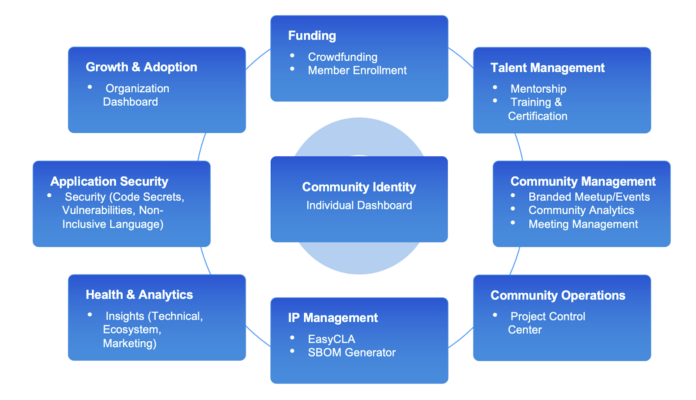
Open source fuels the world’s innovation, yet building impactful, innovative, high-quality, and secure software at scale can be challenging when meeting the growing requirements of open source communities. Over the past two decades, we have learned that ecosystem building is complex. A solution was needed to help communities manage themselves with the proper toolsets in key functional domains.
From infrastructure to legal and compliance, from code security to marketing, our experience in project governance among communities within the Linux Foundation has accumulated years of expertise and proven best practices. As a result, we have spent the year productizing the LFX Platform, a suite of tools engineered to grow and sustain and grow the communities of today and build the communities of tomorrow.
The LFX Platform tools provide our members and projects with tools to support every stage of an open source project, from funding to community management to application security. LFX is built to support the needs of all community participants; maintainers, contributors, community managers, security professionals, marketers, and more.
Open source communities need access to better tools to scale. Developers need to be able to make effective code contributions, scan for security vulnerabilities, and deploy. Community managers need to facilitate meetings, host meet-ups online or in-person, support governing boards, and decide on proper governance structures. Project leadership needs to be responsive, provide support, engage in training, and promote their latest developments.
We aim to help reduce the complexity of building and managing open source ecosystems by delivering a new platform that brings people, information, tools, and supporting programs together.
We want to invite you to explore LFX. First, create your LFID needed to login. Then jump into experiencing LFX elements such as your Individual Dashboard, Mentorship, EasyCLA, Insights, or Security. The LFX platform provides open source communities the following areas of key functionality:
Global Trends and Compare Projects capabilities extend LFX insights with new reports and enable community members to easily answer common questions about their open source ecosystem or quickly compare open source communities to identify and drive best practices.
Security Vulnerabilities and Code Secrets Scanning, with Remediation powered by Snyk and BluBracket, is now available in LFX Security. Enabling communities to automatically scan code and detect potential vulnerabilities or exposed code secrets then recommend fixes to remediate the identified issues.
Non-Inclusive Language Detection is now a part of LFX Security through integration with BluBracket, enabling the identification and elimination of non-inclusive language to attract and retain more participants and deliver on the power and promise of more diverse and inclusive open source communities.
The world’s most critical infrastructure is built on open source, and therefore the security of open source software is essential. LFX Security builds on the Core Infrastructure Initiative and the Open Source Security Foundation and years of learned security best practices to provide communities with the capabilities required to secure their code continuously. LFX Security is powered by integrations with leading security vendors and supports existing tools and languages.
Automatic vulnerability scanning, with recommended fixes and inline remediationRisk analysis with intuitive and informative scoring Automatic detection of potential code secretsIdentification of non-inclusive language in code
Learn more about LFX Security at lfx.dev/tools/security
Successful open source communities require effective management of everything from code quality and build to collaboration and marketing. But to manage them effectively, data has to be gathered across disparate repositories, tools, and activities. LFX Insights integrates data from source code repositories to issue trackers, social media platforms to mailing lists and contextualizes projects, project groups, or the entire Linux Foundation ecosystem.
Learn more about LFX Insights at lfx.dev/tools/insights
The LFX platform is designed to address these issues and more. LFX aggregates dozens of data sources and commonly used management. It provides visualization tools with an added layer of intelligence to reveal best practices for numerous open source stakeholders, including developers, project leaders, open source program offices, legal, operations, and even marketing.
LFX is a suite of elements engineered to grow and sustain and grow the communities of today and build the communities of tomorrow. By automating and consolidating many of the most critical activities needed by open source projects and stakeholders, we hope to reduce complexities that sometimes hinder innovation and progress.
The LFX platform provides our members and project with tools to support every stage of an open source project. As we head into 2022, we plan to release even more functionality to support our growing community.
Create your LFID and Explore LFX at lfx.linuxfoundation.org
The post LFX Platform: An Update on Growing and Sustaining Open Source appeared first on Linux Foundation.
Our recently published Open Source Jobs Report examined the demand for open source talent and trends among open source professionals. What did we find?
The good news is that hiring is rebounding in the wake of the pandemic, as organizations look to continue their investments in digital transformation. This is evidenced by 50% of employers surveyed who stated they are increasing hires this year. There are significant challenges though, with 92% of managers having difficulty finding enough talent and struggling to hold onto existing talent in the face of fierce competition. Other key findings from this year’s report included:
Cloud is on the rise. Cloud and container technology skills are most in-demand by hiring managers, surpassing Linux for the first time, with 46% of hiring managers seeking cloud talent.DevOps has become the standard method for developing software. Virtually all open source professionals (88%) report using DevOps practices in their work, a 50% increase from three years ago.Demand for certified talent is spiking. Managers are prioritizing hires of certified talent (88%).Training is increasingly helping close skills gaps. 92% of managers report increasing requests for training. Employers also report that they prioritize training investments to close skills gaps, with 58% using this tactic.Discrimination is a growing concern in the community. Open source professionals having been discriminated against or made to feel unwelcome in the community increased to 18% in 2021 — a 125% increase over the past three years.
This year, vendor-neutral training and certification grew in importance as demand for professionals with critical skills in open cloud technologies and DevOps increased. Over 2 million individuals have enrolled in free Linux Foundation training courses, providing them a great way to explore different open source technologies and decide which is the best fit for them; this includes over a million students who have enrolled in our Introduction to Linux course on the edX platform. To date, over 50,000 individuals have been certified for their technical competence through Linux Foundation programs.
This year, our Training & Certification team launched over 20 new offerings. We now host over 70 eLearning courses, deliver over 20 instructor-led courses, and offer more than a dozen certification exams that enable certified professionals to demonstrate their skills, with more being released regularly.
This year saw the addition of exam simulators to our Kubernetes certification exams, enabling exam registrants to familiarize themselves with the exam environment before sitting for their exam. In late 2021, we will launch a new Kubernetes and Cloud Native Associate certification exam, which will serve as an entry-level certification for new cloud professionals.
In 2021, The Linux Foundation directly awarded 500 scholarships for free training and certification to individuals worldwide. Hundreds more were awarded via partnerships with nonprofits, including Blacks in Technology, TransTech Social Enterprises, and Women Who Code.
New training and certification offerings launched in 2021 include:
Building a RISC-V CPU CoreCertified Kubernetes and Cloud Native Associate (KCNA)Certified TARS Application Developer (CTAD)FinOps for EngineeringGenerating a Software Bill of MaterialsGitOps: Continuous Delivery on Kubernetes with FluxHyperledger Besu Essentials:Creating a Private Blockchain NetworkKubernetes and Cloud Native EssentialsKubernetes Security EssentialsKubernetes Security FundamentalsImplementing DevSecOpsIntroduction to Cloud FoundryIntroduction to FDC3 StandardIntroduction to GitOpsIntroduction to Kubernetes on Edge with K3sIntroduction to Magma:Cloud Native Wireless NetworkingIntroduction to Node.jsIntroduction to RISC-VIntroduction to WebAssemblyOpen Source Management and StrategyRISC-V Toolchain and Compiler OptimizationTechniquesWebAssembly Actors: From Cloud to Edge
Explore the full catalog of courses at training.linuxfoundation.org/full-catalog.
The post Facing Economic Challenges: Open Source Opportunities are Strong During Times of Crisis appeared first on Linux Foundation.
Get plugged into these networking guides to learn how to automate network configurations, analyze traffic, leverage containers, and more.
Read More at Enable Sysadmin