Home Blog Page 860

Let’s Encrypt Reaches One Million Certificate Encryption Milestone

letsencryptOne million free TLS certificates have now been issued, paving the way for better encryption and security on the Web.

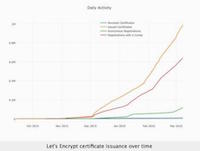
On Tuesday morning, the Let’s Encrypt free Certificate Authority (CA), operated by the Internet Security Research Group (ISRG),said in a blog post that only three months and five days since launching a beta version of the service, one million webmasters have opted for the free Transport Layer Security (TLS) certificates.

The Let’s Encrypt project offers free, trusted Web certificates to increase the rates of encryption in domain communication and traffic.

Read more at ZDNet News

WSO2 Launches a Lightweight Java Framework for Building Microservices

On Monday, WSO2 launched the Microservices Framework for Java (MSF4J), which is built on the company’s open source middleware platform Carbon. MSF4J is going up against competitors such as Spring Boot. What makes it stand out? Besides being open source, MSF4J is focused on enabling truly lightweight microservices for rapid container deployment.

“[MSF4J] has been designed with containers in mind so that you’d run the microservices in the containers environment, a very small environment,†Mauny said. She went on to say that MSF4J enables microservices to boot in a Docker container in 400 milliseconds and be “easily†added to a Docker image definition.

Read more at The New Stack

When Selling a Site Means Selling a Community

community-penguinsIn January, the CEO of ownCloudFrank Karlitschek, sold his network of more than 30 community sites. The same month, DHI Group, Inc. announced that it completed the sale of its Slashdot and SourceForge community-driven businesses to BIZX, LLC.

In both cases, websites weren’t the only things changing virtual hands. Entire online communities transferred to new stewards.

Recently I interviewed Karlitschek and Logan Abbott, President at SourceForge Media, LLC (the company that now owns SourceForge and Slashdot) to get a behind-the-scenes look at what happens when selling—and buying—a site means handing over online communities as part of the deal. Part 1 is my interview with Karlitschek. Read Part 2 for insight into what Abbott has planned for Slashdot and SourceForge.

Read more at OpenSource.com

5 Free Alternatives To Google Drive On Linux

cloud storage

Google Drive is one of the most popular, fremium cloud storage service from Google. Gdrive is an official client for Google drive and a must have application for Windows. But sadly the most popular service can’t be used on Linux via any official client like Gdrive. So I thought to find free alternatives to Google Drive on Linux and I came up with the list of 5 free cloud storage services that provide client for Linux. I know you’ll love it.

Read At LinuxAndUbuntu

Microsoft Announces SQL Server for Linux

Today I’m excited to announce our plans to bring SQL Server to Linux as well. This will enable SQL Server to deliver a consistent data platform across Windows Server and Linux, as well as on-premises and cloud. We are bringing the core relational database capabilities to preview today, and are targeting availability in mid-2017, wrote Scott Guthrie, Executive Vice President, Cloud and Enterprise Group, Microsoft in a blog post on March 7.

According to the post, “SQL Server on Linux will provide customers with even more flexibility in their data solution. One with mission-critical performance, industry-leading TCO, best-in-class security, and hybrid cloud innovations…”

“We are delighted to be working with Microsoft as it brings SQL Server to Linux,” said Mark Shuttleworth, founder of Canonical. “Customers are already taking advantage of Azure Data Lake services on Ubuntu, and now developers will be able to build modern applications that utilize SQL Server’s enterprise capabilities.”

Read more at the Microsoft blog

Meet Linux Lite 2.8 – Video Overview and Screenshot Tours

Linux Lite 2.8 is the latest release of Linux Lite. This release based on Ubuntu 14.04.3 LTS featuring Xfce 4.10 as main desktop environment. Powered by Linux kernel 3.19, which has been reinforced with support for the latest hardware components, Linux Lite 2.8 ships with support for the Btrfs file system. It also features support for H.265 encoded videos, which has been implemented in the VLC Media Player software, the xbacklight utility for adjusting the brightness.

More details :Linux Lite 2.8 – Video Overview and Screenshot tours

Meet Zorin OS 11 – Video Overview and Screenshot tours

Zorin OS 11 a linux distribution based on Ubuntu 15.10 Wily Werewolf has been released and announced by Zorin OS Development Team, It now available to download and install on your computer. This release featuring the zorin desktop environment that integrated with Zorin menu and Zorin Look Changer for ultimate ease of use.

Zorin OS 11 is powered by Linux Kerenl 4.2, include Zorin Web Browser Manager tool for easy installation of different web browsers, Contacts manager utility, a Clocks app for setting alarms or using stopwatch and timer, and a beautiful new video player app. In addition, Wine .1.6 and PlayOnLinux 1.4.2 installed by default for anyone want to install Window Game and Applications in Zorin OS.

Zorin OS 11 – Video Overview and Screenshot tours

Node.js Foundation Update: A Few of Our Current Goals for 2016

We recently summarized our 2015 accomplishments and now want to share more about our plans for this year in this blog. This is by no means the full plans for the year, but it is focused on a few of our current plans that are taking place and the why behind them.

Node.js has one of the largest and broadest communities in the world, however, there is a limit to the kinds of resources the community is able to create. Similarly, as a Foundation, we also need to prioritize our focus and energy; here are the current goals that we are focusing on:

  • Increase educational resources for Node.js.

  • Increase the presence of the Node.js Foundation: global events program; increased membership (corporate and individual); and expanded marketing and communications

  • Support community efforts around learning and diversity.

We also want to make sure that we, as a Foundation, build efforts that will support and potentially integrate with community efforts.

If you haven’t read Mikeal’s post “Healthy Open Source,” please do so as it helps explain the how and why of our base contribution policy and its influence on the guiding principles for the Foundation.

In order to support the push for better education, we are holding monthly worldwide events called Node.js Live. Our first one was held in Los Angeles last Thursday and was a huge success. We had incredible speakers, including Ashley Williams from NPM, Dan Shaw from NodeSource, Mikeal Rogers from the Node.js Foundation, Justin Meyer of Bitovi and Andrew Hao from Carbon Five. There were more than 250 attendees and we even got a shout out on ArcLight Cinema’s movie board :). This event was recorded and we’ll be sharing it soon.

node-jsThese new 2016 events are targeted at enterprise and independent Node.js developers, architects and tech leaders who are interested in learning more about Node.js. The series establishes a global presence for the Foundation and specifically targets cities and countries where we have many users, but few established events. For the full roster of events, click here. These more community-inspired events balance the Foundation’s Node.js Interactive event. We will be holding a Node.js Interactive in Europe in September and the US in late November (more details coming soon!).

If you’re not able to attend these events or just prefer a different pedagogy, the Foundation is working on increasing availability of Node.js training, educational opportunities and resources. Working closely with The Linux Foundation and with direction from a new Education Lead employee, we’re developing a training and certification program as well as e-learning classes (more details coming soon).

The Foundation is also expanding opportunities and resources to learn Node.js in the following ways:

  • Increasing the number of case studies

  • Launching a Community Podcast series to highlight the important and often under-recognized work of contributors to working groups inside the Node.js org.

  • Kicking-off an Enterprise Conversations Hangout on Air series to share technical insights from the enterprise frontline with Node.js users

We’ll also continue to support our community efforts around learning and diversity with guidance from our recently formed Inclusivity Working Group. In addition to this, we will be supporting the new series NodeTogether, which is run by Ashley Williams, and will be co-located at Node.js Live events.

This is an initiative to improve the diversity in the Node.js community by bringing people of underrepresented groups together to learn Node.js. NodeTogether targets new or junior developers, or even those without any programming experience. They are also seeking mentors and sponsors for this event, so if you want to help share your knowledge or support this series, definitely check it out. To become a student, mentor or sponsor, you simply need to apply online and pick the event location that is best for you. If you have any questions on the event and openings, This e-mail address is being protected from spambots. You need JavaScript enabled to view it
.

As with last year, we’ll continue to seek out projects that are essential to the ecosystem and in need of additional support and mentor these projects through our incubation program. Each project will have different needs and Node.js evaluates and accepts projects on a case-by-case basis with the goal of nurturing ones that will help make the Node.js ecosystem as robust and competitive as possible. We announced libuv last year and Express this year.

There are many ways to get involved with the Foundation and community, from becoming a member (individual or corporate member)), reporting an issue, helping with documentation to contributing to the code base. For Foundation updates, be sure to follow this blog, our website, and our Twitter and Google+.

We are looking forward to another great year ahead, and will continually update you with new efforts and goals that we have throughout the year.

uTox installation on Ubuntu and Fedora Linux

uTox is a lightweight client for the Tox software which connects users with friends and family over an insecure network. It supports Windows, Linux, Mac OS and Android platforms. This tutorials shows the installation and setup of uTox on Ubuntu and Fedora.

Read more at HowtoForge

Fostering Cross-Industry NFV Collaboration

Bluer Background OptionThe networking industry is currently undergoing a huge transformation as demand for network bandwidth increases exponentially. Both the technology itself (e.g., evolution across software, cloud, SDN, NFV, containers, virtualization, and orchestration) and the way in which service providers, operators, and vendors structure their business is evolving at record pace. The entire industry is becoming more nimble and agile to keep up with demand.

I blogged recently about the role of NFV in this transformation and how the OPNFV project is at the forefront; we’re tasked with creating a carrier-grade, integrated, open source platform to accelerate new NFV products and services. And while the reality of transformation is that it’s a hard, risky and challenging journey, the industry is ripe for change. OPNFV’s second platform release, Brahmaputra, helps set the stage for the NFV ecosystem to start actualizing NFV with a lab-ready framework.

Focused on preparing a viable starting point for evolving NFV use cases and composing services in a lab environment, the release is the first iteration of a massively parallel simultaneous release process. At a high level, it puts into place the processes and infrastructure that will allow us to scale up and out as we march towards NFV deployments. (Check out our recent ONS Webinar, “OPNFV Brahmaputra: An Early Look –Approach, Architecture Overview, Upstream Integration and Readiness” for a detailed discussion of enhancements delivered in OPNFV Brahmaputra. )

But it’s not just OPNFV. The entire industry is involved in the development of NFV, and the unique role that OPNFV plays is to foster collaboration among key stakeholders across the entire ecosystem. The strength of any open source project depends on the community involved in developing it. As the industry comes together to further NFV, we’re seeing the OPNFV community grow; as Brahmaputra integrates multiple open source and standards projects. This fosters feature development, testing, deploy and Continuous Integration/Continuous Deployment domains. Thirty-five projects and more than 140 developers were involved in the Brahmaputra release (in fact, participation in OPNFV as a whole has increased five times since August of 2015!).

Despite this rapid growth, our journey is still in its infancy and we have a long way to go. Anyone and everyone interested in accelerating open source NFV is welcome to join us. Have ideas for use cases or integration? See something that’s missing? If a project interests you, join it. See a need for OPNFV not currently addressed? Start a new project. Hang out on our IRC channels. Check out the wiki. Join our meetings and bring your thoughts, passion and ideas!

We’re excited to engage with the open networking industry at the Open Networking Summit March 14-17 in Santa Clara, CA, and we invite you to join us:

  • We’re hosting a two-day OPNFV Hackfest March 14 and 15, focused on planning for the next release.

  • Check out the OPNFV sessions during the event, covering a range of topics including how OPNFV works with other open source networking projects, analysis of service chaining approaches, and how OPNFV is accelerating open source NFV for and with end users.  

  • Come to our ONS Evening Reception co-sponsored by OpenDaylight, OpenStack, and DevOps Networking Forum, Monday, March 14 at Levi Stadium. RSVP here: https://www.surveymonkey.com/r/V65Y3DF

  • Stop by our booth on the show floor.