

Home Blog Page 869

The Linux Foundation Partners with Women Who Code to Increase Diversity at 2016 Events

LinuxCon-Europe-2015-attendee

Part of our mission at The Linux Foundation is to bring more people into the open source community, which involves reaching people who have traditionally been underrepresented in open source specifically and technology generally.

As part of this continuing effort, we are proud to partner with Women Who Code to provide free passes and 20 percent discounts for their members and subscribers to attend The Linux Foundation’s various events around the world. Women Who Code was created in 2011 and is best known for its weekly publication the CODE Review and free technical study groups, hack nights, career development, and speaking events featuring influential technology industry experts and investors. Their focus on education aligns with our goal to  increase access to Linux and open source learning materials, helping to grow the Linux and open source talent pool, increases diversity in technology and provides the pathway to the most lucrative jobs in IT.

Our team works hard to increase the number of individuals from underrepresented communities contributing to technology development through a variety of initiatives. Specific to our events, these initiatives include offering diversity scholarships to attend events, onsite childcare, mothers’ rooms, and enforcing a respectful code of conduct for attendees. We also recently announced a partnership with Goodwill to increase access to Linux training and certification to disadvantaged populations.

The Linux Foundation open source events where free passes and 20 percent discounts (using code WWCODE20) are available include:

  • Open Networking Summit (March 14-17, Santa Clara, CA)

  • Embedded Linux Conference + OpenIoT Summit (April 4-6, San Diego, CA)

  • Vault (April 20-21, Raleigh, NC)

  • Apache: Big Data North America (May 9-12, Vancouver, BC)

  • ApacheCon North America (May 11-13, Vancouver, BC)

  • MesosCon (June 1-2, Denver, CO)

  • LinuxCon + ContainerCon North America (August 22-24, Toronto, ON)

  • LinuxCon + ContainerCon Europe (October 4-6, Berlin, Germany)

  • Embedded Linux Conference Europe (October 6-7, Berlin, Germany).

“The Linux Foundation sets the example for other organizations that want to increase the number of women contributing to technology development,” said Zassmin Montes de Oca, WWCode Board Vice Chair. “We look forward to their continued sponsorship to propel women’s careers in technology.”

We look forward to meeting and working with women from the program and helping them to advance their careers and contributions in the open source community.

For more information about our events, including codes of conduct and diversity scholarships, please visit: http://events.linuxfoundation.org/

To become a member of Women Who Code, please visit: https://www.womenwhocode.com/donate. You may also subscribe to Women Who Code’s Code Review newsletter to receive information about these and other technology event discounts at https://www.womenwhocode.com/.
Configure Postfix to use Gmail as a Mail Relay

If you have a Gmail account, you can configure your MTA to relay outgoing mail through Gmail. This gives you the benefit of Gmail’s reliability and robust infrastructure, and provides you with a simple means of sending email from the command line. In this tutorial, we will use Postfix as our MTA. Postfix is a free, open-source, actively maintained, and highly secure mail transfer agent.

Read more at HowtoForge

Distribution Release: Netrunner 2016.01 “Rolling”

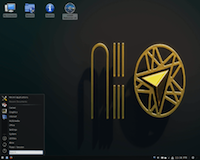
netrunner-smallClemens Toennies has announced the release Netrunner 2016.01 “Rolling” edition, the latest version of the project’s Manjaro-based rolling-release distribution featuring the KDE Plasma desktop: “Three months in the making, we are happy to announce the release of Netrunner Rolling 2016.01, 64-bit edition. Despite the version number, 2016.01 comes with the latest KDE, including Plasma 5.5.4 and KDE Applications 15.12.2. This release marks one change from previously released pre-packaged ISO image – we’ve decided not to ship Akonadi and the KDE PIM suite with this release, favouring more lightweight alternatives instead. 
Read more at DistroWatch

SSD Reliability in the Real World: Google’s Experience

Using data from millions of drive days in Google datacenters, a new paper offers production lifecycle data on SSD reliability. Surprise! SSDs fail differently than disks – and in a dangerous way. Here’s what you need to know.

SSDs are a new phenomenon in the datacenter. We have theories about how they should perform, but until now, little data. That’s just changed.

The FAST 2016 paper Flash Reliability in Production: The Expected and the Unexpected, (the paper is not available online until Friday) by Professor Bianca Schroeder of the University of Toronto, and Raghav Lagisetty and Arif Merchant of Google, covers:


  • Millions of drive days over 6 years
  • 10 different drive models
  • 3 different flash types: MLC, eMLC and SLC
  • Enterprise and consumer drives


Read more at ZDNet

Spring RTS Open Source Engine 101.0 Released

Spring RTS 101.0 has been released with performance improvements, bug fixes, and new features. 

Spring RTS 101.0 brings support for custom shaders and map drawing via Lua scripting, line of sight refactoring, refactoring of transports, an internal pr-downloader, and a ton of fixes. 

Read more at Phoronix

Encryption Still a Low Priority for Too Many Cloud Users

The vast majority of businesses will be using cloud to store confidential information by 2018 – but almost half have no plans to encrypt it.

The vast majority of organisations plan to store confidential or sensitive data in the cloud by 2018, but despite that being just two years away, only a third have already set out an encryption plan which can be described as consistently applied across the entirety of the enterprise.

According to the 2016 Global Encryption and Key Management Trends Study, more than half of global organisations are already transferring sensitive or confidential information to the cloud, with 56 percent of respondents stating that this already forms part of their data storage strategy, whether or not that data is encrypted or made unreadable via some other mechanism.

Read more at ZDNet News

Anyone Can Now Port Ubuntu Linux for Raspberry Pi 3 with Ubuntu Pi Flavour Maker

linux-for-raspberry-pi-3We believe that you already know about the surprise launch of the Raspberry Pi 3 single-board computer today, February 29, 2016, and it appears that developers had early access to the board.
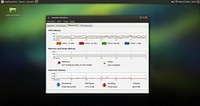
Martin Wimpress, the leader of the Ubuntu MATE Linux operating system, had the great pleasure of informing Softpedia just a few minutes ago that he updated the Ubuntu Pi Flavour Maker tool introduced by us in December 2015 to support porting of Ubuntu MATE, Xubuntu, Lubuntu, and Ubuntu Server OSes for the Raspberry Pi 3 Model B.

Raspberry Pi 3 Has Wi-Fi and Bluetooth, 64-Bit Chip, Still Just $35

The third major version of the Raspberry Pi will go on sale Monday, with the $35/£30 credit card-sized Raspberry Pi 3 Model B now sporting a 64-bit processor and embedded Wi-Fi and Bluetooth. In previous versions, the Pi needed USB adapters to get Wi-Fi and Bluetooth connectivity. Raspberry Pi 3 supports 802.11n Wi-Fi (2.4GHz only) and Bluetooth 4.0 without an adapter, freeing up its four USB ports for other purposes.

While the Raspberry Pi 2 released a year ago used a Broadcom system-on-chip with a 32-bit, 900MHz quad-core ARM Cortex A7, the Raspberry Pi 3 upgrades to a 64-bit ARM Cortex A53 that’s also quad-core and is clocked at 1.2GHz.

Wireshark 2.0.2 Is a Major Release of the World’s Most Popular Network Scanner

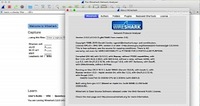
wireshark-2-0-2The world’s most popular network protocol analyzer, Wireshark, which security experts can use for development, analysis, troubleshooting, or education purposes, has reached version 2.0.2.

Wireshark 2.0.2 is a major release that patches a significant amount of security issues discovered since the first maintenance release, such as a DLL hijacking vulnerability, a DNP dissector infinite loop, and a SPICE dissector large loop. Additionally, multiple crashes have been addressed, in particular for the X.509AF, ASN.1 BER, HTTP/2, HiQnet, LBMC, RSL, LLRP, IEEE 802.11, GSM A-bis OML, SPICE, and NFS dissectors.

SCO vs. IBM Looks Like It’s Over For Good

And the winner is IBM…. And the lawyers milking the case for 13 long years. A new filing (PDF) scooped up by the good folks at Groklaw sees both SCO and IBM agree to sign off on two recent decisions in which SCO’s arguments advancing its claims to own parts of Unix were slapped down by the US District Court.

As The Register reads the PDF we’ve linked to above, and our informal legal counsel concurs, the new document describes IBM and SCO both signing off on the recent court orders. Those orders left SCO without a legal argument to stand on. The new filing also points out that SCO remains bankrupt and has “has de minimis financial resources beyond the value of the claims on which the Court has granted summary judgment for IBM.â€

Read more at The Register