 Linus Torvalds yesterday released the Linux 4.4 kernel. This is a long-term support (LTS) release, as was determined at the Linux Kernel Summit and announced in October by Greg Kroah-Hartman, who will maintain it for 2 years.
This release checks in at more than 20.8 million lines of code, which is up considerably from Version 4.1, released in June 2015 with slightly more than 19.5 million lines of code, according to Phoronix. For historical comparison, version 0.01 of the Linux kernel — released in 1991 — had just 10,239 lines of code (source: Wikipedia).
The Linux kernel is a huge collaborative effort. According to the “Who Writes Linux” report published last year, nearly 12,000 developers from more than 1,200 companies have contributed to the Linux kernel since tracking began 10 years ago. Additionally, the average number of changes accepted into the kernel per hour is 7.71, or roughly 185 changes every day and nearly 1,300 per week.
Yet, 4.4 is a modest release, with various release candidate (rc) stages characterized by Linus Torvalds as “pretty calm,” and “fairly normal.”
“The changes since rc8 aren’t big,” Linus wrote in his 4.4 release notes. “There’s about one third arch updates, one third drivers, and one third “misc” (mainly some core kernel and networking), But it’s all small. Notable might be unbreaking the x86-32 “sysenter” ABI, when somebody (*cough*android-x86*cough*) misused it by not using the vdso and instead using the instruction directly.”
The important features for 4.4 can be broken down into a few main categories:
Graphics and Audio
Zack Brown’s Kernel News in the December 2015 issue of Linux Magazine covered a recent discussion of DRM on the mailing list. Zack wrote: “Tomi Valkeinen pointed out that although fbdev (the Linux graphical framebuffer) was still maintained, it had been deprecated in favor of the DRM (Direct Rendering Manager) subsystem. Because of that, Tomi asked developers to stop submitting new fbdev drivers and to work through DRM instead.” The thread included some dismay about the many lines of code involved in writing DRM drivers — an order of magnitude more than needed for fbdev by some accounts — resulting in reluctance to move away from fbdev entirely.
Zack summed up this way: “…the upshot is that fbdev is still deprecated, and folks are motivated to make DRM support simpler hardware more gently. It’s a nice discussion to watch, because everyone seemed to have a fair sense of balance and of the need to continue to support features that were actually needed in the wild, while at the same time allowing older code to age gracefully out of the kernel.”
Networking
Notable networking updates include:
Security
Hardware Support
And More
You can download the sources for 4.4 from the kernel.org website and start compiling now.

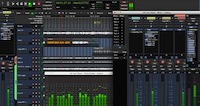 Just a few minutes ago, January 11, 2016, Paul Davis had the great pleasure of announcing the first update of his impressive Ardour open-source DAW (Digital Audio Workstation) in 2016, version 4.6.
 The company’s Virtuora NC 3.0 SDN framework and supporting applications take advantage of work done by the OpenDaylight Foundation.
 At the 2016 Southern California Linux Expo (SCaLE 14x), long-time tech writer and editor Bob Reselman will give a talk called