
I’m working in Ubuntu bash terminal application and remotely on a RHEL server in cloud platform. I typed the wrong and dangerous command. I no longer wish to remember dangerous command in the history file. How can I remove or delete a single command from bash history file?
Arch Linux Gets Its First ISO Image for 2016, Finally Moves to Linux Kernel 4.3
 In the first day of each month, the Arch Linux developers release of a new ISO image of the fully customizable Arch Linux operating system, bringing the latest software updates released during the month that just passed.
Arch Linux 2016.01.01 is the first ISO image for 2016 and it finally ships with a new kernel version. Linux kernel 4.3.3 is now the default for Arch Linux and it is the latest stable and most advanced kernel version available at the moment of writing this article.
Read more at Softpedia Linux Blog
Git 2.7 Open Source Distributed Version Control System Is a Massive Release
 Git 2.7 major release of the world’s best free, open source and cross-platform distributed version control software used by millions of developers worldwide arrived on January 4, 2016 for all supported operating systems, including GNU/Linux, Mac OS X and Microsoft Windows.
According to the internal changelog, which we’ve attached at the end of the article for reference, Git 2.7 is a massive release that includes numerous improvements to the user interface, workflows, development support, performance, and internal implementation.
As one might expect from such a major release of a piece of software, Git 2.7 fixes numerous issues that remained unresolved since the previous branch…
Read more at Softpedia Linux News
Car Makers Rev Up Automotive Grade Linux at CES
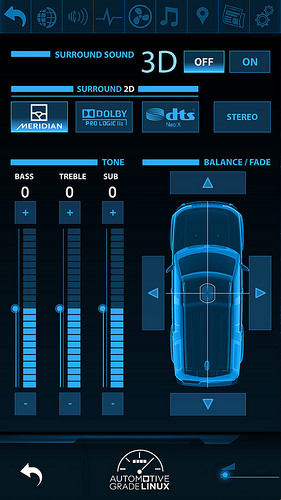 The hottest up-and-coming auto show may very well be CES. Many of the world’s biggest automakers will be there, and they’ll be showing off more than new electric or self-driving cars. The technology inside our cars for music, infotainment, and GPS is also a big part of story. Especially with consumers expecting their “connected” car experience to be as glitzy, convenient, simple and easy to upgrade as their smart phone or wearable.
While some car companies are partnering with Google on self-driving cars for the future, there’s also a major shift taking place that provides a tremendous opportunity and demand for Linux and an open ecosystem that invites industry-wide collaboration.
The Linux Foundation Automotive Grade Linux (AGL) Collaborative Project is kicking off CES with two major announcements that show car makers are embracing open development and code.
With four new major automotive OEMs stepping up to join the project (see announcement here), AGL is well-positioned to quickly become the de facto standard for automotive. Mazda, Mitsubishi Motors, Subaru as well as Ford, the first U.S. auto maker to join AGL, are committing to an open ecosystem and a common platform to accelerate rapid innovation. They see a clear benefit to working alongside other AGL members like auto suppliers, communications and semiconductor companies and collaborating directly with our global community of developers to advance the software for connected car applications. But even more important, it’s a clear indication that carmakers are embracing an open source development methodology that has been highly successful in other markets.
Thanks in part to new member resources, several members upgrading their membership levels and very active collaboration and development, we already have a major new release to announce as well. Our new AGL Unified Code Base (UCB) distribution leverages the best software components from AGL and other existing open source projects such as Tizen and GENIVI Alliance.
At CES, the AGL UCB will be featured as part of the GENIVI CES 2016 Demonstration Showcase in the Trump International Hotel on January 6-7, 2016. Demo applications for navigation, HVAC control, radio, media player and browser, settings and home screen are on display this week.
This new distribution integrates the best components from AGL, Tizen, GENIVI and related open source code into a single AGL Unified Code Base, allowing carmakers to leverage a common platform for rapid innovation.
Already several members of AGL, including Toyota, Aisin AW, DENSO, Fujitsu Ten, HARMAN, Panasonic, Pioneer and Renesas Electronics are planning to use the AGL Unified Code Base distribution to deliver a modern in-vehicle infotainment (IVI) and connected car experience for consumers.
The AGL UCB distribution will play a huge role in the adoption of Linux-based systems for all functions in the vehicle too. Although initially focused on IVI, the new distribution has been architected to allow different profiles to be created from the same code base to address all applications in the car, such as instrument cluster, heads up display, telematics and connected car.
The automotive industry needs a standard open operating system and framework to enable automakers and suppliers to quickly bring these smart phone-like capabilities to the car. Auto OEMs are also are not willing to cede control of their display technology, embedded systems and data to a single software technology company. So don’t be surprised if the Linux penguin laps the competition in the automotive industry this year.
To read more about the Automotive Grade Linux or get involved, please visit: https://www.automotivelinux.org/.
Dan Cauchy is General Manager, Automotive Grade Linux at The Linux Foundation.
Top Linux Trends of 2015
 2015 was terrific. Looking back, it was the most fascinating year for Linux and open source. Here are some of the top trends of 2015.
Linux Kind of Dominated CES 2015
At CES last year, we saw the presence of Linux in almost every category of consumer devices. And what’s even more interesting is that companies are using different operating systems, all based on Linux. Diversity. While Samsung showcased their Tizen-powered 4K smart TV, LG brought their webOS running smartwatch; Sony showed their Android-powered Walkman, and Panasonic was there with Firefox OS TV.
Ubuntu Phone Launched
Linux pretty much dominates the smartphone market, thanks to Linux-based Android operating system. But, there are companies like Canonical, Mozilla, and Jolla that are working on bringing more Linux-powered mobile operating systems to the market. 2015 began with Ubuntu phones shipping in select markets.
Gaming Goes Linux
Games have been a pain point for Linux in consumer space, but that changed in 2015. Valve finally started shipping their Steam Machines after long delay. That was not all, however. Nvidia came out with their Nvidia Shield Android TV that doubles as a set-top box and game console.
Linux Foundation Became a “Go To” Organization
2015 also saw many new open source projects, such as Open Container Initiative that became Linux Foundation’s Collaborative project. The Foundation was at the center of other new projects such as the OpenHPC Project. Every time I talk to a company that’s interested in open sourcing their project, they point in one direction — the Linux Foundation. Recently, Fujitsu open sourced their software and when I asked where they would be hosting it, their answer was…obvious!
Companies Going Open Source
Apple: The most interesting trend of 2015 was that traditional, proprietary software vendors started to embrace open source. The biggest story of the year was Apple open sourcing their programming language Swift. Apple’s PR teams, however, made a blunder and, as usual, overused adjectives and called Apple “the first major computer company to make open source a key part of its strategy.” They fixed it after the open source community pushed back.
Microsoft: The second big story was from Microsoft camp. Thanks to the change in leadership and market dynamics, the company is embracing Linux and open source at an unprecedented level. This year, Microsoft open sourced two of their core technologies: .NET and Visual Studio. Boy, they even built their own Linux-based operating system for networking switches on Azure Cloud. And, that’s not all, Microsoft also brought Debian and Red Hat Enterprise Linux to their Azure Cloud.
Automattic: Hold on, there’s more. Automattic, the company behind WordPress blogging software and WordPress.com rebuilt the code for WordPress.com from scratch. And, for the first time they released this code under an open source licence.
AMD: It’s not over yet. AMD, one of the two GPU giants, also went open source in 2015. The company announced a project called GPUOpen initiative. According to Marco Chiappetta of HotHardware, AMD will release a “collection of open source effects, tools, libraries and SDKs that are being made available on GitHub under an MIT open source license.”
openSUSE — SUSE Linux Enterprise Came Closer
Last year, SUSE was bought by Micro Focus as part of the Attachmate acquisition, and the company is already showing growth. Now we are also seeing the much needed proximity between openSUSE and SUSE Linux Enterprise. At SUSECon 2015, the openSUSE community announced openSUSE Leap, a new version of open source distribution that shares its DNA with SLE.
IBM Announced LinuxONE Mainframe
At LinuxCon, IBM announced their mainframe for Linux called LinuxONE. LinuxONE comes in two sizes: LinuxONE Emperor and LinuxONE Rockhopper. Based on the IBM z13, LinuxONE Emperor is the world’s most advanced Linux system with the fastest processor in the industry. Later at SUSECon, IBM announced flexible pricing for LinuxONE, making it affordable for businesses of different sizes.
KDE Plasma Mobile Launched
In 2015, the KDE Community announced the Plasma Mobile project. The phone will be running on top of Kubuntu, which was founded by KDE developer Jonathan Riddell. The project is in early stage of development, but users can already install it on supported Nexus devices. Plasma Mobile is a very important project for the community because almost all other mobile platforms are controlled by some company, whereas this one is driven solely by the community.
Linux Kernel Receives Live Patching
Live patching on Linux systems has been around for a while, most notably though Ksplice, which is an extension of Linux kernel that allows patching the kernel on running systems. But, Oracle acquired the company and dropped support for Red Hat; Oracle used it to lure Red Hat customers into switching to Oracle Linux. That’s when both Red Hat and SUSE started working on their own live patching technologies called Kpatch and kGraft, respectively. Both companies worked together and the two technologies were submitted to be included in the mainline Linux kernel. And, the release of kernel 4.0 this year made live patching part of the kernel itself.
Raspberry Pi Goes $5
The Raspberry Pi Foundation performed a double act: they launched an even more powerful Raspberry Pi 2 and then later announced a $5 Raspberry Pi Zero. Pi Zero is almost half the size of the first generation Pi. Don’t let the size fool you, though. Pi Zero is around 40% more powerful than Model A+.
Some Bad News
However, not everything was good news in 2015. There were some disappointing stories, too. Despite the arrival of Ubuntu Phones, the two other Linux-based mobile OSes — Firefox OS and Sailfish by Jolla — faced hardship. Seems like it’s way too difficult to break the iOS/Android dominance. Although Firefox OS gave up and announced discontinuation of the project, Jolla continued to struggle throughout the year. It was a sad year for Mandriva users as the struggling company was finally liquidated.
From the security point of view, 2015 was not as bad as 2014. However, there were some incidents, including Ghost and that infamous vulnerability where anyone can compromise a Linux system by hitting the backspace key 28 times. However, there were no reports of any compromised businesses caused by these security holes, which is something you would often see in the case of proprietary technologies.
Conclusion
Overall, the year ended with more good stories than bad. By the end of the year, Linux was stronger than before, and things are going to get even better in 2016.
WiFi Alliance Introduces Long Range WiFi HaLow
 WiFi HaLow is designed to enable a variety of new power efficient use cases in the smart home, connected car, and digital health care markets.
The WiFi Alliance announced the WiFi HaLow designation for products incorporating IEEE 802.11ah technology, which operates in frequency bands below one gigahertz, offering longer range and lower power connectivity to WiFi Certified products.
Read more at eWeek