
 The Linux Foundation regularly awards scholarships as part of its Linux Training Scholarship Program — totaling more than $100,000 in free training over the past 5 years. In this continuing series, we talk with recent scholarship recipients and share their stories with the hope of inspiring others.
Apply by June 30 for a 2016 Linux Foundation Training (LiFT) Scholarship. Learn more.
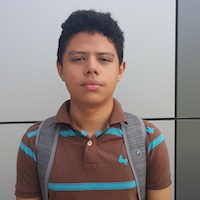
Eduardo Mayorga Téllez, a Teens in Training scholarship recipient, is 17 and lives in Nicaragua. He plans to become a Linux kernel developer and use his knowledge of device drivers to help Linux support the most hardware possible. He says he often hears classmates and colleagues argue that Linux is not suitable for them because they cannot make the most of their hardware. Eduardo says he will change that.
How did you become interested in Linux and open source?
Just a few years after I used my first computer (around 12 years ago), the technical guy who helped fix my computers told me that I should try out a different operating system. He noted my general interest in computers and, of course, I was open to new experiences.
I was excited about Linux being highly customizable and well suited for programmers.
What Linux Foundation course do you plan to take with your scholarship?
I took LFD331 (Developing Linux Device Drivers) because I am curious about operating systems’ internals, and I want to help Linux support every piece of hardware out there.
How do you expect to use the knowledge you gain from the course?
I aim to become a kernel developer, and I plan to contribute to the kernel upstream. To work in such an important and big project with so many talented people is just appealing, so I want to be part of it.
What are your career goals? How do you see a Linux Foundation course helping you achieve those goals?
I want to do academic research in the field of theoretical computer science, specifically Formal Hardware Verification. I initially thought of kernel hacking as a hobby. However, I then realized training on Linux device drivers would give me a better understanding of the interaction between hardware and software. So, the benefit is not necessarily direct, but complements other knowledge I’ll get in the future.
What other hobbies or projects are you involved in? Do you participate in any open source projects at this time?
I am involved in another big community: OpenStreetMap. I like maps and geodata. I also maintain several Fedora packages, some of them being related to GIS.
Read more:
Linux Foundation Scholarship Recipient: Kyri’ay Vanderpoel, Whiz Kid
Linux Foundation Scholarship Recipient: Erich Noriega, SysAdmin Superstar
Linux Foundation Scholarship Recipient: Eva Tanaskoska, Women in Linux
Linux Foundation Scholarship Recipient: Enrique Sevillano, SysAdmin Superstar
Linux Foundation Scholarship Recipient: Anthony Hooper, Whiz Kid
Linux Foundation Scholarship Recipient: Yashdeep Saini, Developer Do-Gooder
Linux Foundation Scholarship Recipient: Kiran Padwal, Kernel Guru
 FAIR is more than tripling its investment in GPU hardware as we focus even more on research and enable other teams across the company to use neural networks in our products and services. As part of our ongoing commitment to open source and open standards, we plan to contribute our innovations in GPU hardware to the Open Compute Project so others can benefit from them…
 Favourite blogging tool now ready for hacking – but cross platform will not be easy
 This week in Linux news, the Linux Foundation and Microsoft work together on the Azure certification, 2015 wasn’t the year for the Linux smartphone, and more. Get up to speed with the latest Linux news with our weekly digest.
 Audio and Video are two common sources of information sharing we see in today’s world. May it be publishing any product, or need of sharing any information between a huge community of people, or a way of socializing in the group, or sharing of knowledge (e.g. as we see in online tutorials) audio and video hold a great place in this highly expressive world which wants to share their ideas, prove themselves and do all possible steps which brings them in limelight.
 Earlier this year, I wrote an article about