Home Blog Page 951

Kafka and syslog-ng

Anytime I tweet about syslog-ng‘s Kafka destination, I gather some new followers. Most of the time they are more interested in another Kafka, who was born in Prague by the end of the 19th century and wrote excellent surreal short stories. Even if I admire Kafka’s works, I’ll write here, as usual, about syslog-ng and one of its most recent destinations: the Kafka destination.

First of all, let me introduce Kafka, a high-throughput distributed messaging system. It was originally developed by LinkedIn as a backbone of a website activity tracking infrastructure. Once open source, it was developed further under the umbrella of the Apache Foundation. In 2014 Confluent was founded to provide enterprise level support to Kafka users. Kafka is now used by major companies, including Netflix, Twitter and PayPal. There are now many more uses for Kafka: message queuing, log aggregation, stream processing or as a commit log.

There are four important terms to know if you want to understand the basics of Kafka and where syslog-ng fits into the picture. For a more detailed introduction check the Kafka documentation.


  • topics are the categories where Kafka feeds messages.

  • producers publish messages to a Kafka topic

  • consumers subscribe to topics to process the published messages

  • Kafka itself is a cluster of one or more servers that are called brokers


The syslog-ng application can act as a producer and publish messages to a Kafka topic. But it is not just a simple collection of syslog messages and publishing them to Kafka. The syslog-ng application can collect messages from several sources and process as well as filter them before forwarding them to Kafka. This can simplify the architecture, lessen the load on brokers due to filtering and ease the work of consumers as they receive pre-processed messages.

You can read more about how syslog-ng can improve your Kafka infrstructure in my blog at https://czanik.blogs.balabit.com/2015/11/kafka-and-syslog-ng/ 

New ELF Linker from the LLVM Project

 We have been working hard for a few months now to rewrite the ELF support in lld, the LLVM linker. We are happy to announce that it has reached a significant milestone: it is now able to bootstrap LLVM, Clang, and itself and pass all tests on x86-64 Linux and FreeBSD with the speed expected of an LLVM project.

ELF is the standard file format for executables on Unix-like systems, such as Linux and BSDs. GNU ld and GNU gold are commonly used linkers for such systems today. In many use cases, the linker is a black box for which only speed matters. Depending on program size, linking a program takes from tens of milliseconds to more than a minute. We designed the new linker so that it runs as fast as possible. 

Read more at LLVM Project Blog.

Linux Performance Analysis in 60,000 Milliseconds

You login to a Linux server with a performance issue: what do you check in the first minute?

At Netflix we have a massive EC2 Linux cloud, and numerous performance analysis tools to monitor and investigate its performance. These include Atlas for cloud-wide monitoring, and Vector for on-demand instance analysis. While those tools help us solve most issues, we sometimes need to login to an instance and run some standard Linux performance tools.

In this post, the Netflix Performance Engineering team will show you the first 60 seconds of an optimized performance investigation at the command line, using standard Linux tools you should have available.

Read more at Netflix blog.

Seagate and Newisys Demonstrate 1 TB/s Flash Architecture

Today Seagate and Newisys announced a new flash storage architecture capable or 1 Terabyte/sec performance. Designed for HPC applications, the “industry’s fastest flash storage design” comprises 21 Newisys NSS-2601 with dual NSS-HWxEA Storage Server Modules deployed with Seagate’s newest SAS 1200.2 SSD drives. These devices can be combined in a single 42U rack to achieve block I/O performance of 1TB/s with 5PB of storage. Each Newisys 2U server with 60 Seagate SSDs is capable of achieving bandwidth of 49GB/s.

The post Seagate and Newisys Demonstrate 1 TB/s Flash Architecture appeared first on insideHPC.

 
Read more at insideHPC

Android Studio 2.0 Aims to Rev App Development

Google last week released a preview of Android Studio 2.0 at the inaugural Android Dev Summit in Mountain View, California. The preview offers several updates, including Instant Run and a new GPU Profiler. It’s available in the Canary release channel for the Linux, Mac and Windows platforms. Instant Run lets developers see changes to code running on their devices or emulators, while the GPU Profiler lets users profile their OpenGL ES Android code.

Read more at LinuxInsider

Altair to Open Source PBS Professional HPC Technology in 2016

altair2

Altair has announced that it will provide an open source licensing option of PBS Professional® (PBS Pro). PBS Pro will become available under two different licensing options for commercial installations and as an Open Source Initiative compliant version. Altair will work closely with Intel and the Linux Foundation’s OpenHPC Collaborative Project to integrate the open source version of PBS Pro.

The post Altair to Open Source PBS Professional HPC Technology in 2016 appeared first on insideHPC.

 
Read more at insideHPC

OpenMW 0.37 Released, Switches To OpenSceneGraph

The open-source community working on OpenMW as an engine re-implementation of Elderscrolls III: Morrowind have announced the release of OpenMW v0.37…

Read more at Phoronix

Intel Lands First Round Of Graphics Work For Linux 4.5, Includes Kaby Lake

The first batch of Intel DRM graphics driver changes targeting the Linux 4.5 kernel have landed into DRM-Next…

Read more at Phoronix

More Hands-on With the Raspberry Pi Zero: Loading, Booting and Configuring

Today I share more information and first-hand experiences with the Raspberry Pi Zero, including loading, booting, configuring and using the PiHub for both USB expansion and power.

Read more at ZDNet News

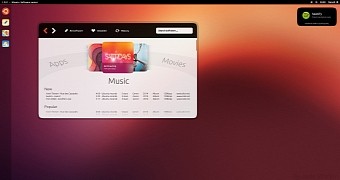
How to Install Unity 8 on Ubuntu 16.04 LTS and Ubuntu 15.10

We’ve created the following tutorial at the request of our readers who asked as to post some easy-to-follow instructions on how to install the next-generation Unity 8 user interface on the Ubuntu Linux operating system.

The fact of the matter is that the latest Unity 8 packages, including the next-gen Mir display server, are available in the default software repositories of Ubuntu 16.04 LTS (Xenial Xerus), which is currently under development, and Ubuntu 15.10 (Wily Werewol… (read more)