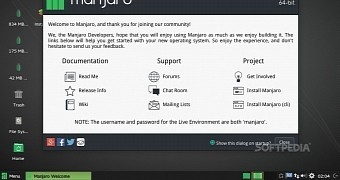
The Enlightenment developers at Samsung have announced the release of the Enlightenment Foundation Libraries (EFL) 1.16 along with updates to Elementary, Evas GL, and Eo…
ALSA 1.11 Released For Linux Audio
It’s been the better part of the year since the last ALSA update while out today is version 1.1 of the Advanced Linux Sound Architecture…
Enjoying the command line
Being a Linux sysad and developing automation scripts I would like to share some of the command line tips that I use to increase my productivity.
-
Using ‘history’ command with timestamp :
# export HISTTIMEFORMAT='%F %T '# history | less
988 2015-11-08 19:52:54 vim composer.sls
989 2015-11-08 19:52:54 salt '*' state.highstate
990 2015-11-08 19:52:54 salt * state.show_highstate
991 2015-11-08 19:52:54 salt '*' state.show_highstate
992 2015-11-08 19:52:54 cat /etc/salt/master
-
Repeat previous command quickly using 3 methods
On command line type !! and then press Enter
On command line type !-1 and then press Enter
Press Control + P will display previous command, press Enter to execute it
-
Run specific command from history
# history | less
995 2015-11-08 19:52:54 vim /etc/salt/master
996 2015-11-08 19:52:54 ps -ef | grep salt-master
997 2015-11-08 19:52:54 pkill salt-master# !996
ps -ef | grep salt-master
root 26026 25065 0 20:14 pts/0 00:00:00 grep salt-master
root 41593 1 0 01:47 ? 00:00:00 /usr/bin/python2.6 /usr/bin/salt-master -d
root 41594 41593 0 01:47 ? 00:00:00 /usr/bin/python2.6 /usr/bin/salt-master -d
root 41595 41593 0 01:47 ? 00:00:00 /usr/bin/python2.6 /usr/bin/salt-master -d
root 41600 41593 0 01:47 ? 00:03:57 /usr/bin/python2.6 /usr/bin/salt-master -d
root 41601 41593 0 01:47 ? 00:00:00 /usr/bin/python2.6 /usr/bin/salt-master -d
Open Source Alternatives to LastPass
LastPass is a cross-platform password management program. While LastPass is a highly rated service, it is proprietary software. And LastPass has recently been absorbed by LogMeIn. If you’re looking for an open source alternative, this article is for you.
To provide an insight into the quality of software available for Linux, I introduce 4 excellent open source alternatives to LastPass.
[url=http://www.linuxlinks.com/article/20151108125950773/LastPassAlternatives.html]Read full article[/url]
DVR set up on RDO Liberty with separated Controller && Network Nodes
The DVR is providing direct (vice/versa) access to external network on Compute nodes. For instances with a floating IP addresses routing from project to external network is performed on the compute nodes.Thus DVR eliminates single point of failure and network congestion on Network Node. Agent_mode is set “dvr” in l3_agent.ini on Compute Nodes. Instances with a fixed IP address (only) still rely on the only network node for outbound connectivity via SNAT. Agent_mode is set “dvr_snat” in l3_agent.ini on Network Node. To support DVR each compute node is running neutron-l3-agent,neutron-metadata-agent,neutron-openvswitch-agent. DVR also requires L2population activated and ARP proxys running on Neutron L2 layer. Actually, this setup was carefully tested in regards of Mitaka M1 which hopefully will allow to test solution provided by https://bugs.launchpad.net/neutron/+bug/1365473
Complete text may be seen here
Open Platform for NFV (OPNFV): How to Get Involved
Thank you for your interest in the OPNFV Community! To make getting started with the community a smooth process, this post will guide you through the basics of our resources, projects, tools, and processes.
OPNFV consists of multiple projects focusing on everything from hardware management to KVM enhancements to running applications. We work closely with underlying upstream projects to help accelerate NFV via an integrated, open platform. Beyond new features, our main focus is integrating of open source components into the platform with proper verification and validation. We have several projects designed to to drive upstream implementation and provide hardware infrastructure, tool sets, testing frameworks and so forth. Furthermore, we encourage every participating member to use Agile methodologies as we believe in speed, proactivity and flexibility. If you would like to learn more about OPNFV in general before jumping in, feel free to reference the OPNFV website or take a look at the OPNFV Wiki.
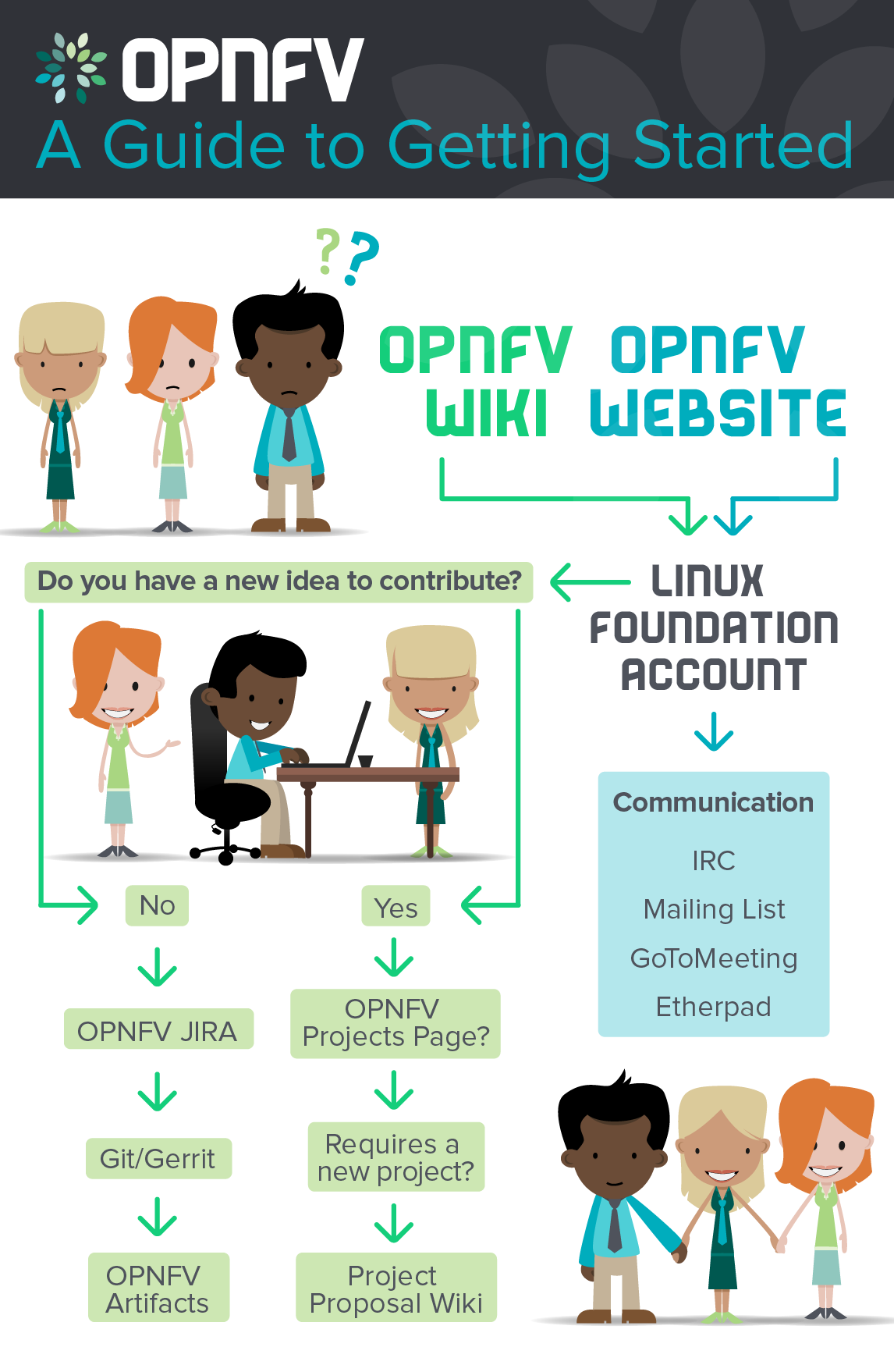
If you’d like to jump right in, the absolute first step is to create a Linux Foundation account and visit the tools pagewhere you will find links to all of the developer tools available. (Note, in most cases you will only have read rights, but once you begin to contribute to a project you will get the access you need to get started.)
Our community believes in coordination and well organized activities as well. This means that we plan and track our tasks within each project around the theme of releases. More detailed information about our project plans are documented in Jira, which can be a good resource to reference tasks or find issues to work on. If you’re not familiar with this tool, check out the Getting started web page for guidance.
You may have heard that OPNFV is a “mid-stream community” which is not supposed to carry any code on its own. It actually depends on how you define “code.” Let’s use the word “artifacts” instead, which includes test cases, documentation, integration scripts and so forth. The common integration point is Git, which we use for version control. You should also familiarize yourself with Gerrit; via the OPNFV Gerrit (login required) you can access repositories and provide patch reviews. You’ll need to set up a few things to get started with Gerrit, like your email address, and you should also not forget to sign the CLA! (login required) Without that you will not be able to submit a patch. You can also access our artifacts page for some results and check out project documentation or even ISO images.
As with every other open source community, we have several channels for communication. These include weekly meetings, mailing lists and IRC channels for daily text-based discussions. The Meetings wiki page contains an up- to-date list of meetings, including agendas and all the information required for joining. We use GoToMeeting for voice and also the #opnfv-meeting or project IRC channels on Freenode for meeting minutes. You can join to the development activities, raise topics for discussion or ask questions on the opnfv-tech-discuss mailing list, which like all the other lists, is also archived.
And last, but not least, the most important thing among all, if you would like to meet with the eager fellow developers, keep an eye on the Events web page for the list of upcoming events, where you can find us.
“That’s all folks!”
Stay tuned for more, and thank you for joining to this short tour of OPNFV! I hope to see you again on a project meeting, on IRC or even at the next, and very first, OPNFV Summit!
Ildiko Vancsa is a Software Developer, working in the O&M area of cloud development at Ericsson. She has been contributing to OpenStack since November 2013, her main focus area is Ceilometer, but she is contributing to other projects too, like OpenStack Manuals, Nova or Oslo. She is also active in OPNFV, where her main focus is on the Promise and Doctor projects.
This article was first published on the OPNFV blog.

Locked Up with Linux
The sheer versatility of the Linux kernel truly knows no bounds. It can be found, literally, everywhere. From your local library to your local big box retailer, Linux is barely a stone’s throw away. There are very few places in the world that can be considered Linux-free. A small tribal village? Maybe. A shade tree mechanic? Possibly. A Prison? Well … not really. That’s right. It seems that Linux has been sent to the joint, and it poised to be there for a very long time. (Read the rest at Freedom Penguin)
The Future of the Bloomberg Terminal is Open Source

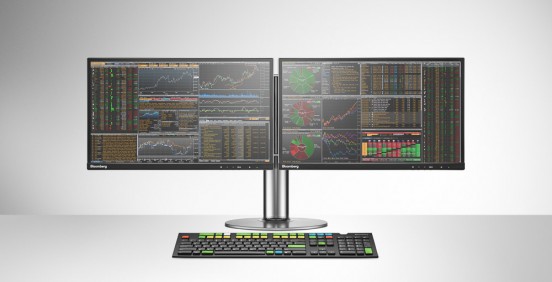
The Bloomberg Terminal, which debuted in December 1982, is one of the computing industry’s “few truly enduring successes” alongside the PC and the Mac, writes Harry McCracken in Fast Company this week. The modern terminals, which run on Windows, have appeared in two historical exhibits this year – at the Computer History Museum in Mountain View and Smithsonian’s National Museum of American History in Washington, D.C., he writes.
The technology has withstood the test of time by continuously evolving to meet the needs of financial traders – though until recently new features have been largely developed with in-house, proprietary code.
The way Bloomberg keeps up with users’ expectations is changing, however, McCracken writes. The company is adopting open source technologies such as Linux, Hadoop, and Solr and contributing code back upstream.
“We’re not at the point where we have a formal open source program, but over the last three or four years we have begun to strongly encourage developers to use open source tools to solve problems, especially if we can contribute back to those projects as well,” said Kevin Fleming, an open source evangelist in the CTO office at Bloomberg, in an interview with Linux.com earlier this year .
As our previous article noted the financial industry is on the verge of an open source breakthrough, and Bloomberg is one of the companies on the cutting edge of the trend.
See Fast Company’s story on the history of the Bloomberg Terminal.
Correction: This article incorrectly stated that the Terminal runs on Linux. Bloomberg uses and contributes to Linux, but the Terminal runs on Windows.
Watch a Linux Foundation interview with Kevin Fleming discussing how and why Bloomberg uses open source software and participates in collaborative development.
Video: No More Open Source Foundations, Please!
Nobody can accuse Simon Phipps of halfheartedly supporting open source. But even he thinks we’ve gone way off the deep end with the number of open source foundations. In the video below, Phipps (an InfoWorld contributor) uses his address at OSCON 2015 in Amsterdam to implore the crowd, “Please, stop your employers from starting new open source trade foundations!”
Read more at InfoWorld.
Programmers, Developers Lead Strong IT Jobs Market
Programmers and developers, forecast as the most difficult to fill, declined throughout the year, but regained the top spot at the end of September.