Home Blog Page 1001

Dronecode Hosts Workshop As Open Source Drones Proliferate

logo-dronecodeThe Linux Foundation’s Dronecode Project is hosting a workshop in Dublin, Ireland on Oct. 5, as well as a  Flight Day event at a nearby airport on Oct. 8, to showcase open source Unmanned Aerial Vehicle (UAV) technology. These events bookend LinuxCon + CloudOpen + Embedded Linux Conference Europe, which is being held Oct. 5-7 at Conference Centre Dublin.

The workshop will be led by Lorenz Meier, PX4 Project lead, and Tully Foote Platform Manager for ROS (Robot Operating System). Meier will demonstrate a PX4 Flight Dronecode stack running on Linux in simulation. The hands-on workshop ​will ​also cover ​toolchain ​setup using a supplied ​VM​/​docker ​image, as well as driving ​an ​electric ​servo ​motor with a PX4/Pixhawk autopilot. ​Foote, meanwhile, will show how Dronecode can interface with ROS.

At the Flight Day event, participants are invited to bring their own UAVs and apply the knowledge learned from the workshop. Prizes will be awarded for various flight challenges, and academic research groups will showcase their projects alongside companies like 3D Robotics’ (3DR) and Parrot.

The Dronecode Project was launched in Oct. 2014 with the goal of uniting open source drone projects and assets and providing a common codebase to help accelerate software development. The project spans from microcontroller-based drones running real-time operating systems like Nuttx to new Linux-driven hybrid designs run that also incorporate RTOSes.

The project, which is governed by the Dronecode Foundation, has made substantial progress in standardizing foundational stacks, and several, mostly Linux-based, UAVs aligned with Dronecode have reached market. New members, such as Parrot, Walkera, and Erle Robotics, have brought the membership to 44, comprising 1,300 active developers.
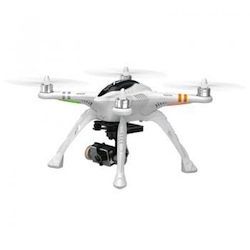
QR X350PROThe new companies join Platinum members 3DR and Yuneec, Gold members Intel and Baidu, and Silver members including Qualcomm, Box, ProDrone, Falcon Unmanned, and others. Earlier this year, Erle Robotics launched a Dronecode-aligned Erle-Copter in Ubuntu and Ubuntu Snappy flavors, and Walkera launched the 2015 QR X350 Pro, which features a Linux-driven Dronecode flight controller.

The Dronecode Project builds upon two closely related open source drone autopilot platforms, APM/ArduPilot UAV platform, and the PX4 project based at the Swiss Federal Institute of Technology, Zurich.

According to workshop leader Lorenz Meier, the core developer and maintainer of the Pixhawk PX4 Flight Stack software, as well as a Ph.D student at the Computer Vision and Geometry Group in the Department of Computer Science at ETH Zurich, the Dronecode Project is moving from developing basic autopilot flight stacks to addressing higher end functions.

“So far, we have focused on getting the Dronecode flight stacks into industry-ready shape,” says Meier. “While GPS-based flight is in a pretty good shape now, we have set out to tackle the next challenges like obstacle detection and avoidance and tighter integration into the cloud, which would allow dynamic no fly zones. The goal is to make flying easier and safer at the same time.”

“Mid-2016 will be a good time to look at Dronecode and Linux adoption, as companies will have had the opportunity to phase in new technology,” says Meier.

I asked Meier about the rapid transition toward Linux, and whether Linux will soon be able run a drone on its own without a companion microcontroller/RTOS control system.

“Hard-realtime Linux is still a specialized solution, making RT-Linux somewhat hard to integrate based on standard distributions,” says Meier. “We opted instead for a hybrid solution running standard Ubuntu / Debian Linux and a dedicated RTOS side-by-side. The PX4 flight stack that runs on Snapdragon Flight uses Linux for higher end functions, but uses Qualcomm’s QuRT for all safety-critical parts running on the Snapdragon 801’s Hexagon DSP. Similarly, the APM-based 3DR Solo runs Yocto based Linux image, but also runs all safety-critical software on a co-located Pixhawk running NuttX and the PX4 middleware for sensor interfacing.”

I also asked Meier about the integration of Dronecode technology with ROS, which was designed for terrestrial robots, but is increasingly being used on drones such as the Erle-Copter.

“ROS is a great rapid prototyping environment and ROS 2.0 is moving in the right direction to become more of a drone platform,” says Meier. “However, right now neither we nor Qualcomm or other industry adopters base the PX4 stack on it. In addition to offering ROS, we have a DSP-to-Linux IPC mechanism called muORB for messaging as a lightweight alternative. However, the PX4 middleware has a transparent adapter layer for ROS, though, so people can run our apps in a native ROS environment. Dronecode also has a MAVLink to ROS bridge called mavros.”

Irish Drone Community Gains Spotlight

A major goal of the workshop and Flight Day is to support the emerging UAV industry in Ireland, a country whose rugged coastline and castle-dotted hills have attracted filmmakers using drones. Both events are sponsored by Atlantic Bridge, IDA Ireland, and Startup Ireland, in addition to 3DR and the Dronecode Foundation.

Ireland has taken an early lead in establishing regulations that legalize safe drone usage. A hobbyist drone community is emerging around organizations like Copter Shop Ireland and the iFly Technology training center. UAV-related companies based in Ireland include Green Aviation, Verifly, and SkyTec Ireland.

“Dronecode provides an ideal collaborative technology platform to foster rapid adoption and growth for the drone industry in Ireland,” says Trishan de Lanerolle, Program Manager for the Dronecode Foundation, as part of the Linux Foundation’s Collaborative Projects team.

At the Flight Day event, several University research groups will be showcasing their projects alongside companies like 3DR and Parrot. De Lanerolle says, “From a regulation point of view the Irish Aviation authority has a progressive approach and wants to promote innovation in this space.”

In the U.S., meanwhile, there’s a growing campaign for self regulation by vendors and users as a means to forestall potentially more restrictive FAA regulations. In a recent Hackaday post, 3DR CEO Chris Anderson notes safety-oriented Dronecode projects including Dronecode No Fly Zones and a related Safe Flight API.

As drone vendors and users come under fire for unsafe flying practices and invasions of privacy, it’s important to note the many benefits of UAV technology, from improved agricultural practices to search and rescue and disaster relief. The Dronecode events will highlight the increasing number of humanitarian projects involving drones, including Uplift Aeronautics and OpenRelief. Other efforts include UAViators, which helps aid organizations safely use drones for relief efforts. Drones are also used by the World Wildlife Foundation to track wildlife and poachers in Africa.

The Drone Developer Workshop ($10) will be held Oct. 5, 2-6pm at the Spencer Hotel in Dublin, Ireland. (bring your own laptop). Flight Day ($10) is scheduled, weather permitting, for Oct. 8, 9am to 4:30pm, with transportation provided to an airfield near Dublin. More information and registration may be found here.

This Week in Linux News: Chinese Government Encourages Adoption of Linux-Based OS, New Malware Infects ATMs, and More

This week in Linux news, the Chinese government encourages widespread adoption of a new Linux-based operating system, new “GreenDispenser” malware infects ATMs, and more! Catch up on your Linux news with our weekly digest below. 

Baby Penguin1) The Chinese government encourages citizens to replace Windows with a Linux-based OS.

A first look at the Chinese Operating System the Government Wants to Replace Windows– Quartz

2) New malware allows attackers to steal from infected ATMs.

GreenDispenser Malware Threatens to Take All Your Dosh From Linux ATMs– The Inquirer

3) Microsoft’s enters into open source SDN territory with Linux-based Azure Cloud switch.

Microsoft’s Linux-based cloud OS scores a win for SDN– TechRepublic

4) Alien: Isolation game soon to be available on Linux.

Alien: Isolation heading to Mac and Linux next week– PCGamer

5) Tizen 3.0 release brings new features to the Linux-based OS for mobile devices and smart TVs that is supported by the Linux Foundation.

Tizen, Samsung’s Linux-Based OS for Mobile and TVs, Gets New Release– The VAR Guy


BlackBerry’s Android Slider Phone Is Called the Priv and Will Be Available This Year

Blackberry-privBlackBerry has been teasing us with its plans for an Android-powered slider smartphone for months, promising in March that the device would be available sometime this year. Now, as part of the company’s second quarter financial results, CEO John Chen confirmed the name of the handset — the BlackBerry Priv — and reiterated a planned release date later this year. “Today, I am confirming our plans to launch Priv, an Android device named after BlackBerry’s heritage and core mission of protecting our customers’ privacy,” wrote Chen. “Priv combines the best of BlackBerry security and productivity with the expansive mobile application ecosystem available on the Android platform.”
Read more at The Verge

​Google To Face Android FTC Antitrust Investigation? Report

Google could be put under the antitrust spotlight in the US over accusations that it’s giving its own services priority in relation to Android. 

US antitrust regulator the Federal Trade Commission is looking to open an investigation into whether Google blocked rivals’ access to the Android operating system, according to Bloomberg. The move could represent more regulatory troubles for Google, with the FTC striking a deal with the US Department of Justice to lead an investigation of Google’s handling of Android, Bloomberg reports. It is not yet clear whether the FTC will open an official investigation.

Read more at ZDNet News

Distribution Release: Webconverger 32.0

Kai Hendry has announced the release of Webconverger 32.0, the latest stable release of the specialist Linux distribution for web kiosks – now with Firefox 41.0 and improved web browser privacy features: “Webconverger 32 release. Prompted by the disturbing privacy defaults in Windows 10 and an enquiry whether Webconverger leaked any intranet information, we reviewed Firefox defaults. This review was accomplished with Wireshark, a tool that allows us to analyse every packet leaving and entering a Webconverger instance.

Read more at DistroWatch

Z-Wave Plus Home Automation Hub Runs Linux on Raspberry Pi

Z-Wave Europe and Popp & Co. have launched a “Popp Hub” home automation gateway that runs Linux on a Raspberry Pi, and supports Z-Wave and IP smart devices. Z-Wave Europe GmbH, which bills itself as Europe’s largest distributor for Z-Wave wireless technology devices, is selling and distributing the Popp Hub smart IP home gateway…

Read more at LinuxGizmos

Apache Big Data Preview: Q&A with IBM’s Anjul Bhambhri

ibmpos blue thumbAs a preview to the upcoming Apache Big Data Europe conference, we spoke with with Anjul Bhambhri, Vice President, Big Data and Analytics, IBM Silicon Valley Lab, who will be giving a keynote presentation titled, “Apache Spark — Making the Unthinkable Possible.” We talked with Bhambhri about IBM’s involvement with open source and what Big Data really means.

Q: Big Data seems to refer not so much to “a large amount of data” as “so much data that traditional methods can’t handle it.”  For IBM, what does Big Data mean?

Currently, Big Data means hundreds of terabytes, going up to tens of petabytes. This could be structured data – data in fixed records or fields, like in databases — as well as unstructured data like documents, images, and multimedia. Every industry has Big Data — Financial, Telco, Insurance, Healthcare, Automotive, Retail. They want to combine data from multiple data sources of record with data sources of interaction, extract new information, derive actionable insights from the information, and deliver new and incremental value via products and services.

anjul-bhambhri

Q: What does IBM’s Big Data Products group do? What are some of the main products?

IBM’s Big Data products help customers across industries store, manage, and analyze all of the data using descriptive,  predictive, prescriptive analytics. The capabilities are available to data scientists as well as to Lines-of-Business (LOB). Products like BigInsights provide the ability to store, query all types of data using SQL, extract information from unstructured data using text analytics, do large-scale analytics using R and Machine Learning. The SPSS suite of products provide the ability to build and score predictive models at scale on big data. Watson Analytics offers LOB the benefits of advanced analytics without the complexity. LOB  can get answers and new insights to make confident decisions in minutes — all on your own.

The Infosphere Streams product lets you analyze all of Big Data in real time. As data continues to grow in the Big Data platforms, it is very easy for the platform to become a swamp as opposed to a source of well-curated information. This is where the IBM tools such as BigQuality and BigIntegration help IT personnel create a balance between unfettered data exploration and analytics while ensuring that the data is appropriately governed in terms of use, lineage, quality. These tools also make it easy for LOB to publish “good information” from data allowing analysts and users to “shop for data” without having to curate the data themselves.

Q: How do these products, and the group’s activities, relate to Apache?

All of these products leverage Apache projects like Spark and Hadoop and their ecosystem of Apache projects, on Big Data. In addition, these products are bringing SQL, large-scale analytics to the Hadoop and Spark community. ISVs that are building applications leveraging Apache projects can now use these value-add capabilities to build applications that better serve their customers.

Over the years, we’ve seen use cases that span the spectrum from log mining to fraud detection, from text analytics to machine learning. Let me give you a couple of examples on how our customers have leveraged Apache projects along with IBM products to derive valuable insights from big data.

The data integration space is one of Apache Hadoop’s strengths. We have a few large ISVs that are integrating customer interactions across multiple channels. They collect all “touches” a customer has with a business — be it via phone, emails and web chats, social media, and blogs (voice, video, web, chat and telephony).  This raw data is then turned into a trail, a “Customer Journey” if you will. To do this, they’re leveraging Hadoop, in combination with IBM BigInsights value-adds around Data transformation, SQL, Text Analytics & Machine Learning.

The immediate benefit is that businesses are able to see their customers in a more complete light. The integrated channel views are leading to improved call-handling efficiencies and faster problem resolutions. For example, the end customers don’t have to repeat themselves to operators on the phone, and there are fewer gaps in customer service. Thanks to Hadoop, these ISVs have seen significant drops in operational costs. Crunching millions of interactions is now running in minutes and hours as opposed to days and weeks.

We also have a large healthcare provider who’s using Hadoop with IBM’s BigInsights text analytics. They’re faced with the problem of identifying patients that have recalled implants, such as hip replacements, spinal implants, and the like. Unfortunately, the information is buried in thousands of medical records in textual form. Can you imagine teams of nurses reading through patient medical records, trying to piece together the maker, model, serial number, etc. for these implants?  With text analytics running on a distributed platform like Hadoop and Spark, they are able to identify patients programmatically, more accurately, and quickly.

Q: Can you talk briefly about IBM’s involvement with Linux and with open source?

IBM has been at the forefront of the open source movement, starting with its contributions to Apache HTTP server, and the Apache Foundation itself, continuing on with the Eclipse Foundation, and its embrace of Linux with its own Linux Technology Center.

IBM’s contributions to Linux include ports to mainframe, the Power architecture, and the Cell Broadband Engine. These ports enable support for Linux on all modern IBM systems and allow Linux to be at the heart of IBM solutions regardless of hardware platform. More than 500 IBM software products now run natively on Linux, including WebSphere, DB2, and systems management products.

In addition to its involvement in Linux, IBM has been actively contributing to open source platforms including Hadoop, Node.js, and Docker. The latest in this trail of open source advancement by IBM has been the announcement of the Spark Technology Center to promote and enhance the Apache Spark platform.

Q: You’re scheduled to give a keynote called “Apache Spark — Making the Unthinkable Possible.” Can you tell us briefly what it’s about? How is IBM contributing to the stretching of boundaries of Big Data thinking?

The Watson initiative is an example of Big Data thinking. We are pushing the boundaries on assimilating all existing data and knowledge and using that to predict and provide guidance on wide range of topics from healthcare, to financial advice, to management of natural resources, to even cooking up a new recipe from a set of ingredients. This is the new age of using data to not only predict outcomes but to change them based on ongoing events.

openSUSE Leap 42.1 Beta Based on Linux Kernel 4.1 LTS

opensuse-leap-42-1-beta-based-on-linux-kernel-4-1-ltsThe openSUSE Project announces openSUSE Leap 42.1 Beta operating system has been released and is now available for download and testing.

The new openSUSE 14.2 Leap version is quickly taking shape and the first Beta has been released for this branch, which has been hailed as practically the second coming. Developers insisted on saying that it will change the way people look and use openSUSE and that can only be a good thing.

Shell Scripting Boot Camp

Spend enough time on the command line and you’ll eventually want to do many tasks…that take some intricate commands…repeatedly. A good example of this, is making thumbnails of photos. Basically, our workhorse of this script is not ImageMagick (which provides convert, identify and mogrify), but the for loop in bash itself. Ready? Grab your pen-knife and let’s whittle out a script: (Read the rest at Freedom Penguin)

RDO Liberty (beta) DVR Deployment (Controller/Network)+Compute+Compute (ML2&OVS&VXLAN) on CentOS 7.1

Per http://specs.openstack.org/openstack/neutron-specs/specs/juno/neutron-ovs-dvr.html

1. Neutron DVR implements the fip-namespace on every Compute Node where the VMs are running. Thus VMs with FloatingIPs can forward the traffic to the External Network without routing it via Network Node. (North-South Routing).
  2. Neutron DVR implements the L3 Routers across the Compute Nodes, so that tenants intra VM communication will occur with Network Node not involved. (East-West Routing).
  3. Neutron Distributed Virtual Router provides the legacy SNAT behavior for the default SNAT for all private VMs. SNAT service is not distributed, it is centralized and the service node will host the service.

Complete text of this post may be seen here