Home Blog Page 1013

Sharing Files with Samba the Easy Way

Yeah, I hear you talking but I don’t believe a word. “You say you’re gonna keep it simple.” “You say you’re gonna stick to just having one Linux machine to play around with and you’re not gonna need to think too much about networking.” Well, let me tell you that it just doesn’t work that way at all.

You see, there is one dirty little secret that long time Linux users know but keep to themselves. Something no one tells newbies. But I will. So here it is: Linux is highly addictive, and having one Linux machine is like eating just one potato chip. You can’t do it, I tell you! Second hand computers are cheap and Linux is a free download, so there’s nothing stopping you form finding yourself with a house full of happy Linux boxes, all humming away. There’s always another reason to add one more machine… Just wait, you’ll see. (Read the rest)

WiFi Without Network Manager Frippery

Back in my day, sonny…there was a time when you could make your networking work without the network manager applet. Not that I’m saying the NetworkManager program is bad, because it actually has been getting better. But the fact of the matter is that I’m a networking guy and a server guy, so I need keep my config-file wits sharp. So take out your pocket knife and let’s start to whittle.

Begin by learning and making some notes about your interfaces before you start to turn off NetworkManager. You’ll need to write down these 3 things:

1) Your SSID and passphrase.
2) The names of your Ethernet and radio devices. They might look like wlan0, wifi0, eth0 or enp2p1.
3) Your gateway IP address.

Next, we’ll start to monkey around in the command line… I’ll do this with Ubuntu in mind. (Read the rest at Freedom Penguin)

WhatsApp vCard Vulnerabilities Expose Millions of Users

Security flaws within the WhatsApp application had the potential to trick users into executing arbitrary code on their systems.

Severe vulnerabilities within the WhatsApp mobile application which tricked users into executing malicious, arbitrary code have been patched. Researchers from security firm Check Point explained the security issues in detail on Tuesday. In a blog post, the team said Whatsapp Web is at fault, and “significant” vulnerabilities discovered by Check Point researcher Kasif Dekel can trick victims into executing arbitrary code.

Read more at ZDNet News

​Europeans to Win the Right to Sue in US Courts Over Privacy Breaches

Europeans will soon be able to sue US authorities that improperly handle their personal data in local courts.

Europeans whose data has been mishandled by US authorities will soon have the right to take legal action in the US courts. EU citizens’ right to seek legal redress in the US comes as part of a new EU-US data protection agreement covering instances where EU citizens’ personal data is involved in US criminal and terrorism investigations. The deal brings rights of EU citizens in line with those of US citizens, who can sue in European courts for similar privacy breaches.

Read more at ZDNet News

Human Interface Guidelines (HIG) for the Unix Shell

HIG

As a command line person myself, I was very intrigued when I saw Klaatu‘s talk, HIG for the Unix Shell, on the upcoming All Things Open schedule.

While I have always been attracted to the Unix/Linux shell because of its beautiful simplicity—yes, really—it is always nice to connect with someone who shares that appreciation. Klaatu, however, has gone further than mere appreciation by defining some of the attributes that contribute to the elegance of the shell. 

Read more at OpenSource.com

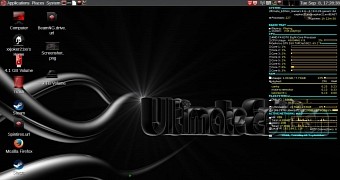
Ubuntu-Based Ultimate Edition 4.6 Gamers Distro Is the Ultimate Entertainment System

gameTheeMahn, the creator, maintainer, and lead developer of the Ultimate Edition project (formerly Ubuntu Ultimate), had the pleasure of announcing the immediate availability for download of Ultimate Edition 4.6 Gamers GNU/Linux distribution.

Being based on the Ubuntu 15.04 (Vivid Vervet) operating system, Ultimate Edition 4.6 Gamers comes now with more than one of the biggest collections of Linux games, as it includes a pre-configure version of the popular XBMC Media Center…

Software-Defined Radio May Cause FCC to Restrict WiFi Modifications

NEWS ANALYSIS: While the concept of a software-defined radio may sound like confusing techno-babble, such radios are almost certainly in devices you already use, especially WiFi routers. 

The comment period for the Federal Communications Commission’s notice of proposed rulemaking (NPRM) on software-defined radios was supposed to end on Sept. 8. But the FCC has extended the comment period because the topic is complex, and the parties involved need time to work.

Read more at eWeek

Google’s VP9 Codec Coming to Microsoft’s Edge Browser

Microsoft has started developing support for Google’s VP9 codec in its Edge browser.

Initial support will be restricted to streaming through the browser when used with MP4 or AAC audio. Microsoft is considering adding additional audio codecs—Opus is often used with VP9, and Microsoft is also considering Ogg and Vorbis support—and extending support to support local playback. Microsoft intends to support both software decoding and, where possible, hardware decoding.

Read more at Ars Technica

Is It Time for The Linux Foundation To Be Renamed? Interview with Jim Zemlin

Jim Zemlin, Executive Director of the Linux Foundation, discusses his organization’s expanding efforts to help enable multiple open source foundations. 

When Jim Zemlin helped to start the Linux Foundation back in 2007, it was an organization with a singular purpose: to help grow and enable the Linux ecosystem. Now in 2015, the Linux Foundation is more than just Linux, and has helped to enable multiple open source foundations and efforts, including the Cloud Foundry Foundation, the node.js Foundation, the Open Container Initiative, the OpenDayLight, and Let’s Encrypt projects. In a video interview, Zemlin discusses foundation building and talks about why the Linux Foundation is likely to keep growing.

Read more at Datamation

Top 5 Upcoming Linux-Based Smartphone Operating Systems

As today is the much anticipated day of the new iPhone 6S and 6S Plus unveiling I thought it would be interesting to take a look at the most anticipated smartphones based on the Linux operating system instead.

Ubuntu Phone

Of course when most people think of Linux-based phones the first thing that comes to their minds is Ubuntu. Ubuntu is in plans to create a touch-optimised interface which will work on not only smartphones and tablets but also TV’s. Not meant as a separate operating system, the intention here is to have one version of the Ubuntu Linux distribution. Ubuntu’s Unity is designed to automatically resize and adapt to the screen size of your device whether you’re using a PC, tablet, TV or phone. Essentially, Ubuntu’s vision is to create a full desktop operating system within a mobile operating system, meaning you could dock an Ubuntu phone and have access to a full Linux desktop running on that device.

Jolla Sailfish

A little history lesson for you: before joining the Windows movement, Nokia was in preparation of a Linux-based smartphone operating system called Maemo. Eventually merging with Intel’s Moblin project and renamed MeeGo, the Nokia N9 was the only MeeGo phone Nokia ever released. After ditching MeeGo and choosing instead to bet on Microsoft’s Windows Phone, many members of the MeeGo team left Nokia and formed a new company. Welcome Jolla. Linux fans rejoice as Sailfish, like MeeGo before it is essentially more of a standard Linux system with apps able to be created with Qt and you can even launch a terminal and install Linux package files. Better still, it even has some compatibility with Android apps.

Firefox OS

This is the new OS I am most excited about as I’ve been a big fan of Firefox for years. It’s almost as handy as Chrome but they seem to have a more ethical stance than Google on a lot of things in the Tech world. Based on the Firefox browser and Gecko rendering engine with every app using web technologies including HTML5 there’s a lot to be excited about. Mozilla is launching Firefox OS devices in developing markets first. I plan on cashing in my old phone as soon as one is available.

Samsung Tizen

Tizen I actually the umbrella of the Linux Foundation with both Samsung and Intel being on its Steering Committee. Basically a backup operating system for Samsung, Tizen looks almost identical to Galaxy phones. The problem with the Tizen OS is that it isn’t compatible with Android, meaning if or when Samsung chooses to run with its own operating system, they would need to convince Android app developers to create apps for Tizen.

Open webOS

Widely heralded as ahead of its time, Palm’s webOS, seen on the Palm Pre and Palm Pixi has a lot of history with HP acquiring the technology in 2010 only to change their minds about further developments and instead open-sourced much of its code as ‘WebOS Community Edition’, with the Open webOS project taking on the code and further developing it as a community project. Just 2 years ago LG licensed it to use on their smart TVs. While now solely on LG TV’s we’re hoping that this OS, originally intended for smartphones will soon see it’s time again