 SUSE is one of the Linux trinity — which comprises Red Hat, SUSE, and Canonical. SUSE is also one of the leading contributors to many open source projects, including the kernel itself. However, the company went through challenging times as it was acquired by one company after another. It seems that things have stabilized with the Micro Focus acquisition, so I sat down with Michael Miller, SUSE’s Vice President of Global Alliances & Marketing at LinuxCon and talked about topics ranging from acquisition to future plans.
Swapnil Bhartiya: SUSE has been through a lot of transition lately since it was acquired by Micro Focus. How much has changed or improved under the new company?
Michael Miller: Acquisition by Micro Focus has been a great thing for SUSE. They are very aware of SUSE’s growth potential and the dynamic market we are in. They like the growth they have seen in SUSE, which is part of what transpired the transition. They have been making investments into the business since the acquisition. I would say that they love what they saw in SUSE, and after the acquisition they have given us great support. They kept our SUSE leadership team intact — with Nils Brauckmann, President & General Manager and his team completely the same as it has been now for years, working together.
SB: How much and what kind of independence does SUSE has in Micro Focus?
MM: We operate as an independent product unit within Micro Focus company. They recognized that, as an open source company and operating system and OpenStack distribution vendor, there are a lot of differences between SUSE business and rest of the Micro Focus business. They are very aware of that, so we are operating very much like we did prior to the acquisition, only now we are part of a larger, very stable, very profitable company where we can actually receive the benefit of all those things and investments in our business that will really help us grow.
SB: We can clearly see that post-acquisition SUSE is doing a lot of things, but has your focus changed? What are the areas SUSE is focusing now?
MM: We are a very practical company. We are interested in areas that focus on enterprise customers that we serve and do those things really, really well with high degree of quality, performance and service. Then, we are open to partnering. So by focusing on areas where we really can make a difference, we can then partner in additional areas.
The three main areas we are focusing on are: enterprise Linux, which is our historical area of strength; OpenStack private cloud for the enterprise; and then software-defined distributed storage, building on Ceph as the upstream project. There is great opportunity to bring those three things together in a very interesting way, and then partnering with both hardware vendors and software vendors to create a variety of choice of solutions for our customers.
SB: SUSE is one of the leading contributors in the open source world. Has the acquisition changed anything in terms of contribution?
MM: As a result of acquisition, we are actually contributing more to the open source projects that we care about. Because we are growing — we are growing the business and we are also growing the engineering organization. If you go to SUSE.com today you will see a huge list of open positions for engineers; we are hiring like crazy all across the board — OpenStack, security, storage, kernel, etc. We are starting to engage in a whole series of new projects. One area I am really excited for us getting involved in is Cloud Foundry. So you will start to see SUSE folks engage with the Cloud Foundry in the near future as well.
SB: At LinuxCon IBM announced their LinuxONE systems, what kind of partnership is there between SUSE and IBM on mainframe?
MM: You know, SUSE and IBM worked together for some 15 to 20 years ago to first bring Linux to the mainframe. SUSE Linux was the first distribution on the mainframe and that was developed by a very deep engineering relationship. And we have kept that depth of engineering collaboration with IBM ever since. What we have announced this week, I think, is just the latest in a long series of innovations we have done together. As you heard in the announcement, KVM for the IBM z Systems is fully supported by SUSE and IBM and available on the new LinuxONE servers; we are the only Linux distribution available right now with full support for that virtualization platform.
SB: I will talk about containers a bit. There are two competing technologies — Docker and Rocket by CoreOS, which seemed bad for containers. It’s good that they are now working together to create some standards through The Open Container Initiative. From what I know, SUSE has partnered only with Docker. What is your perspective on this?
MM: We joined the Open Container Initiative, which was announced at DockerCon recently. It’s very important to us that we find a way for all this to work together to move the technology forward towards enterprise stability, manageability, and security. We want to prevent fragmentation that will slow down that process. So we are keeping an eye on all these things that are going on, but we are absolutely committed to working together with all those vendors in the ecosystem to focus on core standards and moving the bar forwards. We don’t want to be duplicating one another’s efforts and fragmenting what’s going to be a great technology. I want to move it faster, get it to the enterprise where people can put it to work.
SB: Both Red Hat and Canonical have their offerings such as Project Atomic and Snappy Ubuntu. What does SUSE have in this space?
MM: We have been doing small footprint Linux for years; we have Just Enough Operating System. And we have great tools such as SUSE Studio where you can produce exactly the configuration and packages, just the amount of operating system you need, for the environment you are targeting. We think that the combination of tooling and manageability that we can provide actually matches up with what enterprise customers are going to want around containers.
SB: Let’s move from containers to IoT. Where is SUSE in the IoT landscape?
MM: Internet of Things is a fascinating topic and there is a lot of talk about that. Our interest in IoT is the server side. There are devices all around the world but they are generating a massive amount of information and data that needs to be stored, processed and be acted upon. We are working very closely with partners like SAP helping build an ecosystem of ISVs, developing against big data analytics platforms like Hadoop and Hana. That’s where our focus has been.
SB: So, it’s all on the server side and not on the client side?
MM: Correct.
SB: And will the focus change?
MM: Currently we are squarely focused on enterprise server side.
SB: SUSE recently announced their ARM 64 partner program. Big companies like PayPal have deployed ARM datacenters. What kind of market do you see for ARM 64?
MM: We think it’s fairly early days for ARM 64. We are very enthusiastic about it. We have both silicon vendors and systems vendors that joined our program, actively working on the engineering together. And I think the target markets will emerge over the next few years.
SB: SUSE had close relationship with Microsoft for a long time. What are the areas where the two companies are still working together?
MM: We have great partnership with Microsoft, and it has evolved over the years. The things that we are actively working on together include hypervisor — Hyper-V integration with OpenStack. There is mutual certification that Windows runs within our private cloud infrastructure on our servers and vice versa. So you can run SUSE Linux inside of Microsoft’s private or public cloud. We have a great partnership with the Azure team where SUSE is the only commercially supported enterprise Linux on Azure. There are a lot of things we are doing together with them that drive that public cloud, hybrid cloud story forward in a way that supports mixed, heterogenous environments.
SB: Events like LinuxCon play a very pivotal role in bringing different players together under one roof. Is SUSE planning any events to engage with partners and customers?
 MM: SUSECon is our customer, partner, end-user event we hold every year. This year, we are organizing it in Amsterdam, from November 2 through 6. We will have a whole series of very technical, educational sessions, hands-on labs and training. There will be a lot of sessions that are represented by customers and partners on a whole range of open source topics — from enterprise Linux to public cloud, private cloud, hybrid cloud, OpenStack, Ceph storage, Docker and container. You can also come to the event and do Linux certification classes and tests and actually leave the event with a Linux certification in your hands.
SB: The Linux Foundation is doing a lot of courses; do you also run such courses?
MM: We are actually developing more and more training courses. Just this year, we have a fairly wide range of training courses; we have three levels of certification programs and we are adding to that curriculum. We are actually going to start expanding our certification model to work with specialization around subjects like private cloud and storage. Here at LinuxCon, we have been speaking with the Linux Foundation Training and Certification team. At some point in future, not too far, we will be announcing some collaboration between SUSE Training Certification and the Linux Foundation.

 When
When 
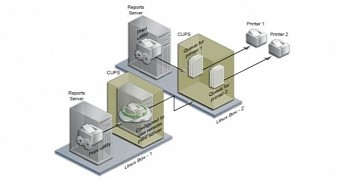 The CUPS (Common UNIX Printing System) open-source and cross-platform printing system for GNU/Linux and Mac OS X operating systems